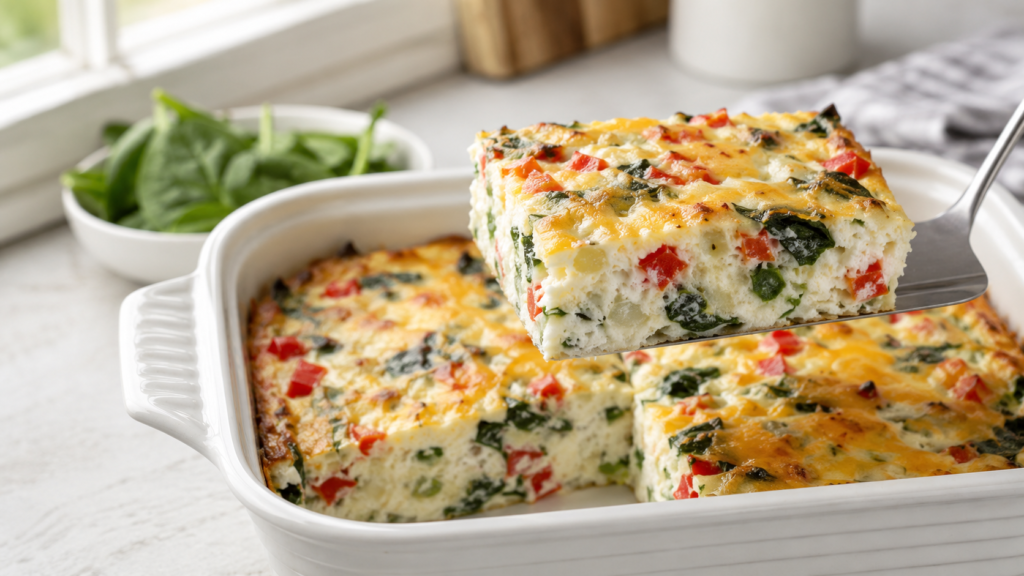
This egg white casserole recipe combines liquid egg whites, sautéed vegetables, cottage cheese, and melted cheese. Cooking the vegetables first prevents excess water, while cottage cheese keeps the casserole soft instead of rubbery.
Start Here
- Preparation time: 15 minutes
- Baking time: 32–38 minutes
- Oven temperature: 350°F or 180°C
- Pan size: 9-inch square dish
- Servings: 8 slices
- Best tip: Cook the vegetables until the pan looks dry
Why Does This Egg White Casserole Work?
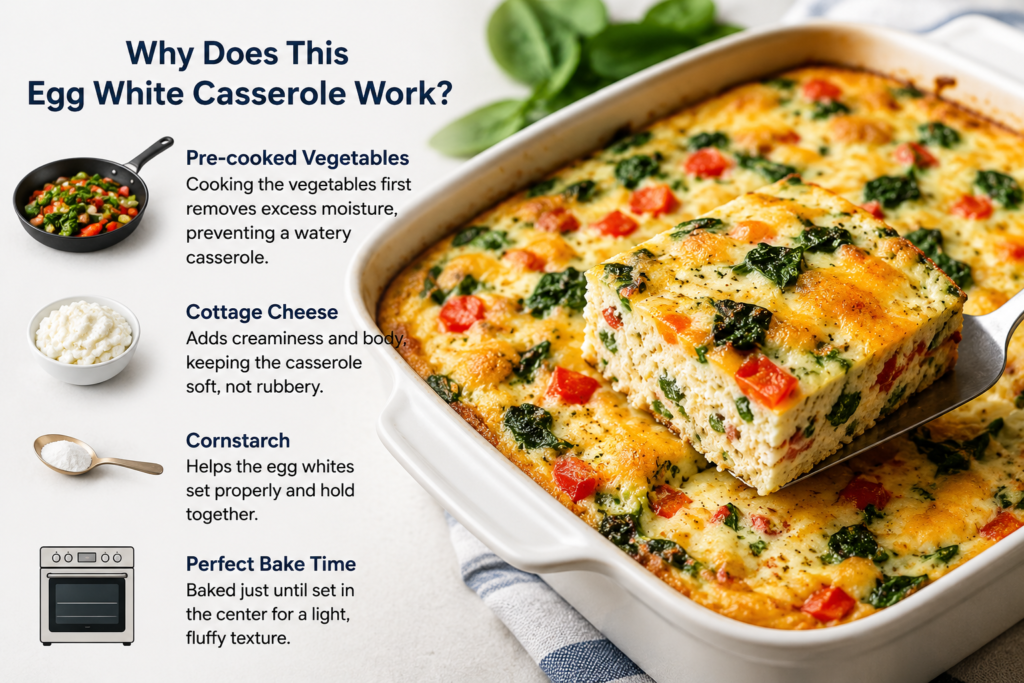
Egg white casseroles can become watery or rubbery. This recipe avoids both problems.
The vegetables are cooked before baking, so they release most of their moisture in the skillet. Cottage cheese adds body and softness, while a small amount of cornstarch helps the casserole hold together.
The casserole is baked only until the centre is set. Overbaking will make the egg whites firm and spongy.
Which Ingredients Do You Need?
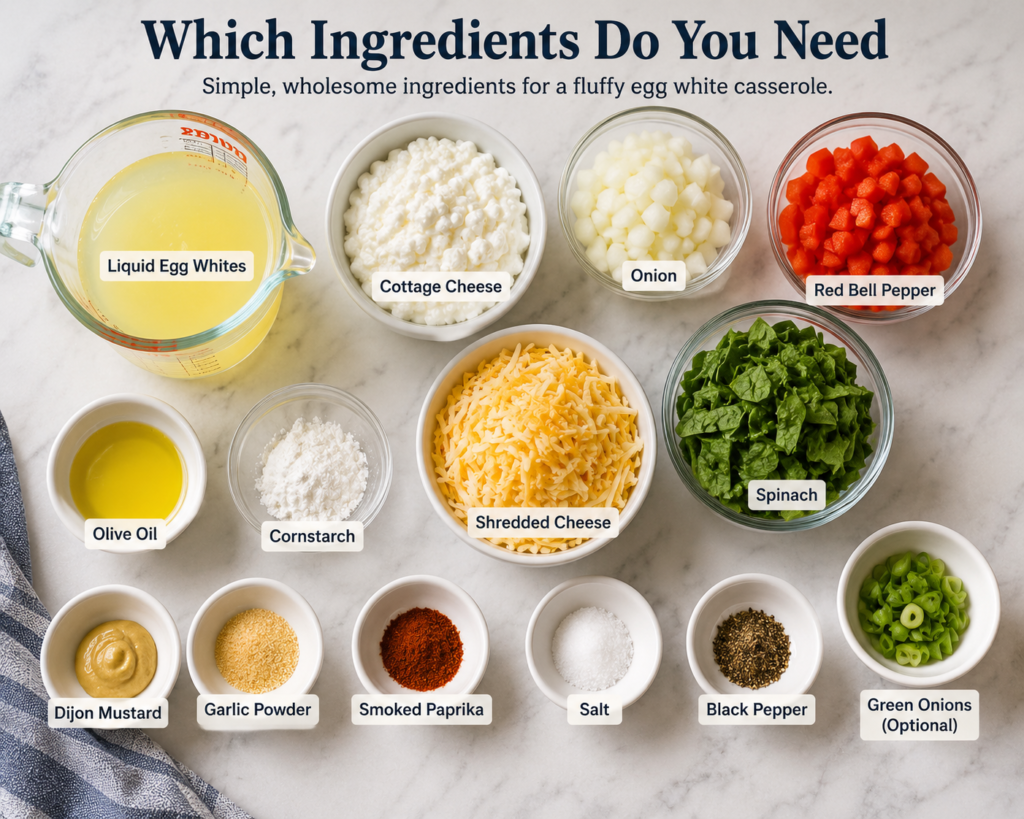
You need:
- Liquid egg whites
- Cottage cheese
- Onion
- Red bell pepper
- Baby spinach
- Shredded cheese
- Cornstarch
- Dijon mustard
- Garlic powder
- Smoked paprika
- Salt and black pepper
Can You Use Carton Egg Whites?
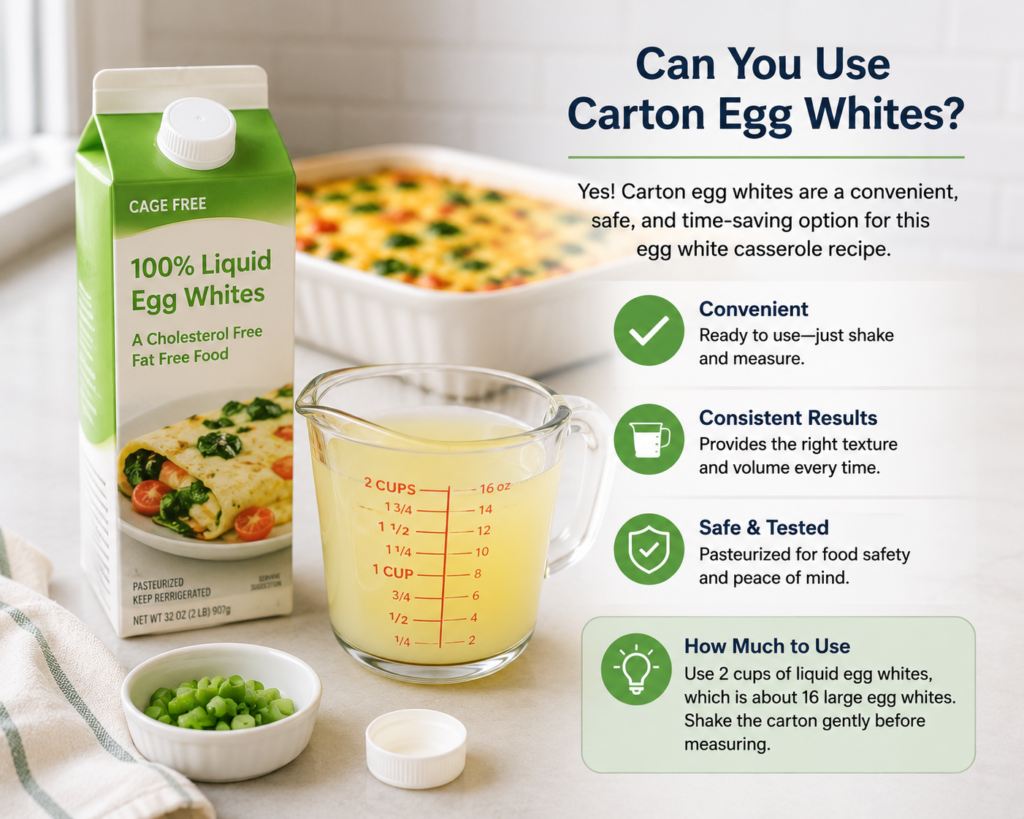
Yes. Carton egg whites are convenient and easy to measure.
Use 2 cups of liquid egg whites. Shake the carton gently before measuring because the contents can settle during storage.
Freshly separated egg whites also work. You will need approximately 16 large egg whites, but measuring the final volume is more accurate.
Should You Cook the Vegetables First?
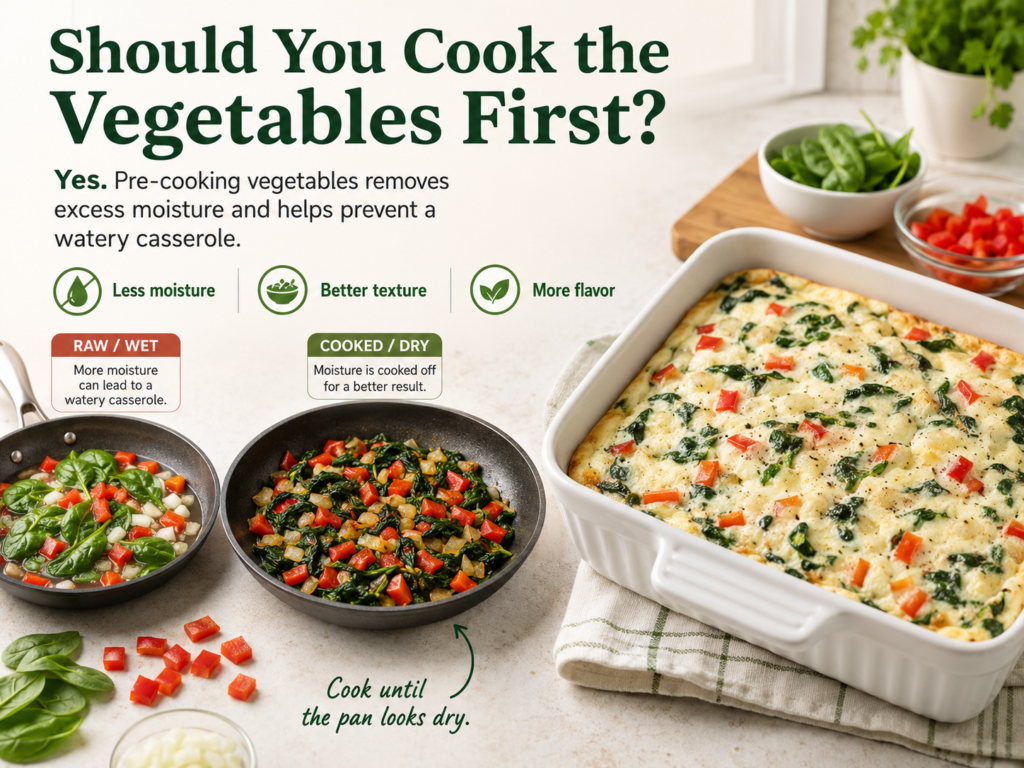
Yes. Pre-cooking vegetables is the most important step for preventing a watery casserole.
Spinach, mushrooms, tomatoes, bell peppers, and zucchini release liquid as they cook. Sauté them until tender and continue cooking until no visible moisture remains in the skillet.
Let the vegetables cool for a few minutes before adding the egg mixture.
How Do You Make an Egg White Casserole?
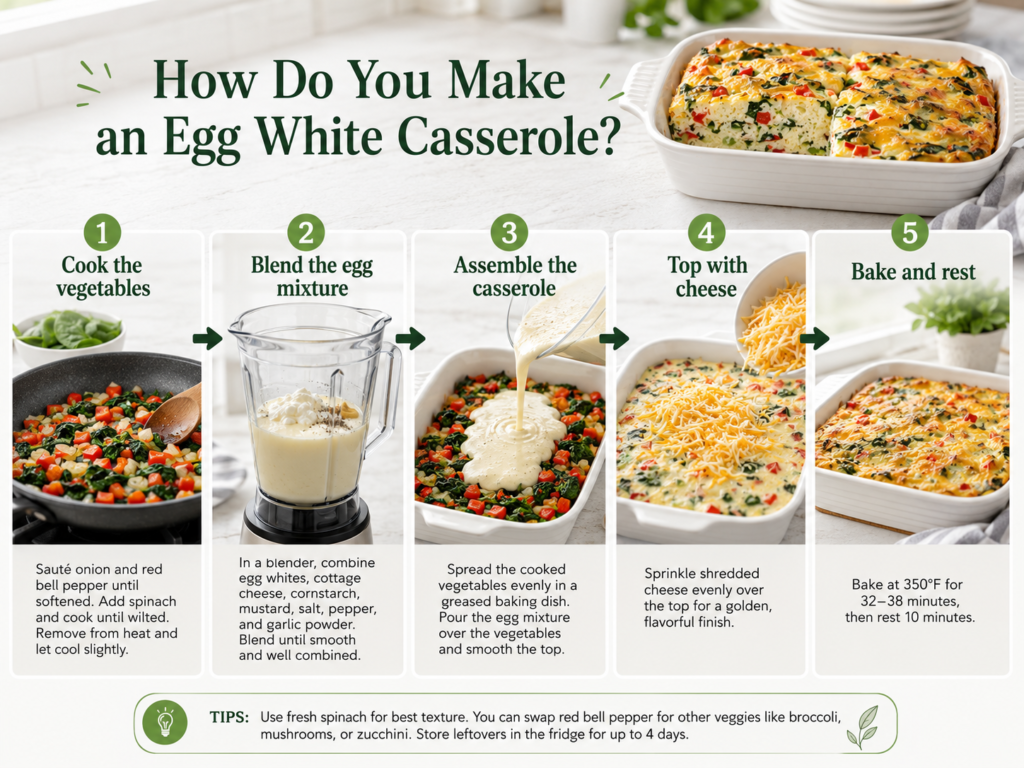
Preheat the oven to 350°F or 180°C. Grease a 9-inch square baking dish.
Heat the olive oil in a skillet over medium heat. Add the onion and bell pepper, then cook for four to five minutes.
Add the spinach and cook until wilted. Continue cooking until the skillet looks dry.
Blend the egg whites, cottage cheese, cornstarch, mustard, garlic powder, paprika, salt, and pepper for about 10 seconds. Blend only until smooth.
Spread the vegetables in the baking dish. Pour the egg mixture over them and sprinkle the cheese on top.
Bake for 32–38 minutes. Let the casserole rest for 10 minutes before slicing.
How Do You Know When It Is Ready?
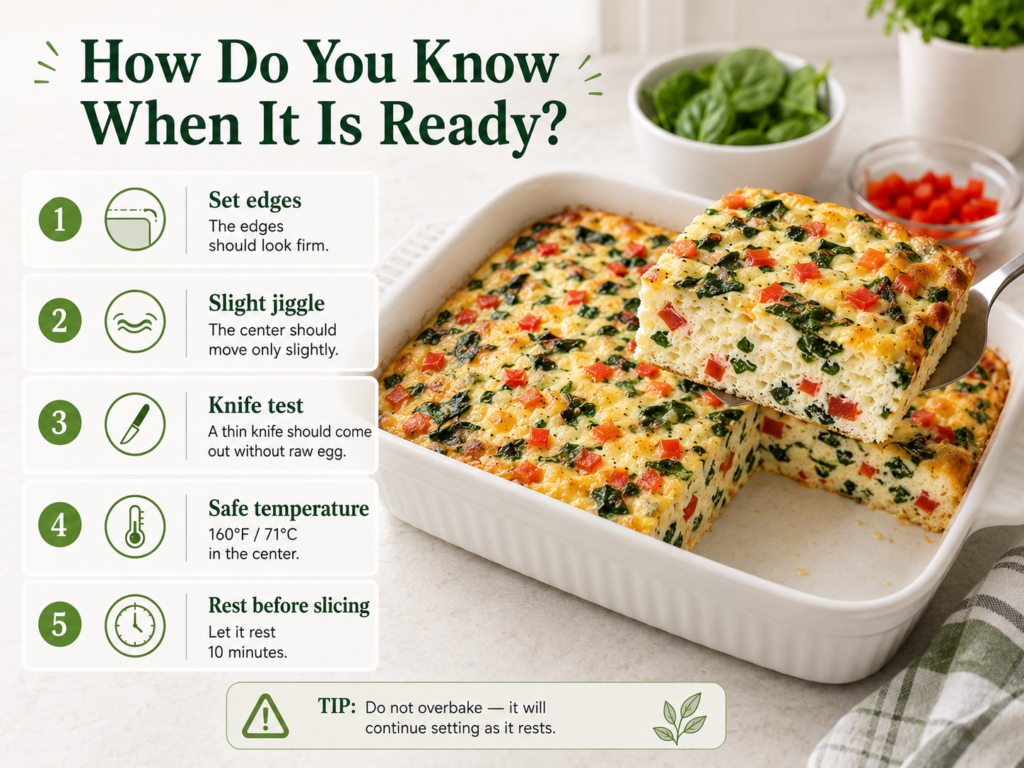
The edges should look firm, while the centre should move only slightly when the dish is gently shaken.
A thin knife inserted near the centre should come out without raw egg mixture.
For food safety, the centre of an egg casserole should reach 160°F or 71°C.
Do not bake until the entire casserole feels hard. It will continue setting as it rests.
Why Is My Egg White Casserole Watery?
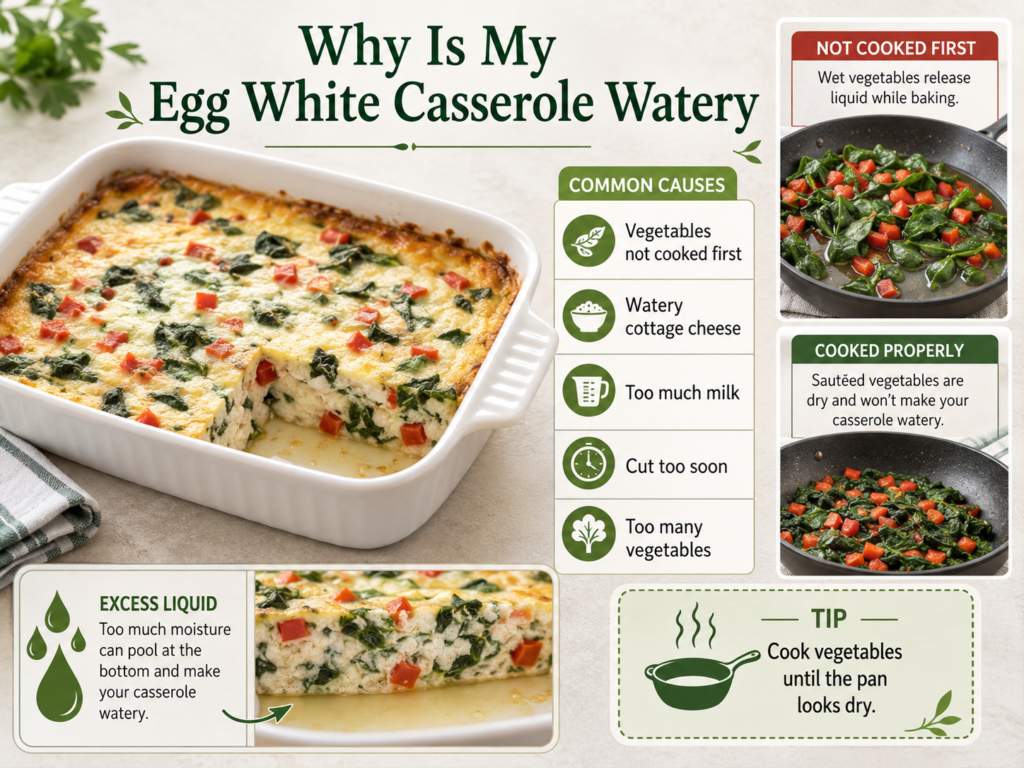
The most common cause is excess moisture from vegetables.
Other possible causes include:
- Adding uncooked spinach or mushrooms
- Using watery cottage cheese
- Adding too much milk
- Cutting the casserole immediately
- Using too many vegetables
- Covering it while it is still hot
Cook vegetables until the skillet is dry and drain any visible liquid from the cottage cheese.
A small amount of moisture after refrigeration is normal.
Why Did It Turn Rubbery?
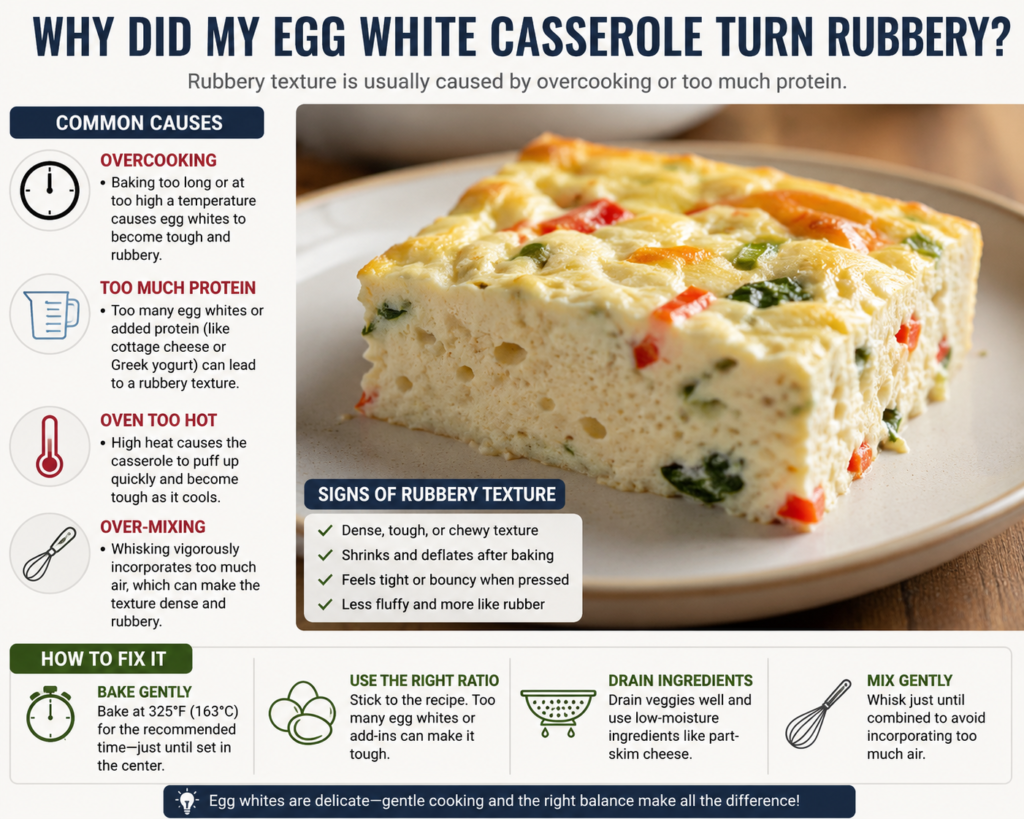
A rubbery casserole has usually been baked too long or at too high a temperature.
Egg whites become firmer as they cook. Prolonged heat forces out moisture and creates a dry, spongy texture.
Remove the casserole when the centre is just set. Also avoid blending the mixture for too long because excess air can make it puff up and collapse.
Can You Prepare It the Night Before?
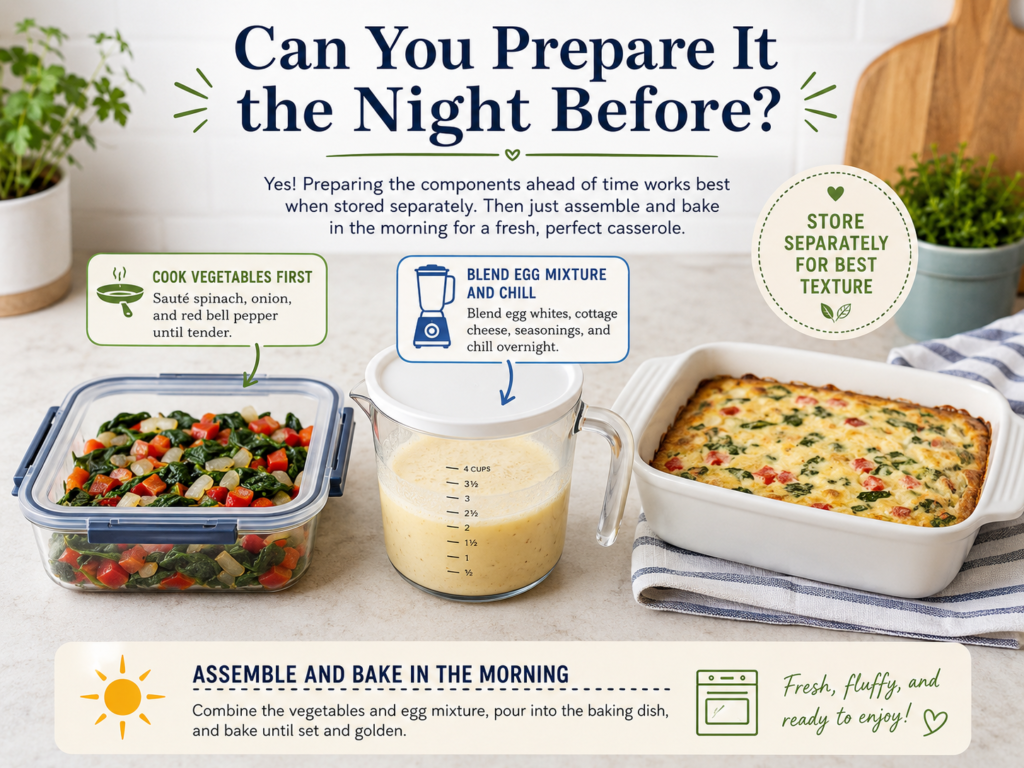
Yes, but it is better to store the components separately.
Cook the vegetables and refrigerate them in a covered container. Blend the egg white mixture and keep it in another container.
Assemble and bake the casserole the following morning.
You can assemble everything the night before, but the vegetables may release more moisture into the egg mixture.
Can You Make It Without Cottage Cheese?
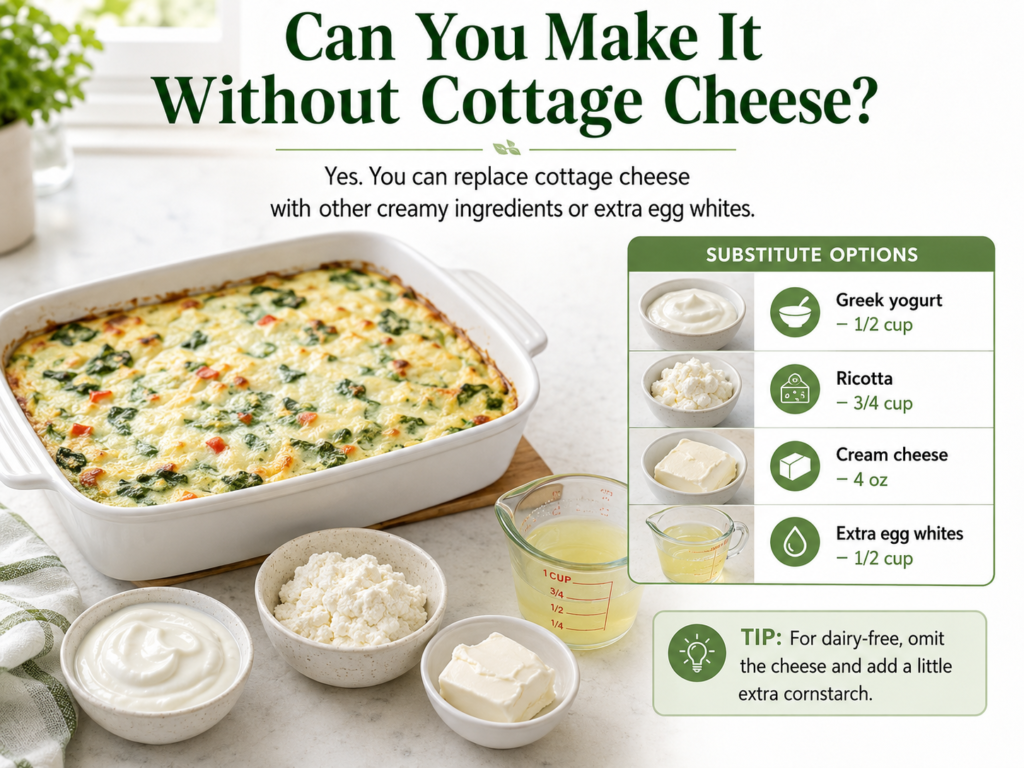
Yes. Cottage cheese can be replaced with:
| Substitute | Amount |
|---|---|
| Thick Greek yoghurt | ½ cup |
| Ricotta | ¾ cup |
| Softened cream cheese | 4 ounces |
| Additional egg whites | ½ cup |
Greek yoghurt gives a soft texture, while ricotta makes the casserole slightly denser.
For a dairy-free casserole, omit both cheeses and add one extra tablespoon of cornstarch.
Which Variations Work Best?
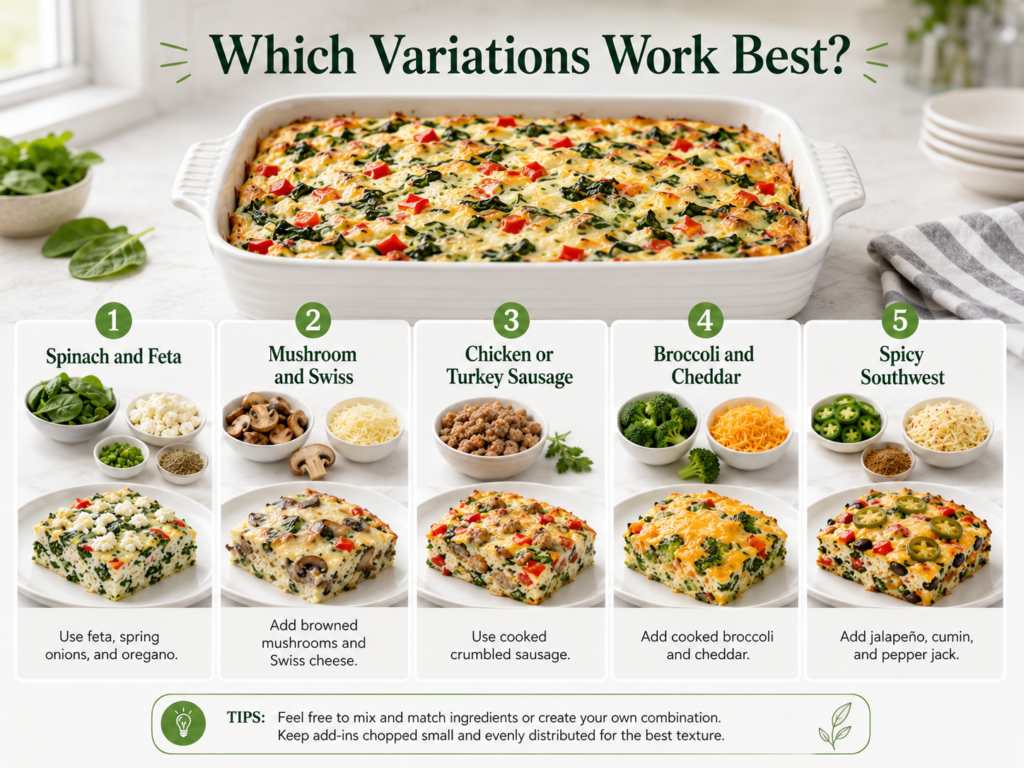
Spinach and Feta
Replace the cheddar with feta. Add spring onions and dried oregano.
Mushroom and Swiss
Cook sliced mushrooms until browned and dry. Use Swiss, Gruyère, or Emmental cheese.
Chicken or Turkey Sausage
Add 8 ounces of cooked crumbled sausage. Let it cool before adding it to the baking dish.
Broccoli and Cheddar
Use cooked, finely chopped broccoli. Drain it well before adding it.
Spicy Southwest
Add jalapeño, cumin, spring onions, and pepper jack cheese. Serve salsa on the side instead of mixing it into the raw eggs.
What Can You Serve With It?
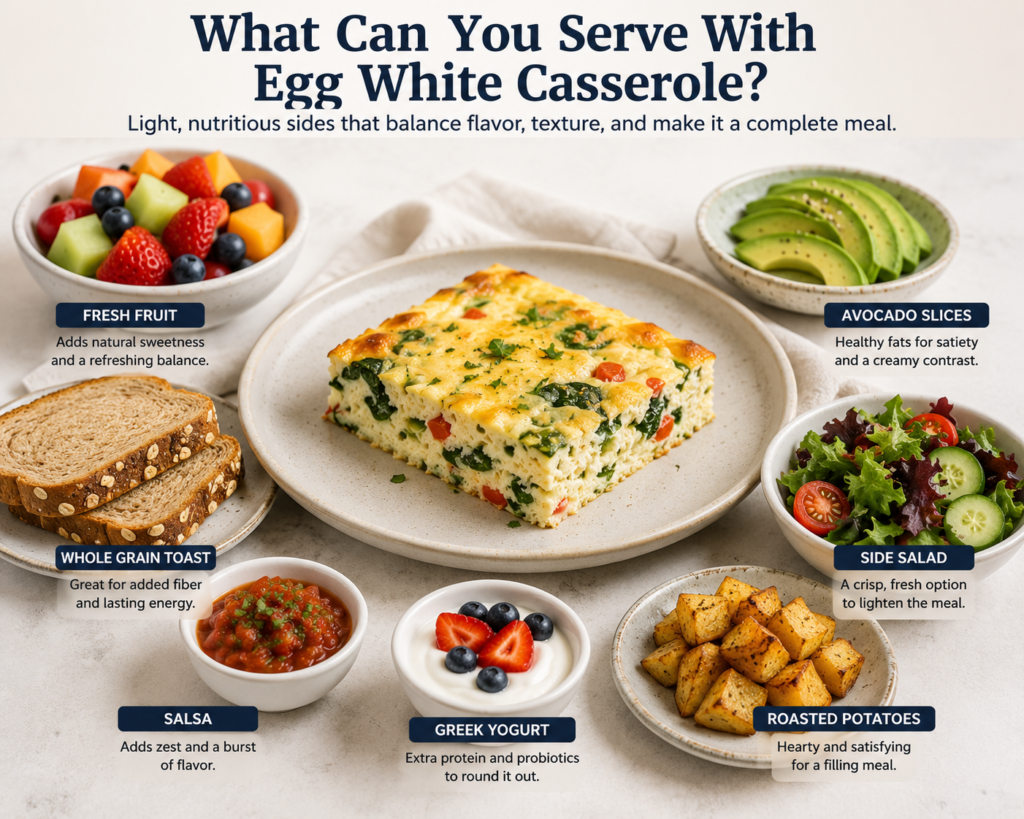
Serve egg white casserole with:
- Fresh berries
- Avocado and tomatoes
- Whole-grain toast
- Roasted potatoes
- Green salad
- Greek yoghurt
- Salsa or hot sauce
For brunch, combine it with fruit, toast, and roasted breakfast potatoes.
How Should You Store and Reheat It?
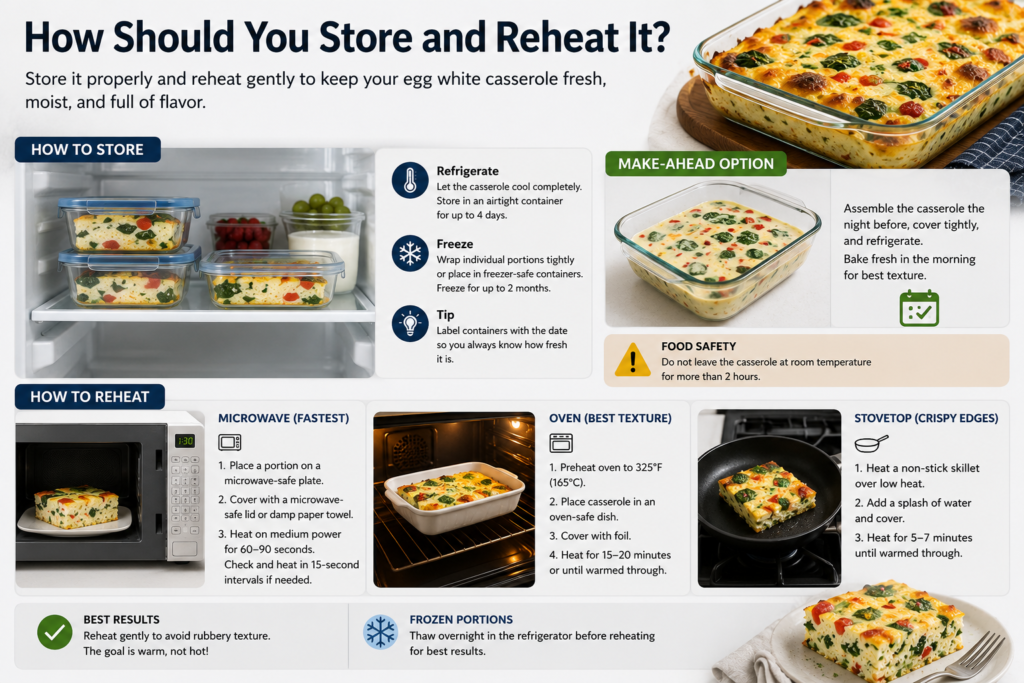
Let the casserole cool before placing it in airtight containers.
Store it in the refrigerator for up to three or four days. Individual slices can also be frozen for approximately two to three months.
Microwave
Cover one slice with a slightly damp paper towel and microwave in short intervals until hot.
Oven
Cover loosely and reheat at 325°F or 165°C.
Reheated leftovers should reach 165°F or 74°C.
Egg White Casserole Recipe card
Category: Breakfast
Cuisine: International
Preparation time: 15 minutes
Cooking time: 35 minutes
Total time: 50 minutes
Yield: 8 slicesngredients
Ingredients
- 2 teaspoons olive oil
- 1 small onion, finely diced
- 1 red bell pepper, finely diced
- 3 packed cups baby spinach
- 2 cups liquid egg whites
- ¾ cup cottage cheese
- 1 tablespoon cornstarch
- 1 teaspoon Dijon mustard
- ½ teaspoon garlic powder
- ½ teaspoon smoked paprika
- ¾ teaspoon salt
- ¼ teaspoon black pepper
- ¾ cup shredded cheddar or mozzarella
- 2 sliced spring onions, optional
Instructions
- Preheat the oven to 350°F or 180°C. Grease a 9-inch square baking dish.
- Heat the oil in a skillet over medium heat.
- Cook the onion and bell pepper for four to five minutes.
- Add the spinach and cook until wilted and no liquid remains.
- Let the vegetables cool for five minutes.
- Blend the egg whites, cottage cheese, cornstarch, mustard, garlic powder, paprika, salt, and pepper for about 10 seconds.
- Spread the vegetables in the baking dish.
- Pour the egg mixture over the vegetables.
- Sprinkle the shredded cheese on top.
- Bake for 32–38 minutes, until the centre is set.
- Confirm that the centre reaches 160°F or 71°C.
- Rest for 10 minutes before slicing.
Final Tips
- Cook vegetables until dry.
- Do not add unnecessary milk.
- Blend only until smooth.
- Avoid overbaking.
- Rest before slicing.
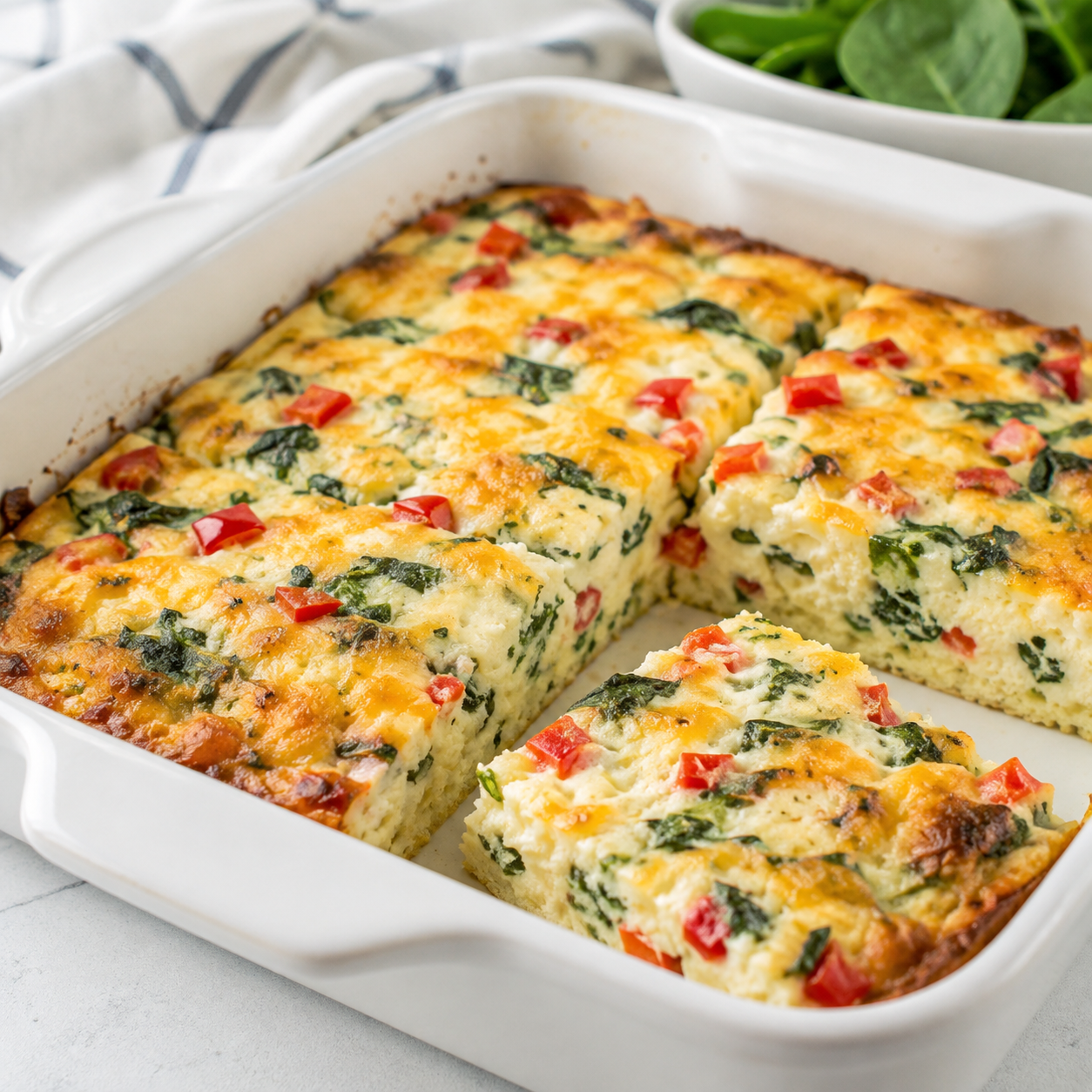
Egg White Casserole Recipe
Ingredients
Method
- 1. Preheat the ovenPreheat the oven to 350°F (180°C) and lightly grease a 9-inch square baking dish.2. Heat the oilHeat the olive oil in a skillet over medium heat.3. Cook the vegetablesAdd the diced onion and red bell pepper. Cook for about 4–5 minutes, until they begin to soften.4. Add the spinachAdd the baby spinach and cook until wilted. Continue cooking until there is no visible liquid left in the skillet.5. Cool the vegetablesRemove the skillet from the heat and let the vegetables cool for about 5 minutes.6. Prepare the egg mixtureAdd the egg whites, cottage cheese, cornstarch, Dijon mustard, garlic powder, smoked paprika, salt, and black pepper to a blender. Blend for about 10 seconds, just until smooth.7. Add vegetables to the dishSpread the cooked vegetables evenly across the prepared baking dish.8. Add egg mixturePour the egg white mixture evenly over the vegetables.9. Add cheeseSprinkle the shredded cheddar or mozzarella evenly over the top.10. BakeBake for 32–38 minutes, or until the edges are firm and the center is just set.11. Check donenessThe center should reach 160°F (71°C) and a knife inserted near the center should come out without raw egg mixture. 12. Rest and serveLet the casserole rest for 10 minutes before slicing into 8 portions.
Notes
- Cook the vegetables until the skillet looks dry to prevent a watery casserole.
- Avoid adding unnecessary milk or other liquid.
- Blend the egg mixture only until smooth; don’t whip too much air into it.
- Do not overbake, or the egg whites may become rubbery.
- Let the casserole rest before slicing so it sets properly.
- Carton egg whites work well; 2 cups are used for this recipe. Fresh egg whites can also be used—approximately 16 large egg whites.
Frequently Asked Questions
Is Egg White Casserole Healthy?
It can be a protein-rich breakfast containing vegetables and controlled amounts of cheese. Its nutritional value depends on the ingredients and serving size.
Can You Use Frozen Vegetables?
Yes. Thaw and cook them first, then remove as much moisture as possible.
Can You Add Potatoes?
Yes. Use cooked diced potatoes or thawed shredded potatoes. Raw potatoes may not cook before the eggs are ready.
Can You Use Fresh Egg Whites?
Yes. Separate approximately 16 large eggs or measure 2 cups of egg whites.
Why Did the Casserole Collapse?
The egg mixture may have contained too much air. Blend briefly rather than whipping it until foamy.
Can You Use a 9×13-Inch Pan?
Yes. The casserole will be thinner and will cook faster. Begin checking it after 22–25 minutes.
Can You Freeze Egg White Casserole?
Yes. Cool it completely, cut it into portions, wrap each slice, and freeze in an airtight container.
Is It Good for Meal Prep?
Yes. Individual slices can be refrigerated or frozen and reheated when needed.

I’m Tahira Ramzan, an experienced recipe creator and the founder of EggWhiteRecipes.com. I specialize in simple, practical egg white recipes made with everyday ingredients. My goal is to share easy-to-follow recipes, helpful cooking tips, and reliable methods that make home cooking easier and more enjoyable.