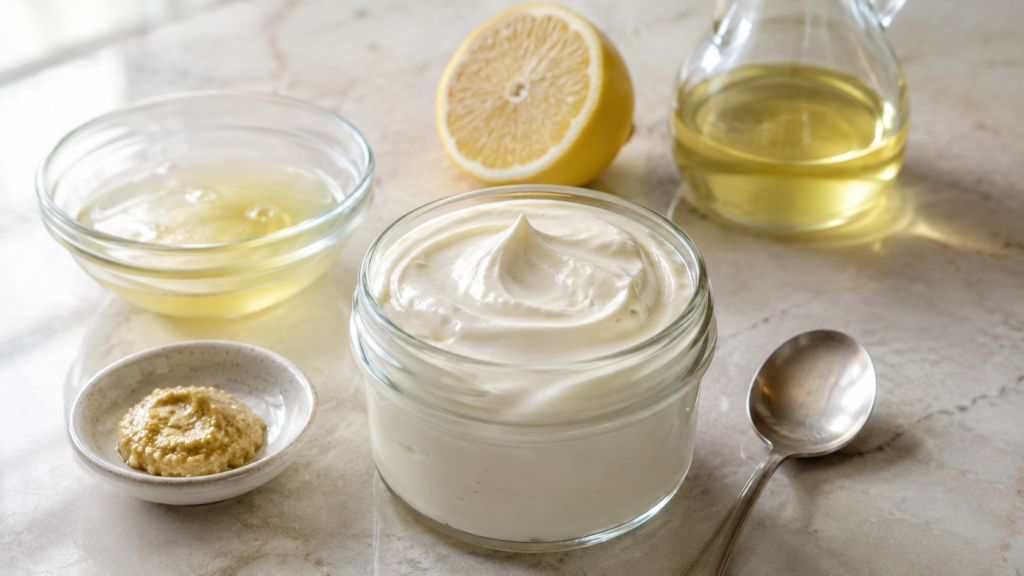
This egg white mayonnaise recipe turns one leftover egg white into about ⅔ cup of creamy homemade mayo. Blend pasteurised egg white with neutral oil, lemon juice, Dijon mustard, and salt for a smooth, bright-white mayonnaise ready in five minutes.
What Is Egg White Mayonnaise?
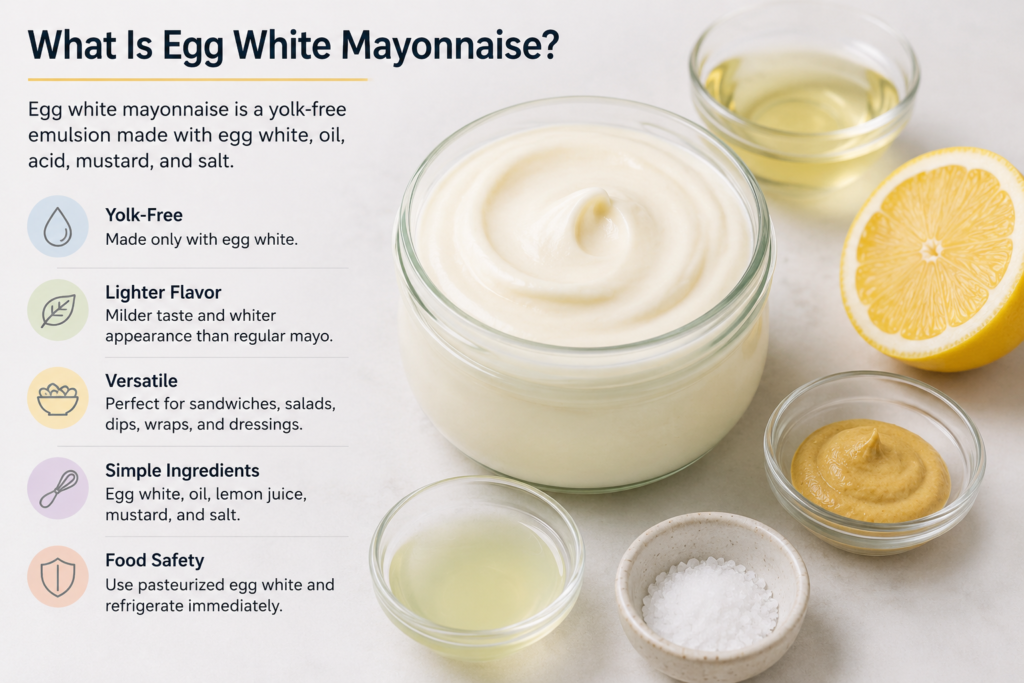
Egg white mayonnaise is a yolk-free emulsion made with egg white, oil, acid, mustard, and salt.
It has a lighter flavour and whiter appearance than traditional mayonnaise but still works well in sandwiches, salads, dips, wraps, and dressings.
It is dairy-free and yolk-free, but it is not suitable for people with an egg allergy.
Why Does This Recipe Work?
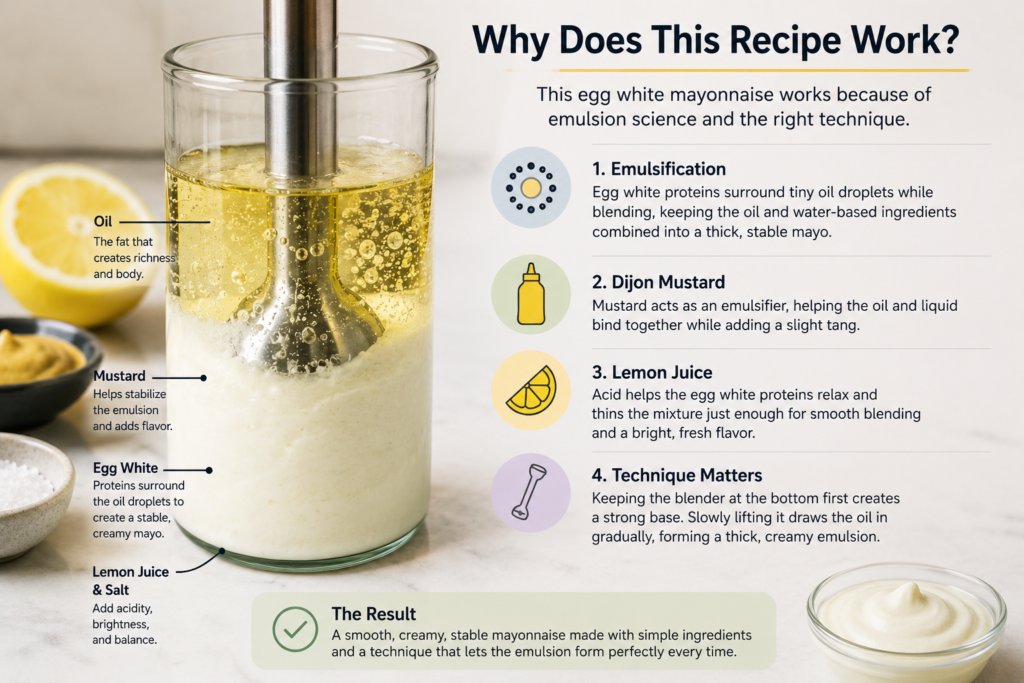
Egg white proteins help hold tiny oil droplets in a stable emulsion. Dijon mustard supports the emulsion, while lemon juice balances the richness.
The blending container also matters. A tall jar only slightly wider than the immersion blender keeps the ingredients close to the blade, helping the mayonnaise thicken quickly.
Which Ingredients Do You Need?
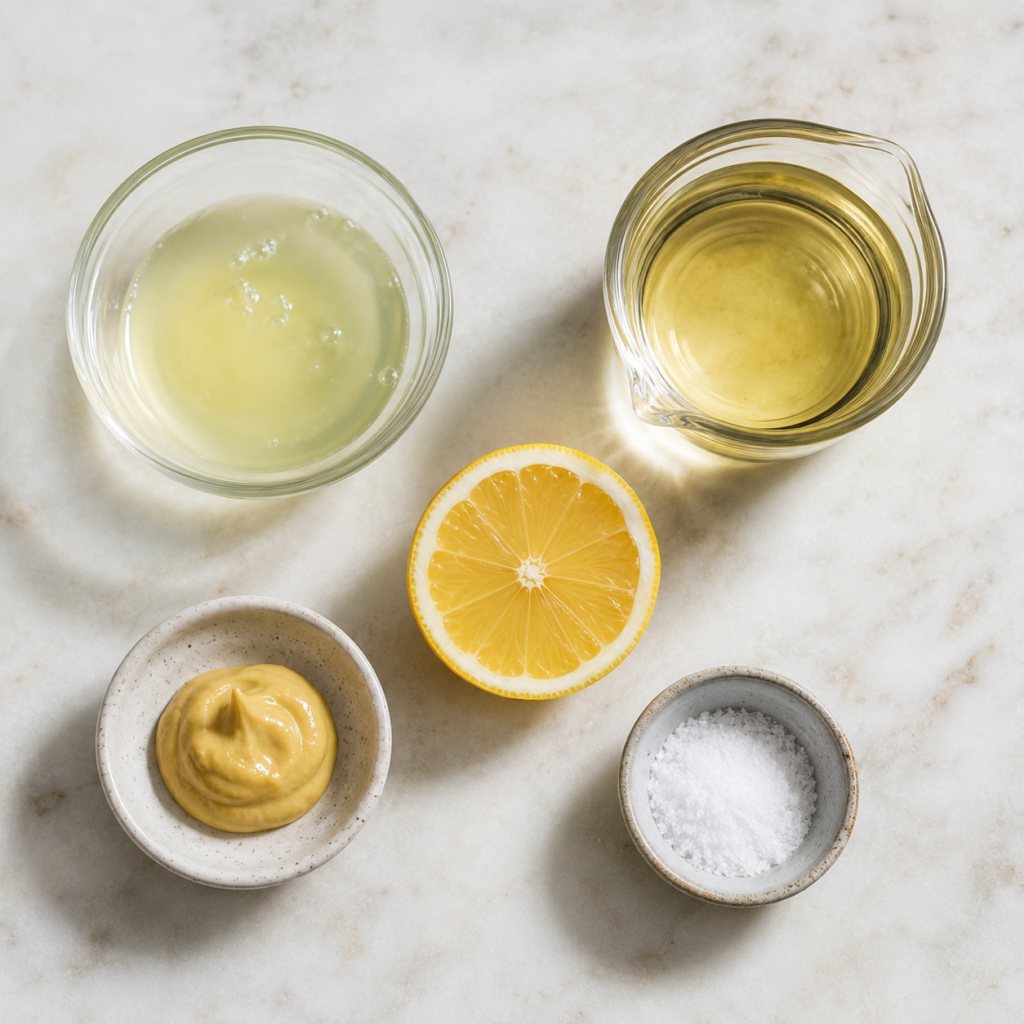
You need five basic ingredients:
- Pasteurised egg white: Use one large egg white or about 30 grams.
- Neutral oil: Sunflower, canola, grapeseed, safflower, or mild avocado oil works well.
- Lemon juice: Adds acidity and freshness.
- Dijon mustard: Improves flavour and stability.
- Fine salt: Seasons the mayonnaise evenly.
Avoid using only strong extra-virgin olive oil because high-speed blending can produce a bitter flavour.
What Is the Best Egg-White-to-Oil Ratio?
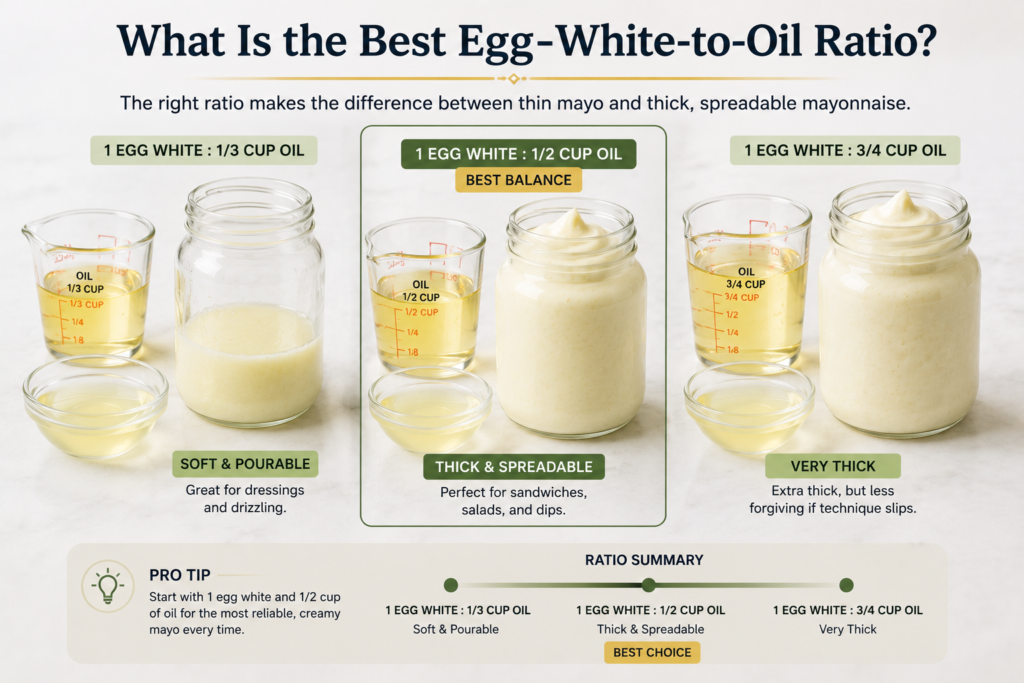
Use one large egg white with ½ cup or 100 grams of neutral oil.
This ratio creates thick, spreadable mayonnaise without overwhelming the egg white with too much oil.
| Egg white | Oil | Result |
|---|---|---|
| 30 g | ⅓ cup | Soft, dressing-like mayo |
| 30 g | ½ cup | Thick, spreadable mayo |
| 30 g | ¾ cup | Very thick and less forgiving |
For the most reliable small batch, begin with ½ cup of oil.
How Do You Make Egg White Mayonnaise?
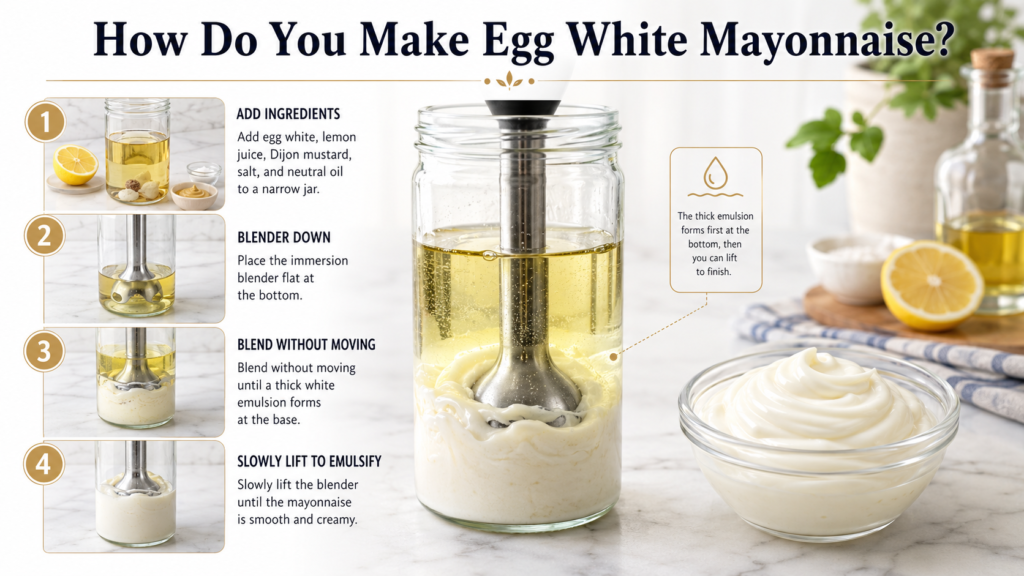
Add all the ingredients to a narrow blending jar. Place the immersion blender flat against the bottom and blend without moving it.
Once a thick white layer forms, slowly lift the blender to incorporate the remaining oil.
Step-by-Step Method
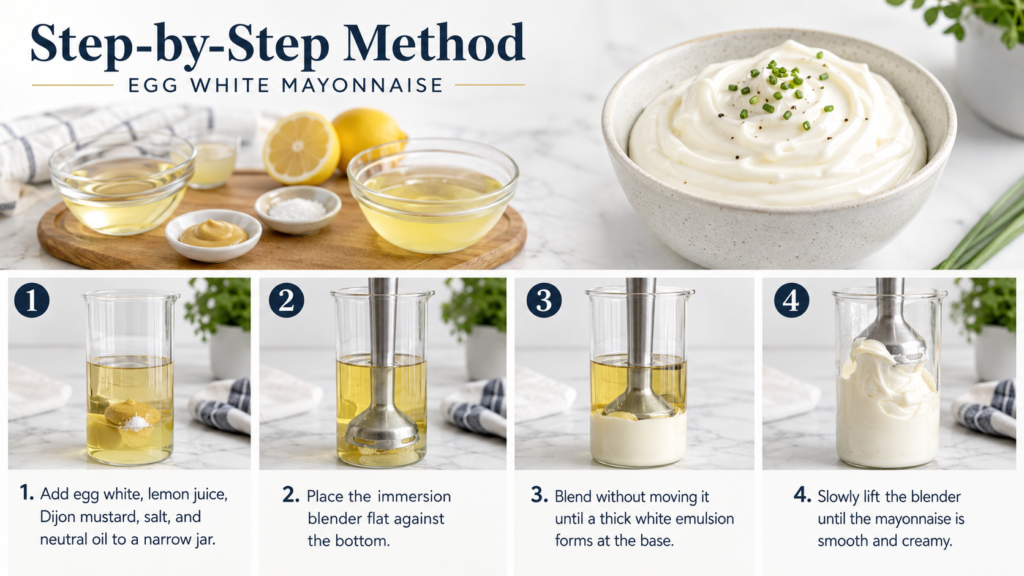
- Add the pasteurised egg white to a narrow jar.
- Add lemon juice, Dijon mustard, and salt.
- Pour in the neutral oil.
- Place the blender firmly against the bottom.
- Blend for 10–15 seconds without lifting it.
- Slowly raise the blender through the remaining oil.
- Stop blending once the mayonnaise is smooth.
- Taste, adjust the seasoning, and refrigerate immediately.
Do not lift the blender too early. The emulsion must begin forming at the bottom first.
Can You Make It Without an Immersion Blender?
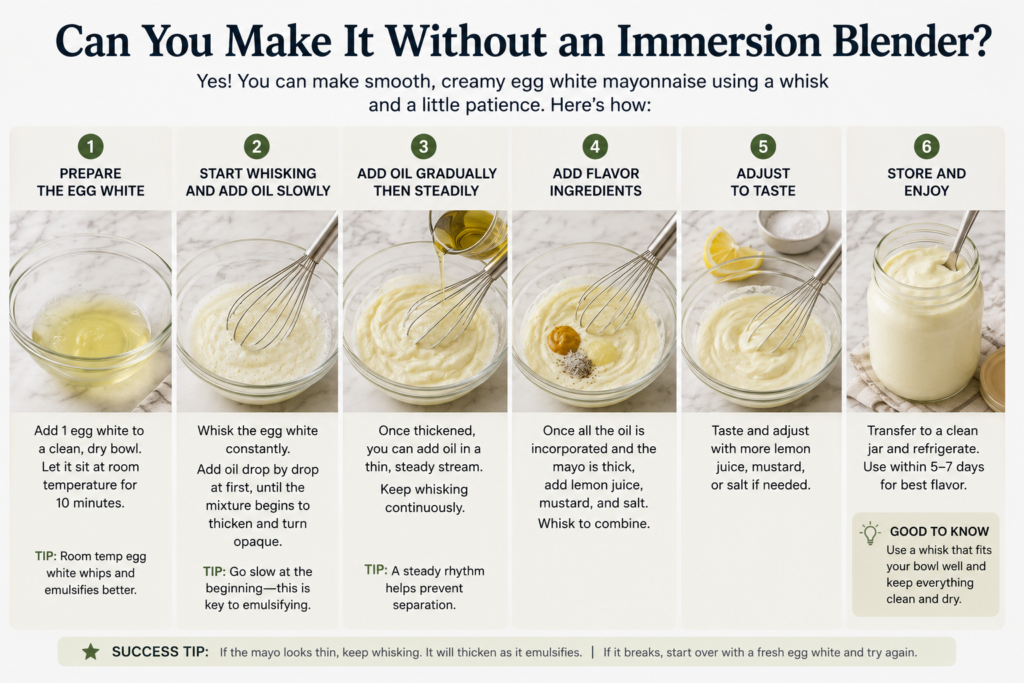
Yes, but the oil must be added gradually.
Whisk or blend the egg white, lemon juice, mustard, and salt first. Add the oil one teaspoon at a time until the mixture begins to thicken, then pour it in using a slow, thin stream.
A full-size blender may struggle with a single batch, so double the ingredients when necessary.
Why Did the Mayonnaise Stay Thin?
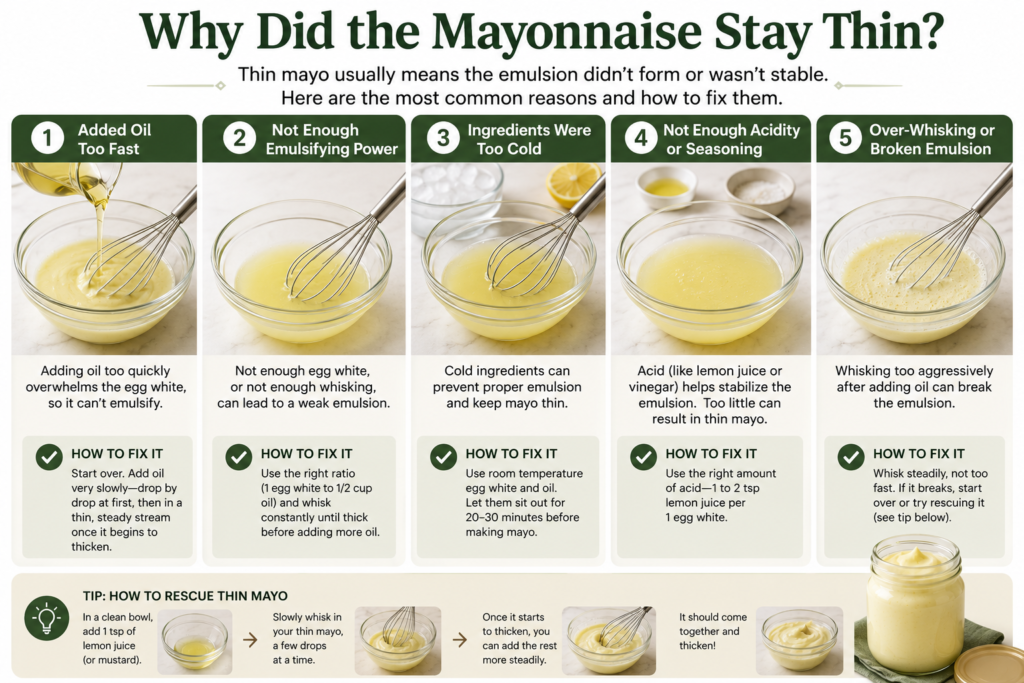
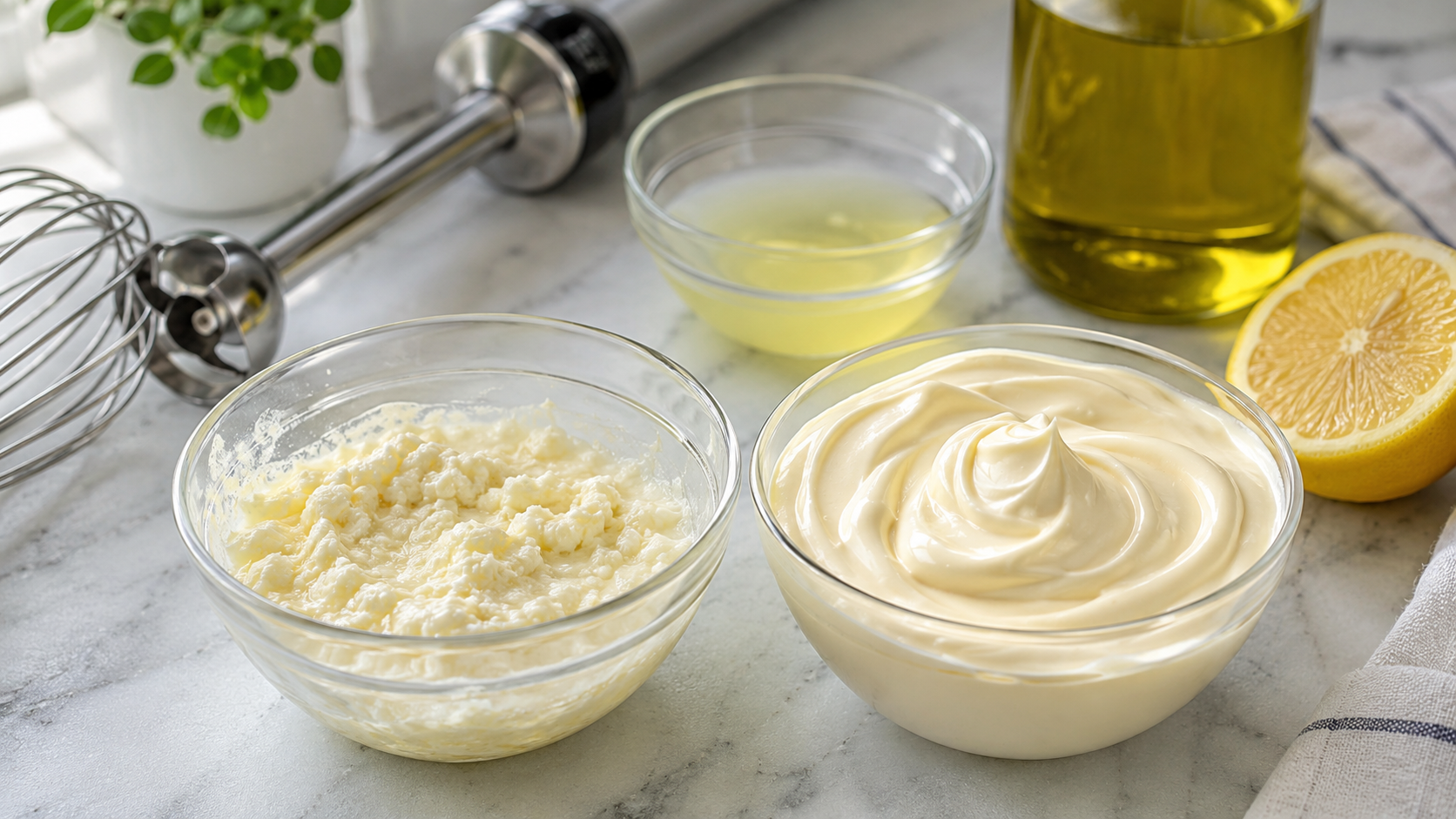
Thin egg white mayonnaise usually results from incorrect blending or too little oil.
| Problem | Likely cause | Solution |
| Completely liquid | Blender lifted too early | Return it to the bottom and blend again |
| Slightly thin | Insufficient oil | Add oil one tablespoon at a time |
| Oil remains on top | Incomplete blending | Slowly lift the running blender |
| Mayo splits | Oil added too quickly | Start a new emulsion and add the broken mayo gradually |
| Bitter flavour | Strong olive oil | Use a neutral oil |
Do not add water when trying to thicken mayonnaise. It will usually make the mixture thinner.
How Do You Fix Broken Egg White Mayonnaise?
Add one teaspoon of Dijon mustard and one teaspoon of lemon juice to a clean jar.
Start blending, then slowly add the broken mayonnaise one spoonful at a time. Once it begins to thicken, add the remaining mixture in a thin stream.
This creates a fresh emulsion and gradually absorbs the failed batch.
Can You Use Carton Egg Whites?
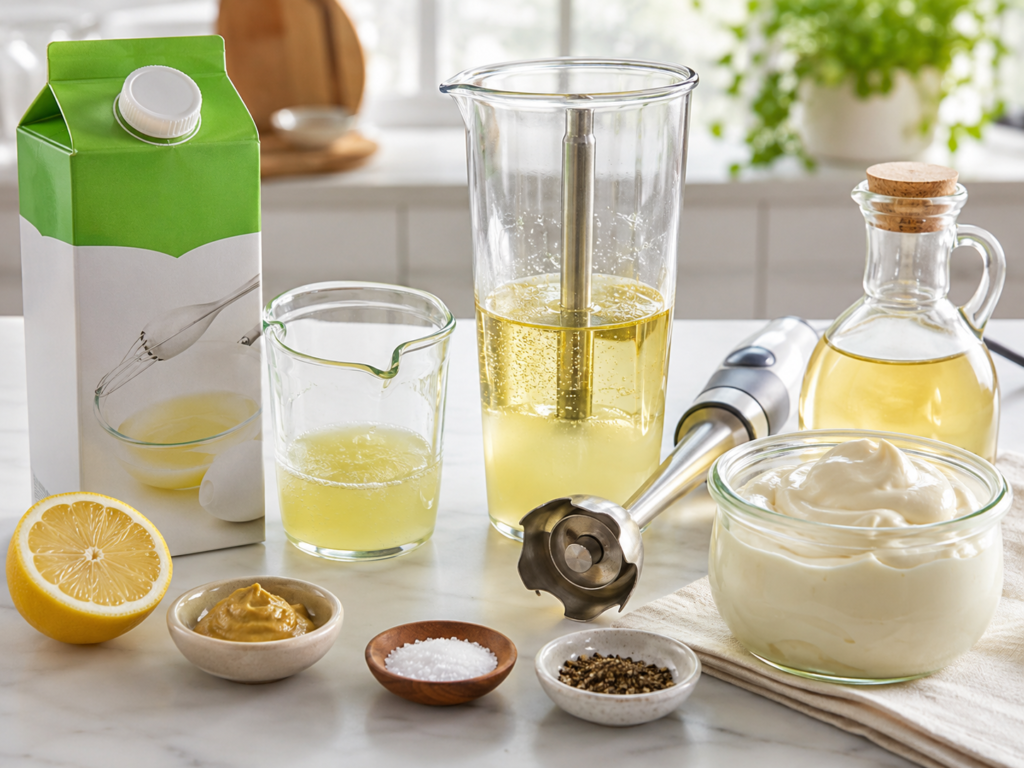
Yes. Pasteurised carton egg whites are a practical choice because the mayonnaise is not cooked.
Measure approximately two tablespoons or 30 grams. Check the carton because egg-size equivalents may vary between brands.
Products containing small amounts of stabilisers can still work, although the final texture may be slightly thicker.
Is Homemade Egg White Mayonnaise Safe?
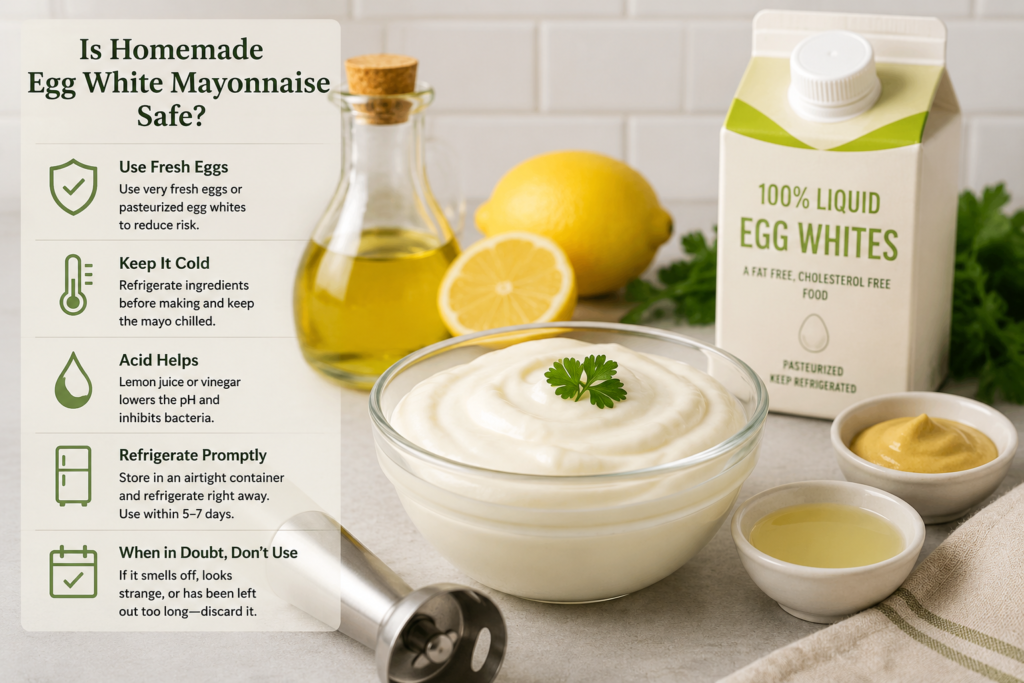
Use pasteurised egg white because the recipe is served without cooking.
Follow these precautions:
- Use clean jars, utensils, and equipment.
- Refrigerate the mayo immediately.
- Store it at 4°C or 40°F or colder.
- Always use a clean spoon.
- Do not leave it at room temperature for more than two hours.
- Reduce that limit to one hour in temperatures above 32°C or 90°F.
People who are pregnant, elderly, immunocompromised, or very young should be especially careful with uncooked egg recipes.
How Long Does Egg White Mayonnaise Last?
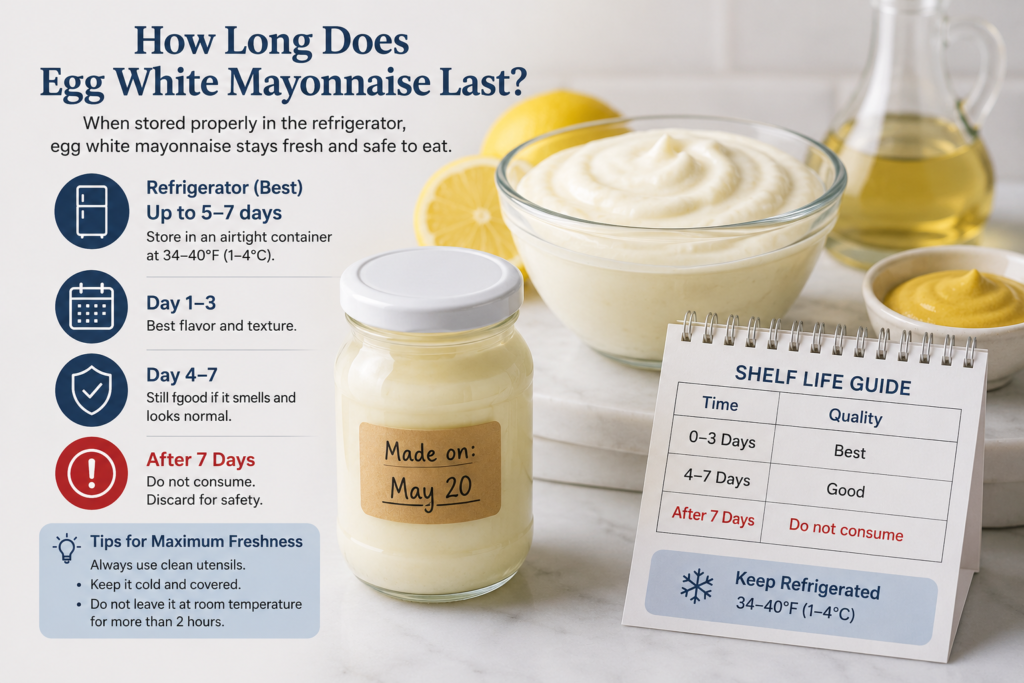
Store homemade egg white mayonnaise in a sealed container and use it within three days.
Its storage life depends on the freshness of the ingredients, refrigerator temperature, cleanliness, and acidity.
Do not treat homemade mayonnaise like a shelf-stable commercial product. It has not undergone commercial pasteurisation or acidity testing.
Freezing is not recommended because the emulsion usually separates after thawing.
Which Variations Work Best?
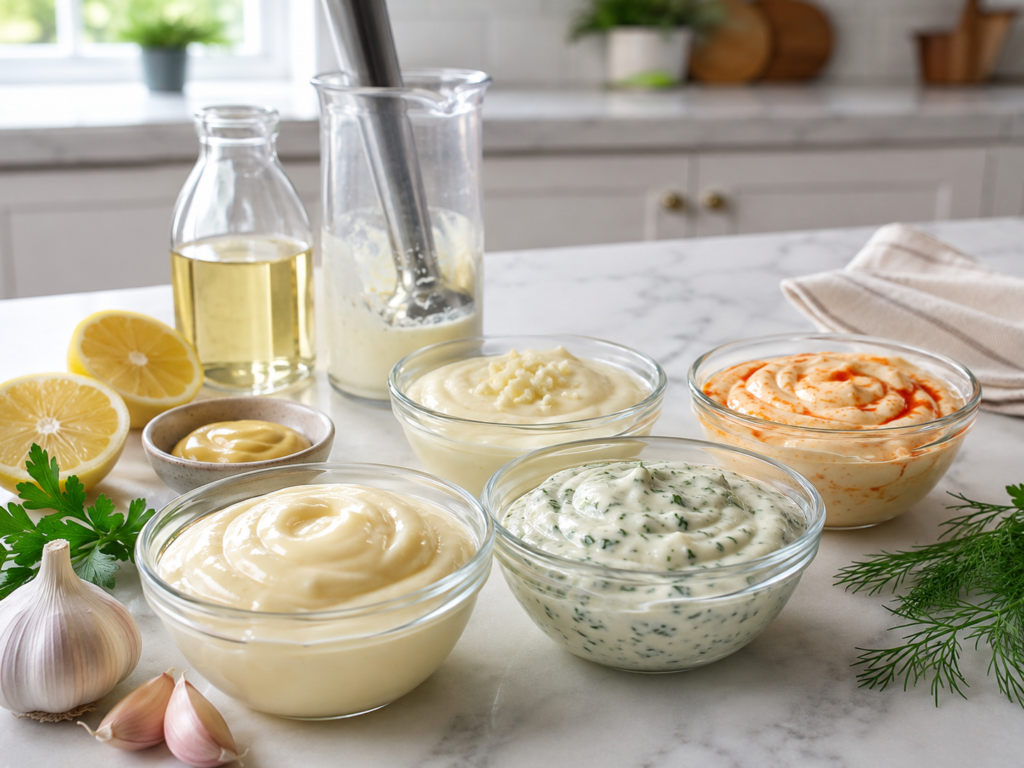
Add flavourings after the mayonnaise has fully thickened.
Garlic Mayonnaise
Blend in one small grated garlic clove and an extra squeeze of lemon.
Spicy Mayonnaise
Mix in sriracha, chilli sauce, or chipotle paste.
Herb Mayonnaise
Add finely chopped parsley, dill, basil, or chives.
Lemon-Pepper Mayonnaise
Stir in lemon zest and freshly ground black pepper.
Pickle Mayonnaise
Add finely chopped pickles and a small amount of pickle brine.
Avoid adding too much watery liquid because it can loosen the texture.
What Can You Serve With It?
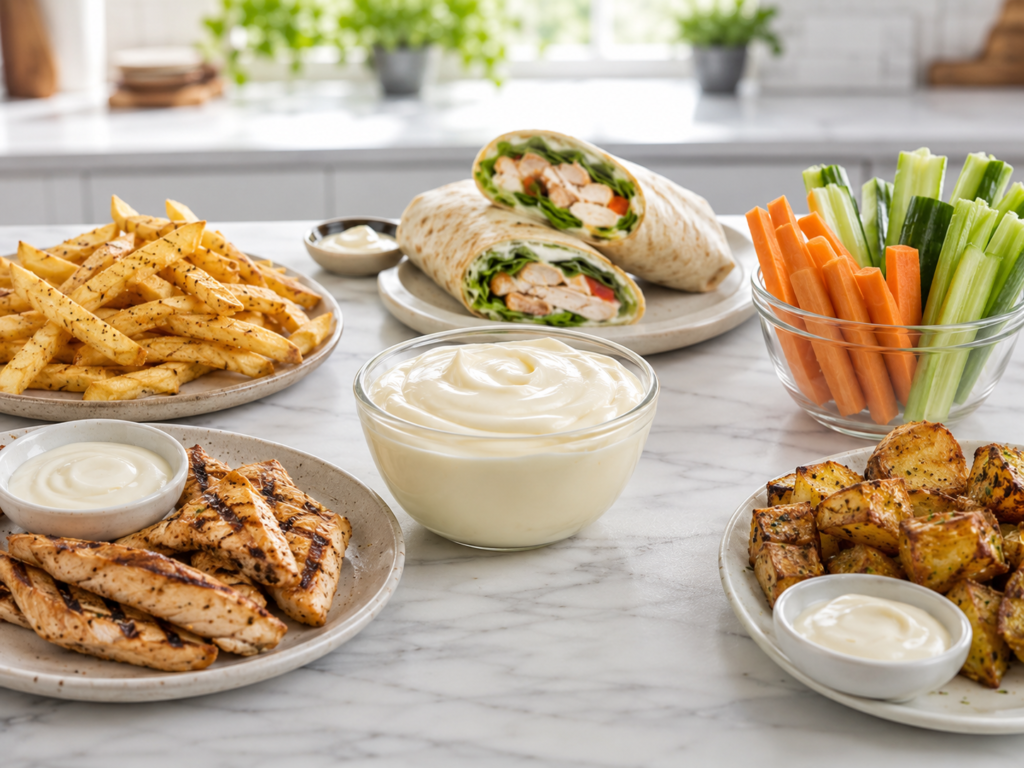
Egg white mayonnaise works well with:
- Sandwiches and wraps
- Burgers
- Chicken or tuna salad
- Potato salad
- Coleslaw
- Roasted vegetables
- Fish cakes
- Fries and potato wedges
- Salad dressings
- Garlic or chilli dips
Its mild flavour makes it easy to pair with herbs, spices, pickles, and hot sauces.
Egg White Mayonnaise Recipe Card
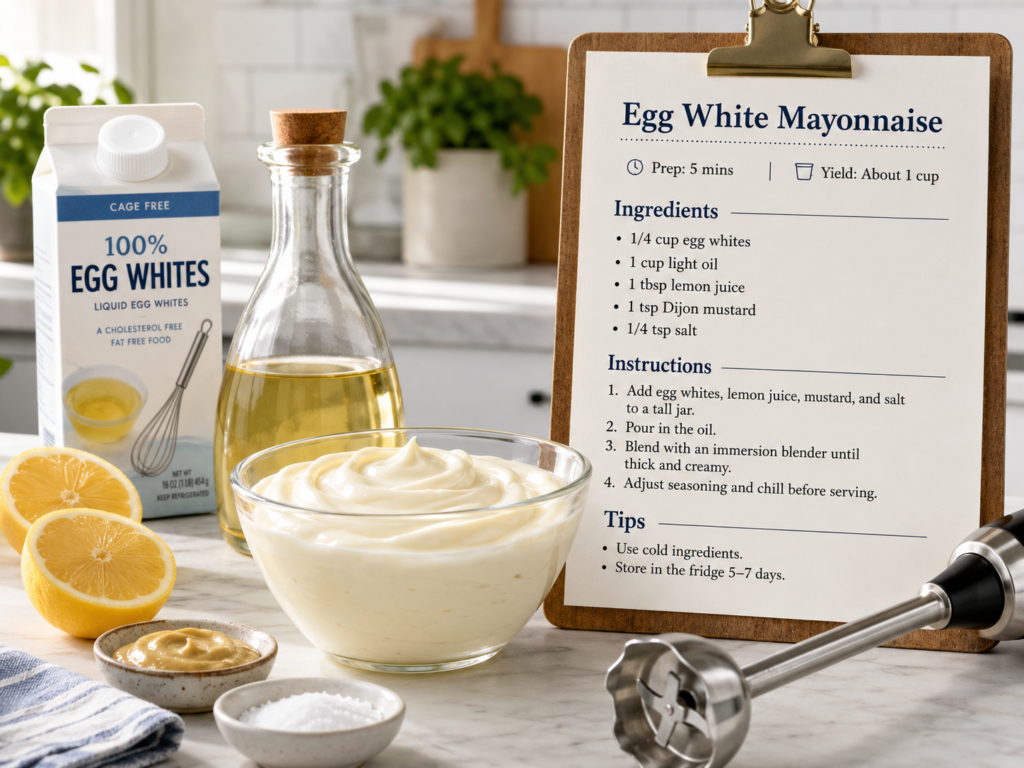
Preparation time: 5 minutes
Total time: 5 minutes
Yield: About ⅔ cup
Method: Immersion blender
Cuisine: International
Ingredients
- 1 large pasteurised egg white, about 30 g
- ½ cup neutral oil, about 100 g
- 1 tablespoon fresh lemon juice
- 1 teaspoon Dijon mustard
- ¼ teaspoon fine salt
Instructions
- Add the egg white, lemon juice, mustard, salt, and oil to a narrow blending jar.
- Place the immersion blender flat against the bottom.
- Blend for 10–15 seconds without moving it.
- Once a thick layer forms, slowly lift the blender.
- Continue until all the oil is incorporated.
- Taste and adjust the seasoning.
- Transfer to a clean container and refrigerate immediately.
- Use within three days.
Final Tips
- Use pasteurised egg white.
- Choose a neutral-flavoured oil.
- Keep the blender at the bottom initially.
- Use a jar only slightly wider than the blender.
- Add flavourings after the mayo thickens.
- Double the recipe for a large food processor.
Egg White Mayonnaise Recipe
Ingredients
Method
- Add the egg white, lemon juice, mustard, salt, and oil to a narrow blending jar.
- Place the immersion blender flat against the bottom.
- Blend for 10–15 seconds without moving it.
- Once a thick layer forms, slowly lift the blender.
- Continue until all the oil is incorporated.
- Taste and adjust the seasoning.
- Transfer to a clean container and refrigerate immediately.
- Use within three days.
Notes
- Use pasteurised egg white because the mayonnaise is not cooked.
- Use a neutral-flavoured oil such as sunflower, canola, grapeseed, safflower, or mild avocado oil.
- Keep the immersion blender at the bottom during the first few seconds so the emulsion can form.
- A jar only slightly wider than the immersion blender works best.
- Avoid strong extra-virgin olive oil because high-speed blending can make it taste bitter.
- Add garlic, herbs, chilli sauce, or other flavourings after the mayonnaise has thickened.
- Keep refrigerated at 40°F / 4°C or colder.
Frequently Asked Questions
Does egg white mayonnaise taste like regular mayonnaise?
It has a lighter and more neutral flavour because it does not contain rich egg yolks.
Is egg white mayonnaise low in fat?
No. Most of the fat and calories in mayonnaise come from the oil rather than the yolk.
Why is egg white mayonnaise white?
It does not contain yellow yolk pigments, and the emulsified oil droplets create an opaque white appearance.
Can you use olive oil?
Mild olive oil can work, but strong extra-virgin olive oil may become bitter during blending.
Can you leave out the mustard?
You can, but the mayonnaise may be thinner and less stable.
Can you use frozen egg whites?
Yes. Thaw them completely in the refrigerator before measuring and blending.
Can you make mayonnaise with cooked egg whites?
Cooked whites can make a creamy blended spread, but they will not create the same classic mayonnaise emulsion.
Why does the mayonnaise thicken in the fridge?
The oil and proteins become firmer at lower temperatures. Stir briefly before serving.

I’m Tahira Ramzan, an experienced recipe creator and the founder of EggWhiteRecipes.com. I specialize in simple, practical egg white recipes made with everyday ingredients. My goal is to share easy-to-follow recipes, helpful cooking tips, and reliable methods that make home cooking easier and more enjoyable.