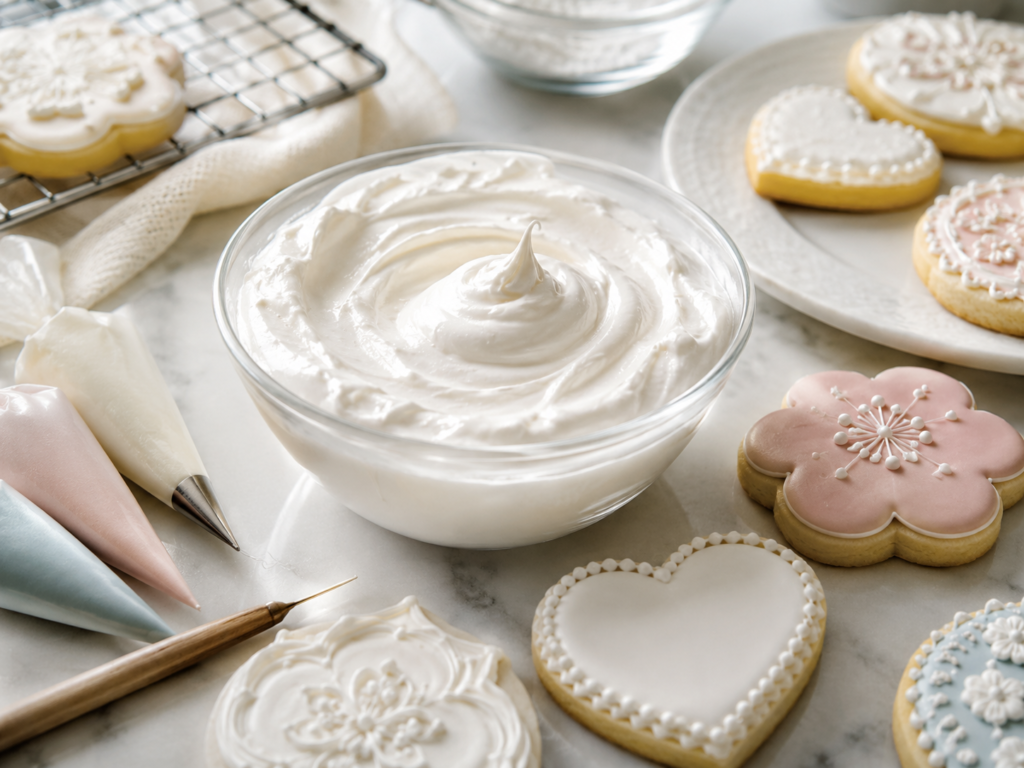
This royal icing egg whites recipe creates a smooth, glossy icing that dries firm enough for decorating sugar cookies, gingerbread, and detailed edible designs. It uses pasteurized egg whites, powdered sugar, lemon juice, and optional flavoring.
The icing can be kept thick for flowers and borders or thinned with a few drops of water for flooding cookies. The key is to begin with stiff icing and adjust the consistency gradually.
What Is Royal Icing With Egg Whites?
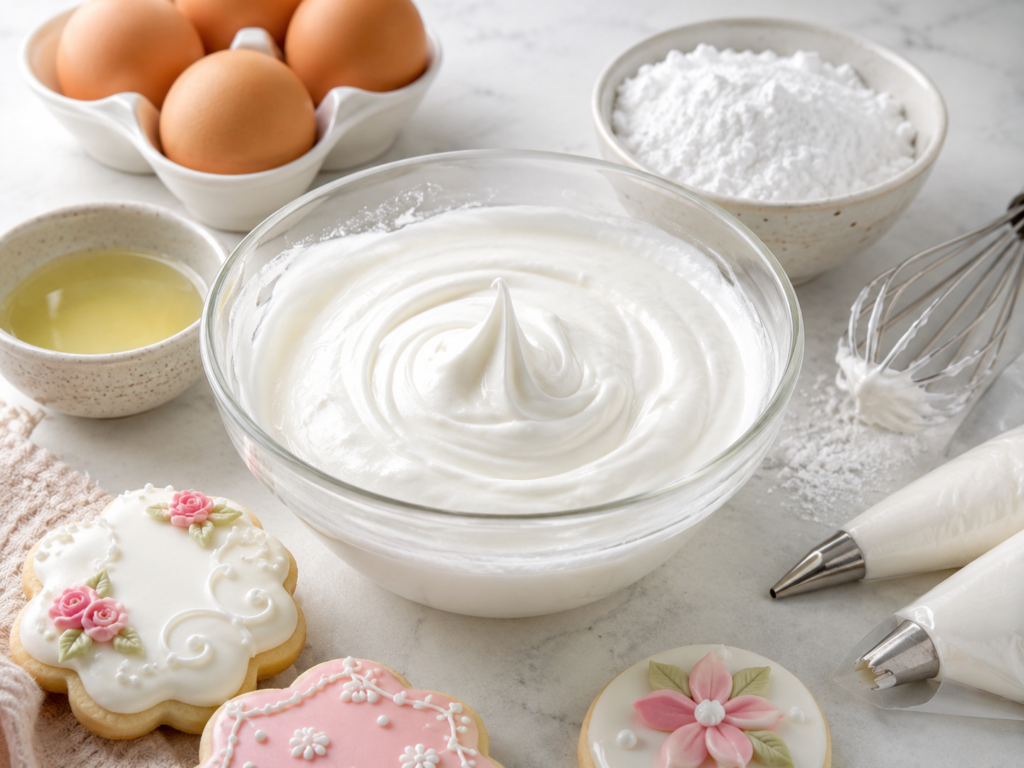
Royal icing is a firm-drying icing made primarily from egg whites and powdered sugar. Unlike buttercream, it contains no butter or shortening, so it dries into a smooth, hard surface.
Egg-white proteins provide structure, while powdered sugar gives the icing sweetness, thickness, and stability. Royal icing is commonly used for:
- Outlining sugar cookies
- Flooding cookie interiors
- Writing names and messages
- Piping flowers and leaves
- Decorating gingerbread houses
- Creating edible cake decorations
Because the icing dries firmly, decorated cookies can usually be packaged or stacked once they are completely dry.
Is Royal Icing With Egg Whites Safe?
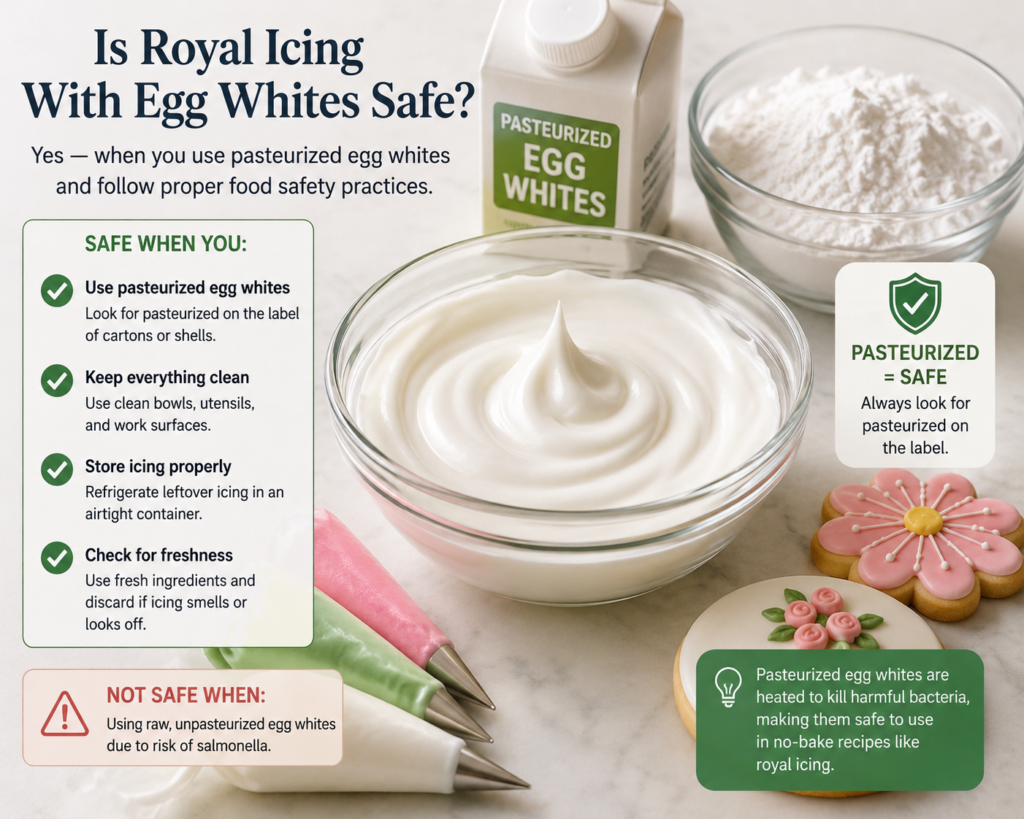
Royal icing is not normally cooked after mixing, so pasteurized egg whites are the safest choice. You can use pasteurized shell eggs or pasteurized liquid egg whites from a carton.
Check the packaging carefully. The label should clearly state that the egg whites are pasteurized. Avoid products sold as egg substitutes because they may contain ingredients that affect whipping and drying.
For this recipe, you can use:
- Three pasteurized shell egg whites
- About 90 grams of pasteurized carton egg whites
- Approximately six tablespoons of liquid egg whites
Always follow the storage instructions printed on the egg-white package.
What Ingredients Do You Need?
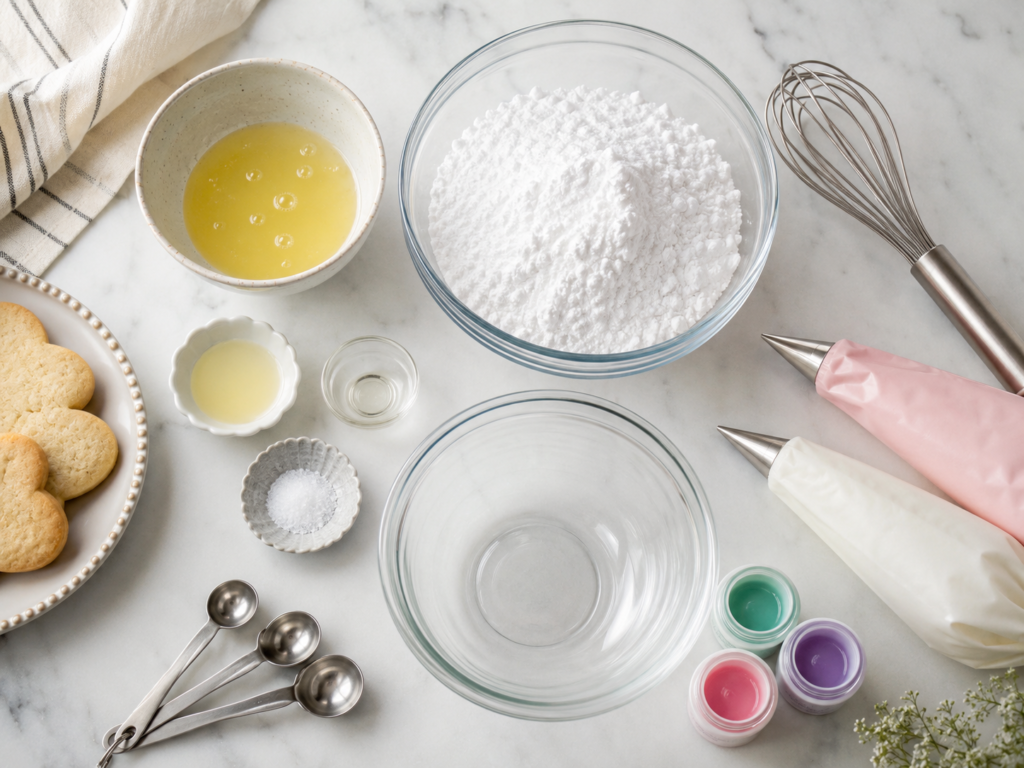
You only need a few simple ingredients to make reliable royal icing.
Ingredients
- 3 large pasteurized egg whites, about 90 grams
- 4 cups powdered sugar, about 480 grams
- 2 teaspoons lemon juice
- ½ teaspoon clear vanilla or almond extract, optional
- Small pinch of fine salt
- Gel food coloring, optional
- Water for thinning
Powdered sugar forms the body of the icing. Sifting it before mixing helps prevent lumps that can block small piping tips.
Lemon juice balances the sweetness and adds a light flavor. Clear vanilla is useful when you want the icing to remain bright white.
Can You Use Carton Egg Whites?
Yes, pasteurized carton egg whites can be used in royal icing. They are convenient, easy to measure, and eliminate the need to separate whole eggs.
For the most consistent result, measure carton whites by weight. Use about 30 grams for each large egg white.
However, carton products can vary. Some contain stabilizers or added ingredients that reduce their ability to whip. Choose a product that lists egg whites as the main ingredient and is suitable for whipping.
If the icing seems thin after mixing, add more sifted powdered sugar one tablespoon at a time.
How Do You Make Royal Icing With Egg Whites?
Start with a clean, dry mixing bowl. Any grease left in the bowl can interfere with the egg whites and prevent the icing from developing the correct structure.
Instructions
- Add the pasteurized egg whites and lemon juice to a mixing bowl.
- Mix on low speed until lightly foamy.
- Add the sifted powdered sugar gradually.
- Continue mixing on low until the sugar is incorporated.
- Add the salt and optional flavoring.
- Increase the mixer to medium-low speed.
- Beat for three to five minutes until thick and glossy.
- Stop when the icing forms firm peaks.
- Cover the bowl immediately with plastic wrap or a damp towel.
Avoid whipping at maximum speed. High-speed mixing can trap too much air and produce bubbles in decorated cookies.
The finished base icing should be thick. It is easier to thin stiff icing than to repair icing that has become too runny.
What Consistency Should Royal Icing Have?
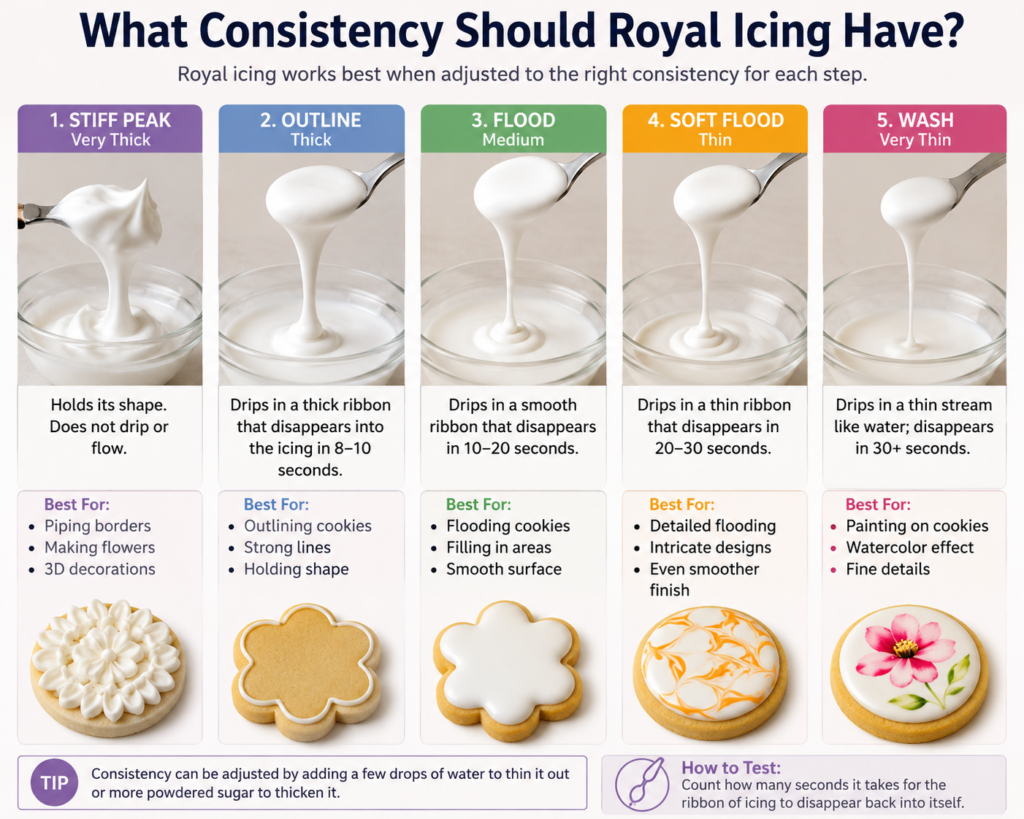
The correct consistency depends on how you plan to use the icing. One batch can be divided and adjusted for several decorating techniques.
Stiff Consistency
Stiff icing forms a peak that remains upright. It works best for:
- Flowers
- Leaves
- Rosettes
- Gingerbread construction
- Raised decorations
Piping Consistency
Piping icing should hold a clean line without breaking. Use it for:
- Cookie outlines
- Lettering
- Borders
- Fine details
Medium Consistency
Medium icing slowly softens after piping but does not spread quickly. It is useful for simple outline-and-fill decorating.
Flood Consistency
Flood icing should flow smoothly and settle into a flat surface. It is used to fill the inside of an outlined cookie.
Always test the icing before filling a piping bag. A small adjustment can make a major difference.
How Do You Make Flood Icing?
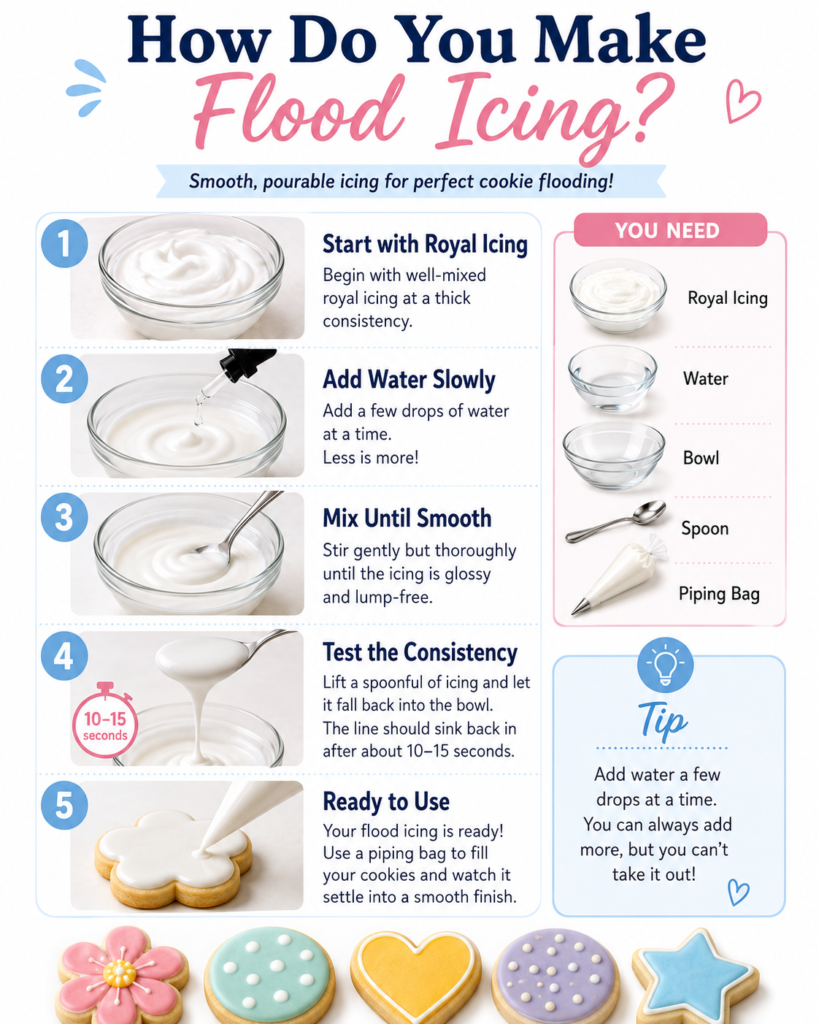
Place some stiff royal icing in a separate bowl. Add water very gradually, preferably a few drops or about ¼ teaspoon at a time.
Stir slowly after each addition. Lift the spoon and allow a ribbon of icing to fall back into the bowl. The ribbon should gradually disappear into the surface without becoming watery.
Follow these rules:
- Add less water than you think you need.
- Wait after each addition before adding more.
- Stir instead of whipping.
- Use the thickest icing that still levels smoothly.
- Test the icing on one cookie first.
If flood icing becomes too thin, add sifted powdered sugar one tablespoon at a time.
How Do You Color Royal Icing?
Gel food coloring is the best option because it provides strong color without adding much liquid. Regular liquid food coloring can make royal icing too thin.
Divide the icing into separate bowls before adding color. Add a small amount of gel coloring with a toothpick, then stir gently.
For better results:
- Add color gradually.
- Keep each bowl covered.
- Allow dark colors time to deepen.
- Reserve some white icing for corrections.
- Avoid adding excessive coloring.
Deep shades such as red, navy, and black may become darker after resting.
How Do You Decorate Cookies?
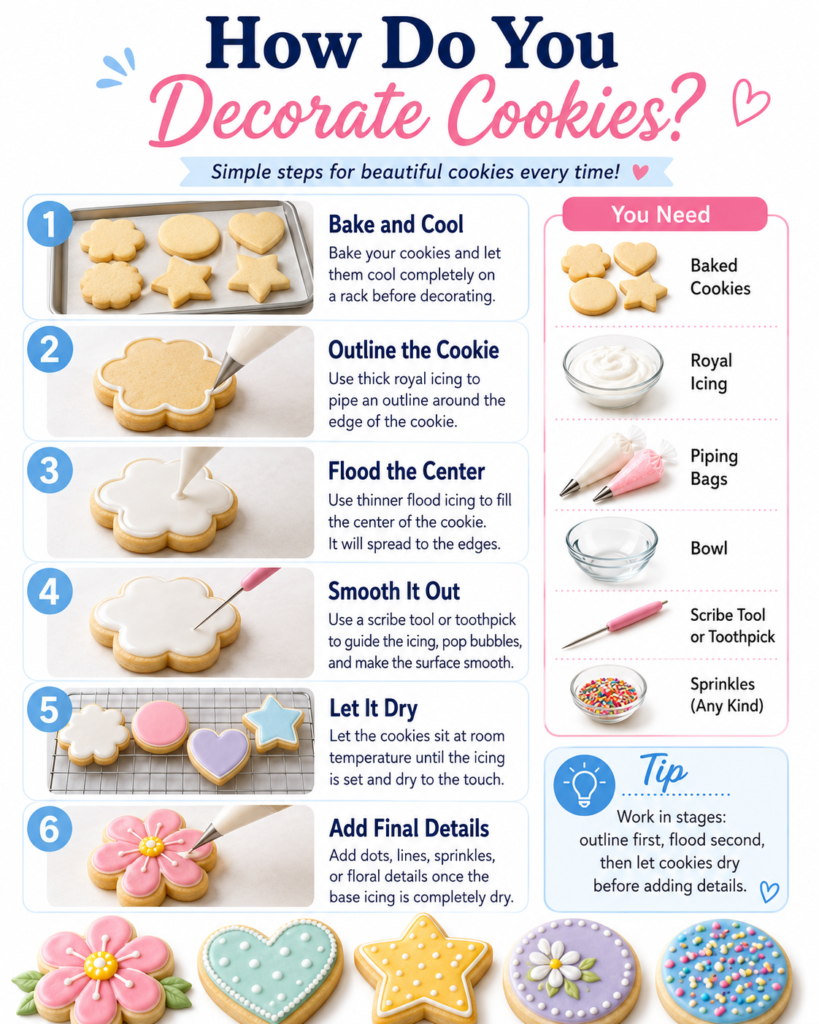
Cookies must be completely cool before icing. Warm cookies can melt the icing or prevent it from drying correctly.
Start by filling one piping bag with outlining icing and another with flood icing.
Decorating Steps
- Pipe a border around the cookie.
- Allow the border to settle briefly.
- Add flood icing inside the outline.
- Use a toothpick to guide icing into corners.
- Pop visible air bubbles.
- Let the base layer begin to set.
- Add lettering, lines, or decorative details.
- Leave the cookies uncovered until fully dry.
Do not stack or package cookies while the icing is still soft. Even a dry-looking surface may remain wet underneath.
How Long Does Royal Icing Take to Dry?
Royal icing usually develops a surface crust within a few hours, but fully flooded cookies often need much longer to dry completely.
Drying time depends on:
- Icing thickness
- Room humidity
- Air circulation
- Amount of food coloring
- Number of icing layers
- Cookie size
For the best results, leave decorated cookies at room temperature until the icing is fully firm. Thick designs are often best left overnight before stacking.
In humid conditions, use slightly thicker flood icing and allow additional drying time. Gentle airflow can help, but avoid strong heat.
Why Is Royal Icing Too Runny?
Runny icing usually contains too much liquid. This may come from egg whites, water, flavoring, lemon juice, or liquid food coloring.
Add sifted powdered sugar one tablespoon at a time until the icing reaches the desired consistency. Mix slowly to avoid introducing additional air.
If the icing is only slightly thin, allow it to rest for a few minutes before making a large adjustment.
Why Is Royal Icing Too Stiff?
Royal icing becomes stiff when it contains too much powdered sugar or has been exposed to air for too long.
Add water one or two drops at a time and stir after each addition. Do not pour water directly into the bowl because the consistency can change very quickly.
Keep unused icing covered at all times to prevent the surface from forming a crust.
Why Does Royal Icing Have Air Bubbles?
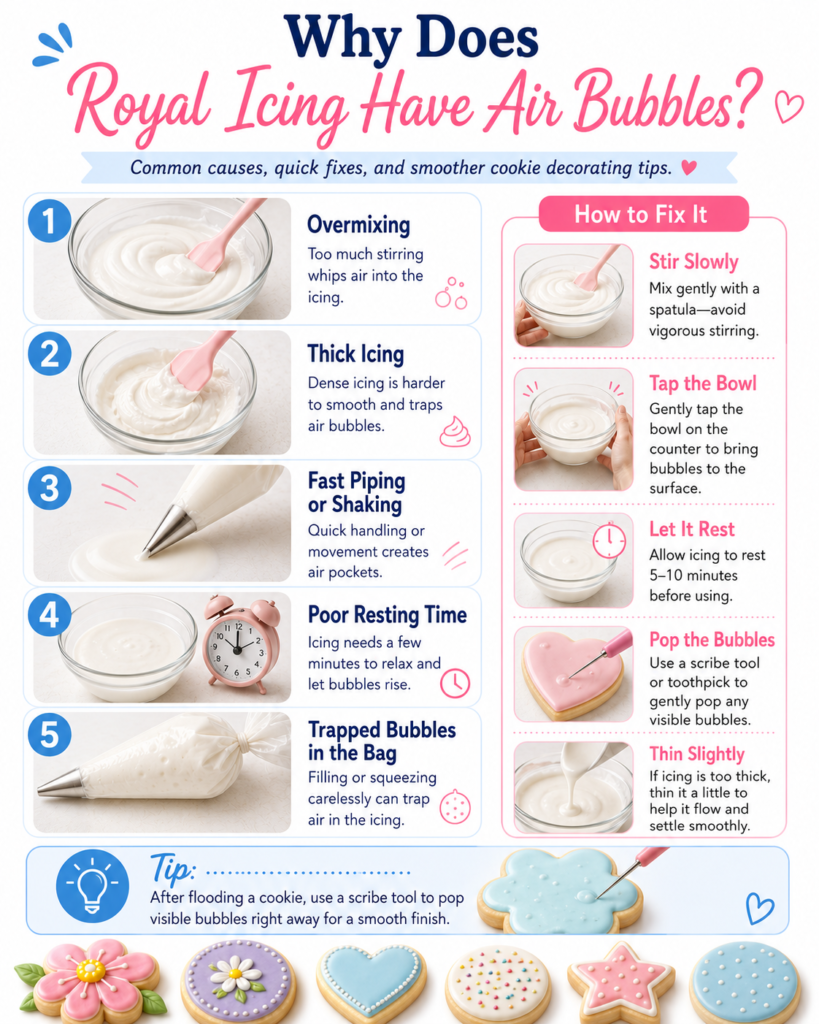
Air bubbles are commonly caused by mixing at high speed or stirring too aggressively after thinning.
To reduce bubbles:
- Mix on medium-low speed.
- Stir flood icing slowly.
- Let thinned icing rest briefly.
- Pop visible bubbles with a toothpick.
- Avoid shaking filled piping bags.
You can also gently massage the piping bag before decorating to move trapped air toward the top.
Why Does Royal Icing Stay Soft?
Royal icing may stay soft because it contains too much liquid, the room is humid, or the icing layer is very thick.
Use slightly thicker icing, improve air circulation, and allow more drying time. Excessive food coloring can also slow drying, especially in dark colors.
Do not refrigerate cookies simply to make the icing harden faster. Condensation can damage the surface when the cookies return to room temperature.
How Should You Store Royal Icing?
Transfer unused icing to an airtight container. Press plastic wrap directly against the surface before sealing the container.
Because this recipe contains egg whites, refrigerate leftover icing according to the storage guidance on the egg-white package. Stir the icing gently before using it again.
You can also store icing in tightly sealed piping bags for short-term decorating. Cover the piping tips with a damp paper towel to prevent clogging.
Discard the icing if it develops an unusual smell, color, or texture.
Are Egg Whites Better Than Meringue Powder?
Both options can make excellent royal icing, but they suit different bakers.
Pasteurized egg whites provide a traditional ingredient profile and are widely available. They are a good choice for home bakers who prefer using real egg whites.
Meringue powder is shelf-stable and often produces more predictable results. It may be more convenient for professional decorators who make large batches regularly.
Choose egg whites when:
- You prefer simple ingredients.
- Pasteurized whites are easy to find.
- You want a traditional recipe.
- You only need a small or medium batch.
Choose meringue powder when convenience and long pantry storage are more important.
What Should You Remember Before Starting?
Royal icing is simple, but small measurement changes can affect the final texture.
Remember these key rules:
- Use pasteurized egg whites.
- Measure ingredients accurately.
- Sift the powdered sugar.
- Begin with thick icing.
- Add water gradually.
- Keep bowls and piping bags covered.
- Use gel food coloring.
- Mix at medium-low speed.
- Let cookies dry completely before stacking.
Royal Icing With Egg Whites Recipe Card
Preparation time: 15 minutes
Yield: About 3 cups
Best for: Outlining, flooding, piping, and cookie decorating
Ingredients
- 3 large pasteurized egg whites
- 4 cups sifted powdered sugar
- 2 teaspoons lemon juice
- ½ teaspoon clear vanilla or almond extract
- Pinch of salt
- Water as needed
- Gel food coloring as needed
Method
- Mix the egg whites and lemon juice until lightly foamy.
- Gradually add the sifted powdered sugar.
- Add flavoring and salt.
- Beat on medium-low until thick, glossy, and firm.
- Divide the icing into bowls.
- Add gel coloring if desired.
- Thin portions gradually for piping or flooding.
- Keep all icing covered when not in use.
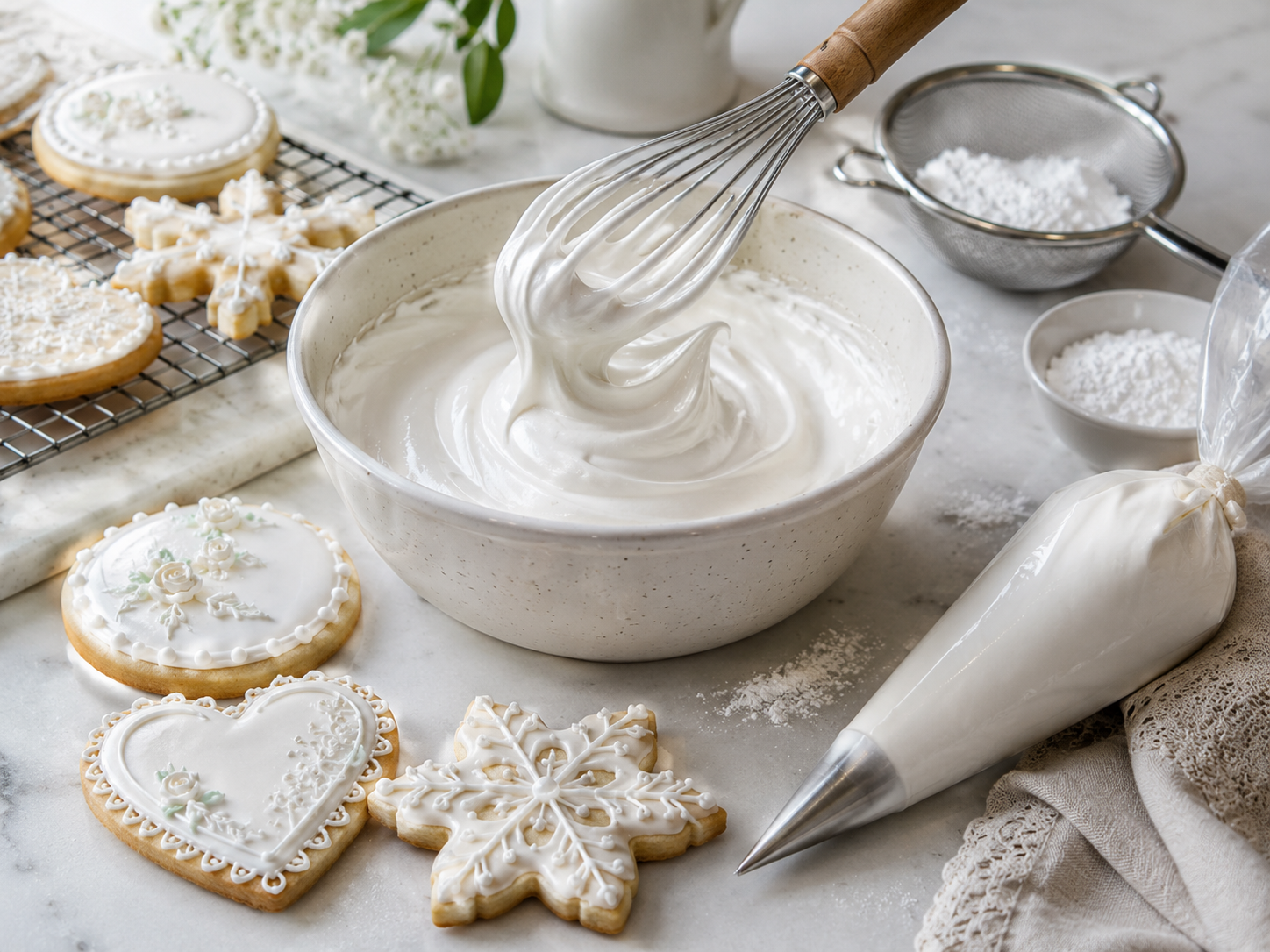
Royal Icing With Egg Whites Recipe
Ingredients
Method
- Add the pasteurized egg whites and lemon juice to a clean, dry mixing bowl.
- Mix on low speed until the egg whites become lightly foamy.
- Gradually add the sifted powdered sugar while mixing on low speed.
- Continue mixing until all of the powdered sugar is incorporated.
- Add the salt and clear vanilla or almond extract, if using.
- Increase the mixer to medium-low speed and beat for 3 to 5 minutes, until the royal icing is thick, glossy, and forms firm peaks.
- Divide the icing into separate bowls if you want to make different colors or consistencies.
- Add gel food coloring a little at a time and stir gently until the desired color is reached.
- For piping or flood icing, add water only a few drops at a time and stir gently until the desired consistency is reached.
- Keep the royal icing covered with plastic wrap or a damp towel whenever it is not being used to prevent it from drying out.
Notes
Frequently Asked Questions
Can I use ordinary raw egg whites?
Pasteurized egg whites are recommended because royal icing is normally not cooked after mixing.
How much carton egg white equals three eggs?
Use approximately six tablespoons or 90 grams, but check the conversion printed on the package.
Do I need to sift powdered sugar?
Sifting is strongly recommended because lumps can affect the texture and clog narrow piping tips.
Can I make royal icing without lemon juice?
Yes. You can omit it or use a small amount of cream of tartar, although the flavor will be slightly different.
How do I thicken royal icing?
Add sifted powdered sugar gradually until the icing reaches the desired consistency.
How do I thin royal icing?
Add water a few drops at a time and stir slowly after each addition.
How long should decorated cookies dry?
Allow several hours for thin details and preferably overnight for fully flooded or heavily decorated cookies.
Can royal icing be made ahead?
Yes. Store it tightly covered in the refrigerator and stir gently before using it again.

I’m Tahira Ramzan, an experienced recipe creator and the founder of EggWhiteRecipes.com. I specialize in simple, practical egg white recipes made with everyday ingredients. My goal is to share easy-to-follow recipes, helpful cooking tips, and reliable methods that make home cooking easier and more enjoyable.