Whipped egg whites add lightness, height, and structure to cakes, waffles, soufflés, mousse, and meringue. For the best result, use a completely clean bowl, beat the whites gradually, and stop when they reach the peak stage required by your recipe.
What Are Whipped Egg Whites?
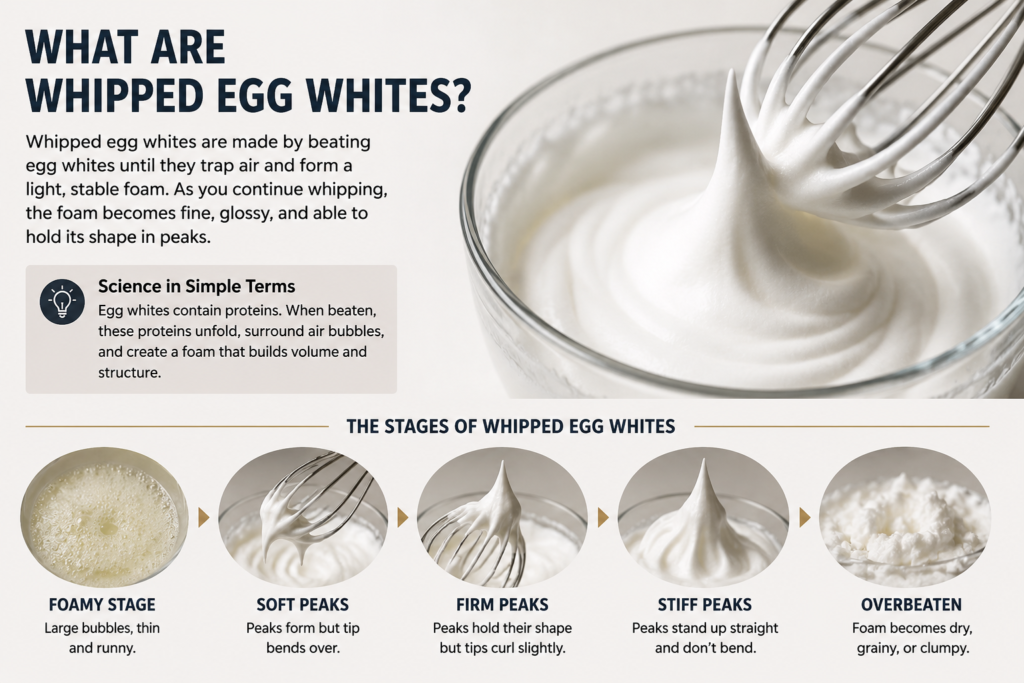
Whipped egg whites are made by beating egg whites until they trap air and form a light foam. As whipping continues, the mixture moves from bubbly foam to soft, firm, and eventually stiff peaks.
Plain whipped egg whites contain no sugar. When sugar is gradually added, the mixture becomes meringue.
Ingredients
- 3 large egg whites, about 90–100 grams
- ¼ teaspoon cream of tartar
- Pinch of salt, optional
For Sweet Meringue
- ½ cup superfine or caster sugar
- ½ teaspoon vanilla extract, optional
Cream of tartar helps stabilize the egg-white foam. You may replace it with ½ teaspoon lemon juice or white vinegar.
Equipment You Need
Use a glass or stainless-steel mixing bowl. Plastic bowls may retain traces of grease that prevent egg whites from whipping properly.
You will also need:
- Electric hand mixer or stand mixer
- Balloon whisk attachment
- Rubber or silicone spatula
- Small bowl for separating eggs
Separate each egg into a small bowl before adding it to the main mixing bowl. This prevents one broken yolk from ruining the entire batch.
How to Make Whipped Egg Whites
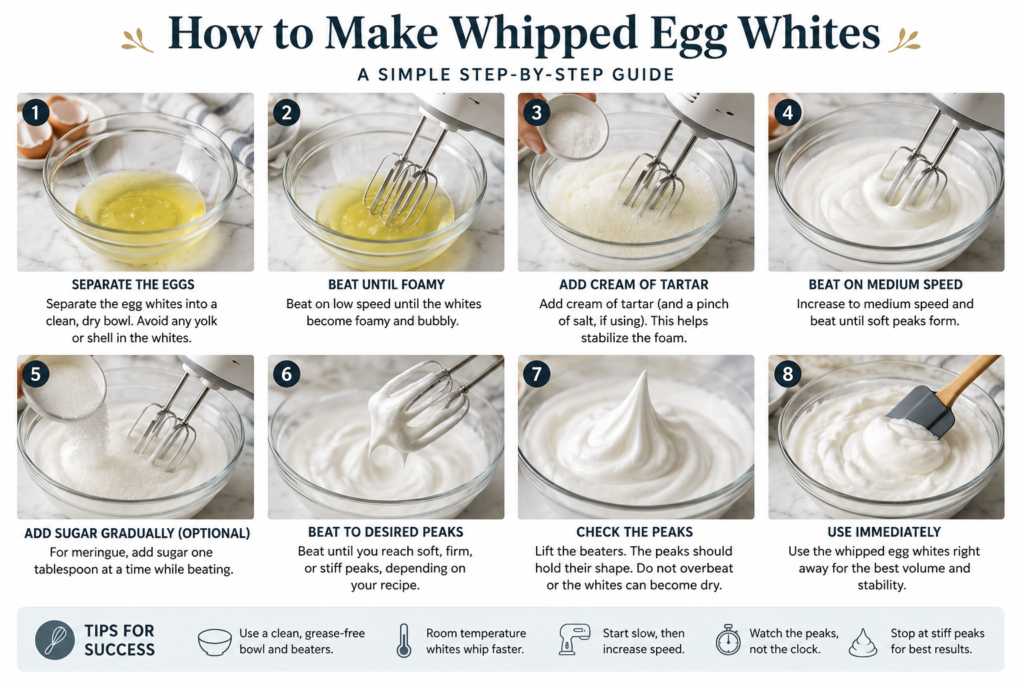
- Separate the eggs while they are cold because cold yolks are less likely to break.
- Allow the egg whites to sit for about 15–20 minutes if you want them to whip faster.
- Place the whites in a completely clean and dry bowl.
- Beat on low speed until the whites become loose and foamy.
- Add the cream of tartar.
- Increase the mixer to medium speed.
- Continue beating until the required peak stage forms.
- Use the whipped egg whites immediately.
Avoid starting at maximum speed. Medium-speed whipping creates smaller, more stable air bubbles.
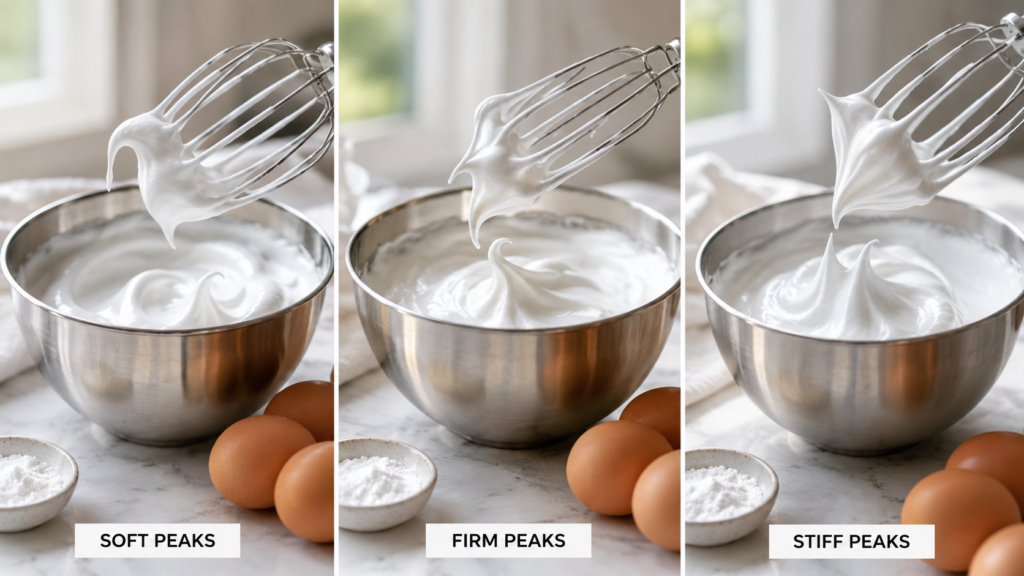
What Do the Different Peak Stages Look Like?
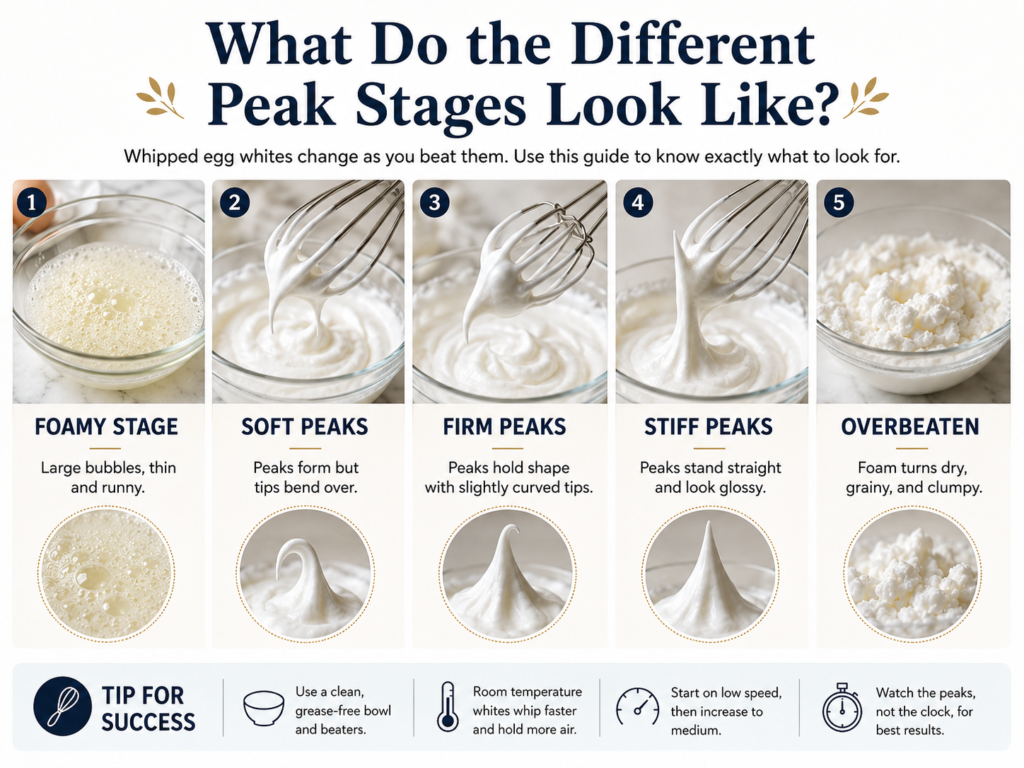
Foamy Stage
The whites contain large bubbles but cannot hold their shape. Continue whipping.
Soft Peaks
When the whisk is lifted, a peak forms but quickly bends over. Soft peaks work well for mousse, delicate fillings, and batters that need gentle aeration.
Firm Peaks
The peak holds its shape but the tip curves slightly. This stage is suitable for soufflés, pancakes, waffles, and many sponge cakes.
Stiff Peaks
The peak stands upright without bending. The mixture should look smooth and glossy. Stiff peaks are commonly used for meringue and recipes that require strong structure.
Stop whipping before the whites become dry, grainy, or clumpy.
How Long Does It Take to Whip Egg Whites?
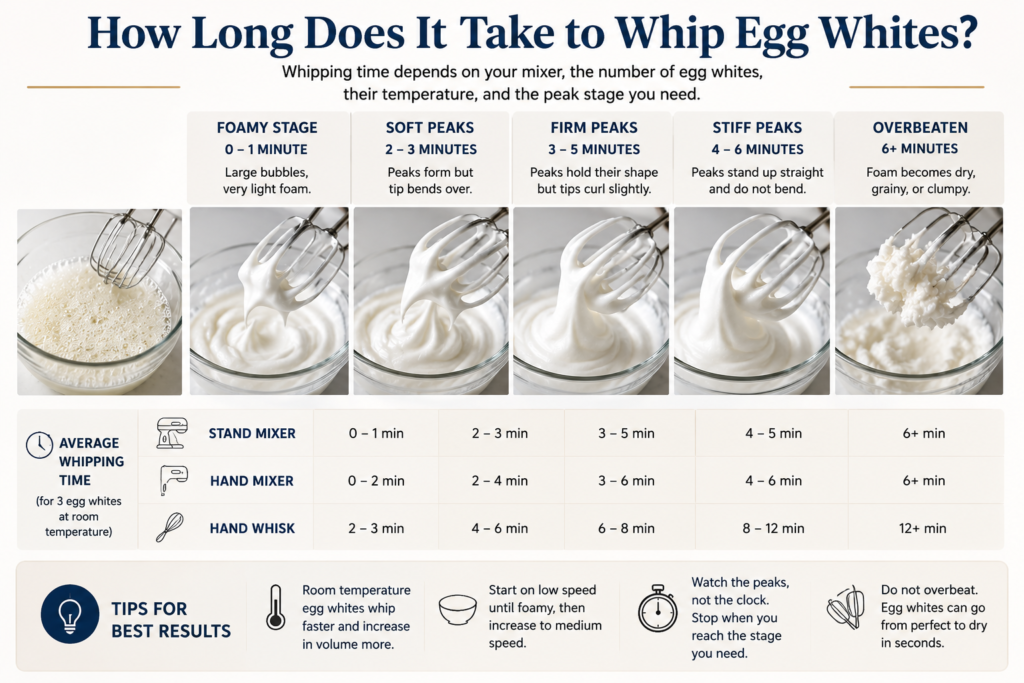
Whipping time depends on the mixer, number of egg whites, bowl size, and required peak stage.
Approximate times include:
- Stand mixer: 3–5 minutes
- Electric hand mixer: 3–6 minutes
- Hand whisk: 8–12 minutes
Use the appearance of the peaks rather than relying only on time.
How Do You Add Sugar?
When making meringue, begin adding sugar after the egg whites reach the foamy or soft-peak stage.
Add one tablespoon at a time while continuing to beat at medium speed. Do not pour in all the sugar at once because it may flatten the foam.
Continue beating until the mixture becomes thick and glossy. Rub a small amount between your fingers. If it feels gritty, continue mixing until the sugar dissolves.
Why Are the Egg Whites Not Whipping?
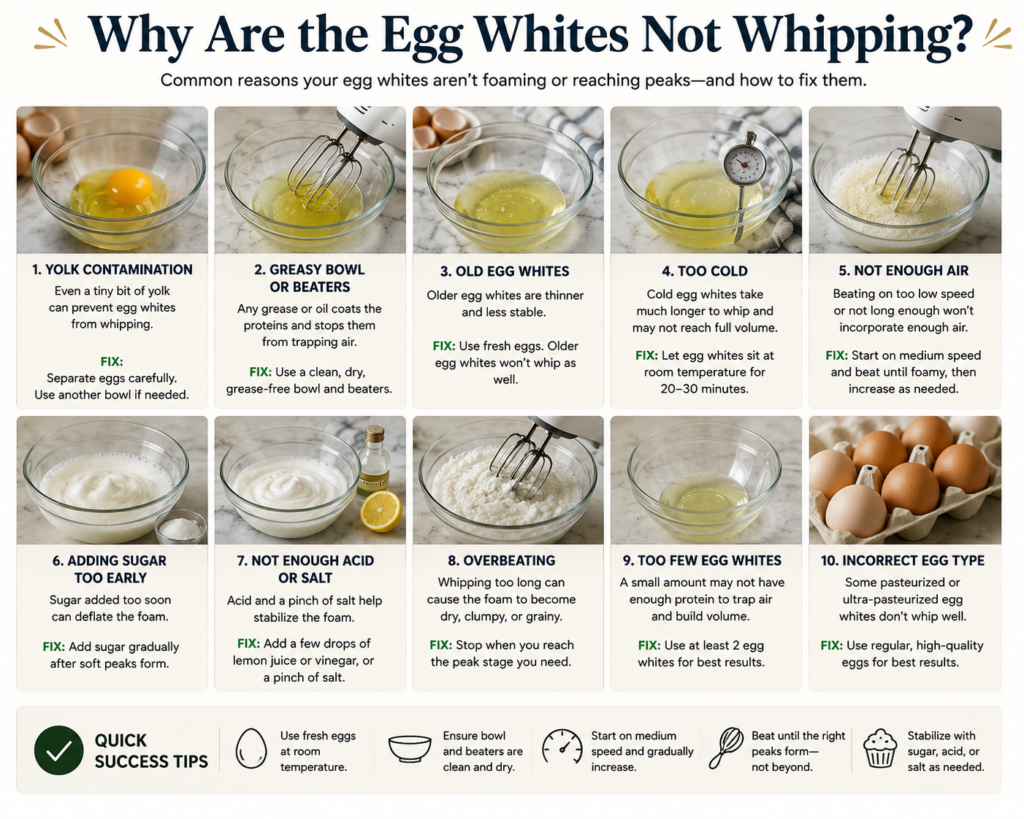
The most common cause is fat contamination. Even a small amount of egg yolk, oil, butter, or grease can stop the whites from gaining volume.
Other possible causes include:
- Wet mixing equipment
- Sugar added too early
- A bowl that is too large
- Egg whites left standing too long
- Carton whites not designed for whipping
- Insufficient mixing time
Clean the bowl with a little lemon juice or vinegar, then dry it thoroughly before beginning.
Can Overwhipped Egg Whites Be Fixed?
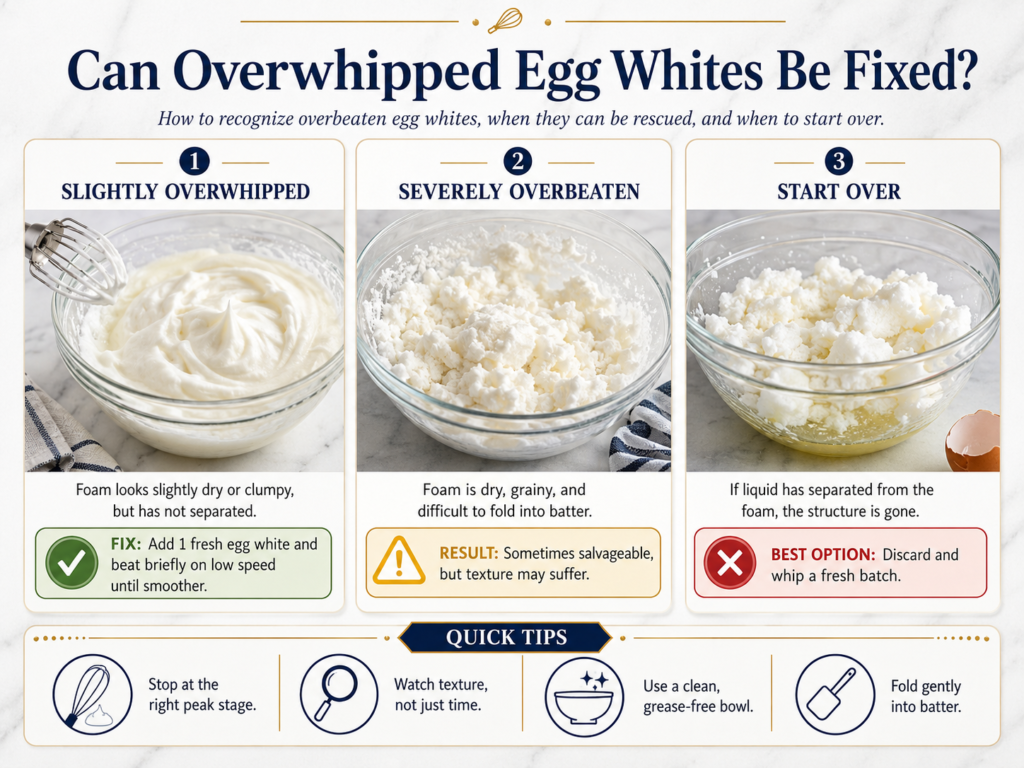
Slightly overwhipped whites may look dull, dry, or clumpy. Try adding one fresh egg white and whisking briefly on low speed until the mixture becomes smoother.
Egg whites that have completely separated or released liquid are difficult to repair. Restarting usually produces a more reliable result.
How Do You Fold Egg Whites Into Batter?
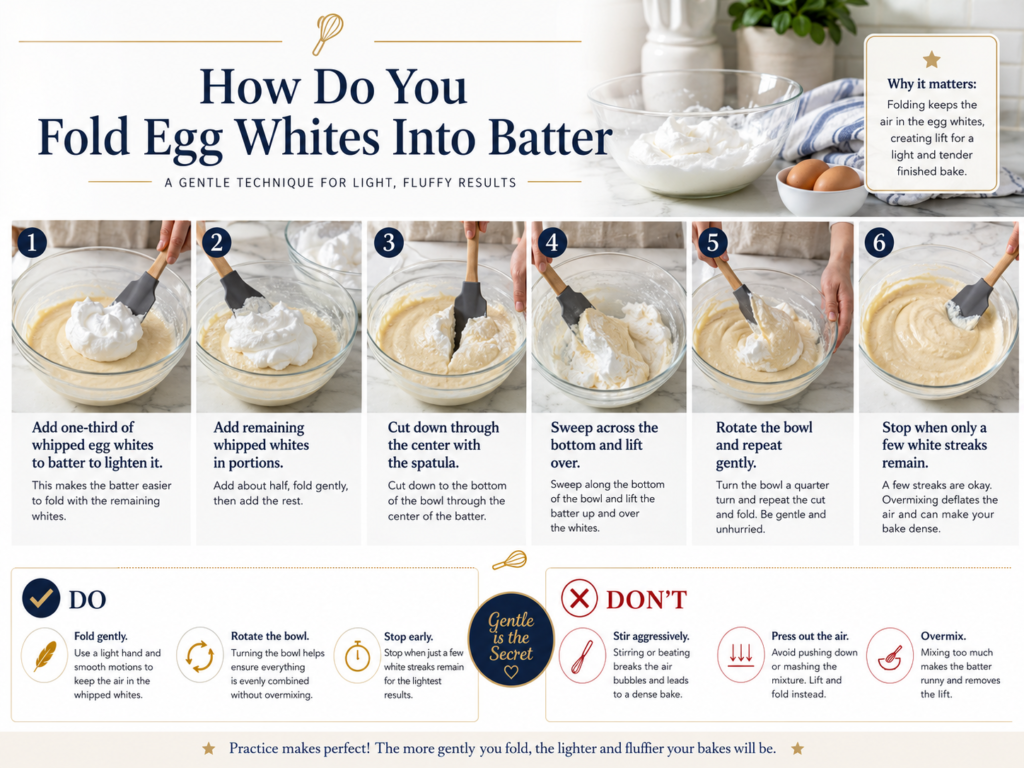
Whipped egg whites must be folded gently so the trapped air is not lost.
First, stir one-third of the whipped whites into the batter to lighten it. Add the remaining whites in two portions.
Use a spatula to cut through the center, sweep along the bottom, and lift the batter over the top. Rotate the bowl and repeat until only a few white streaks remain.
Do not stir in circles because vigorous mixing deflates the foam.
What Can You Make With Whipped Egg Whites?
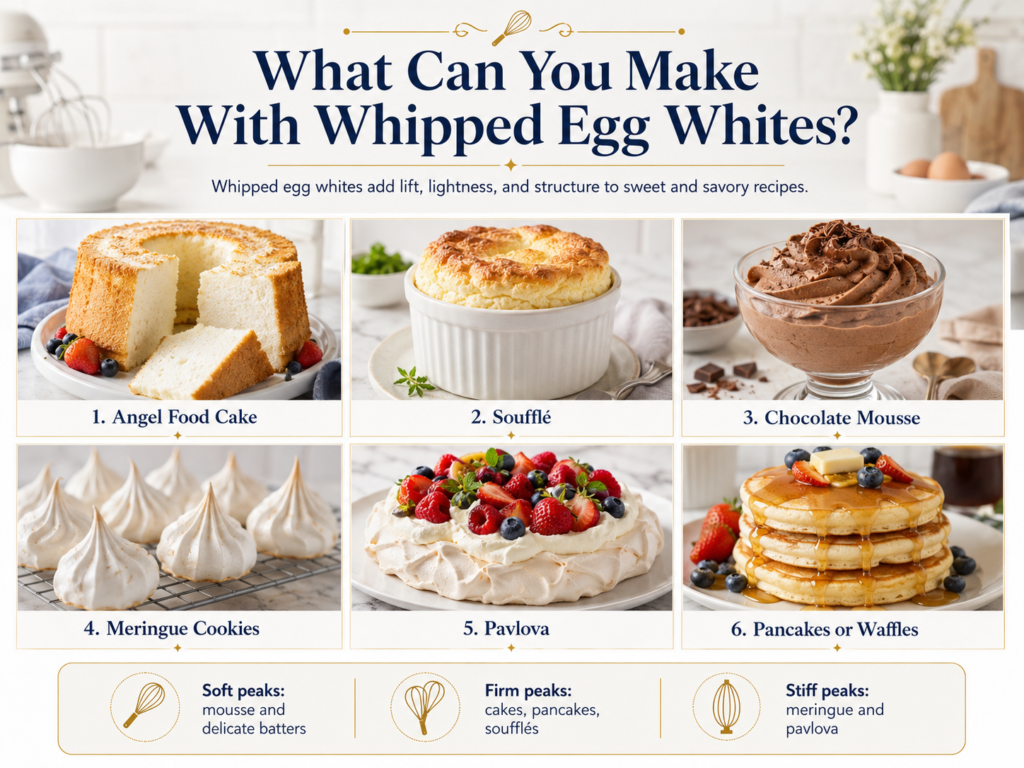
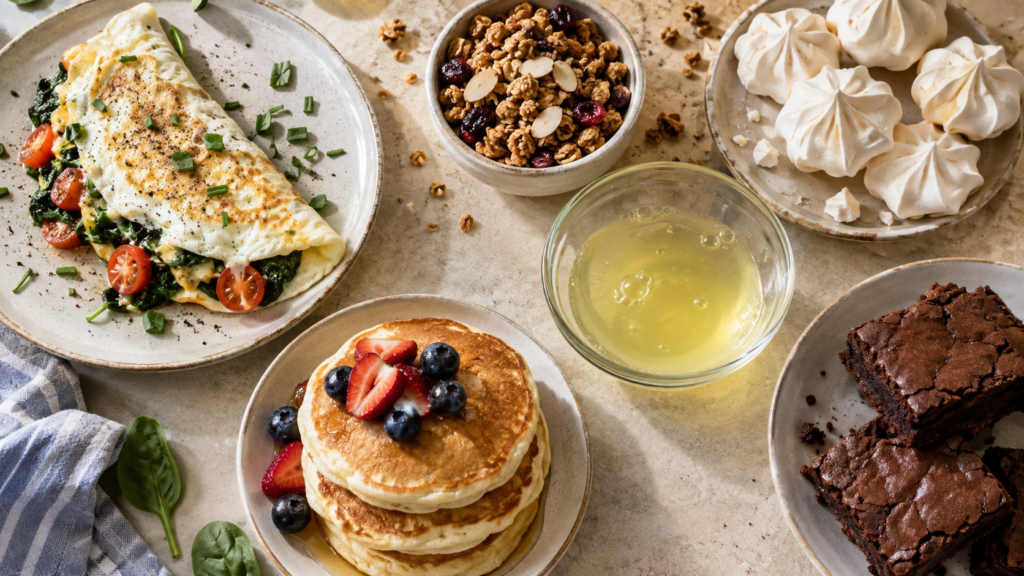
Whipped whites can improve both sweet and savory recipes.
Use them for:
- Angel food cake
- Sponge cake
- Soufflés
- Pancakes and waffles
- Chocolate mousse
- Pavlova
- Meringue cookies
- Macarons
- Light omelets
Choose the peak stage according to the recipe. Stiff peaks are not always better, especially when the whites need to be folded into a delicate batter.
Can You Use Carton Egg Whites?
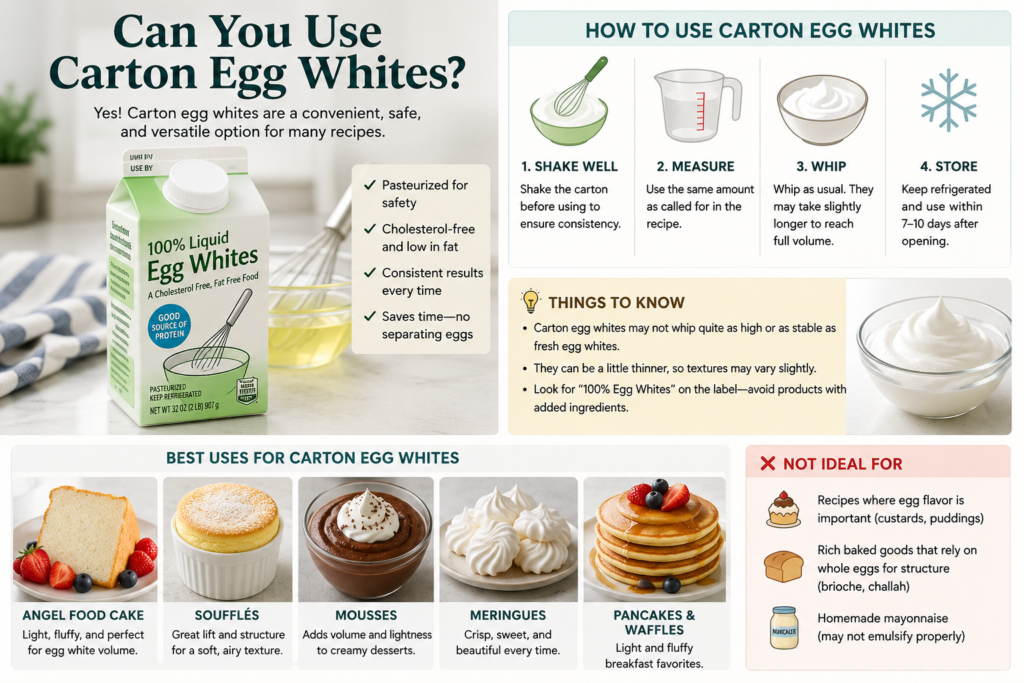
Pasteurized carton egg whites can often be whipped, but results vary between brands. Some contain additives that reduce their ability to reach stiff peaks.
Check the package for wording such as “suitable for whipping” or “suitable for meringue.”
Carton whites are a useful option for desserts that will not be fully cooked because pasteurization reduces food-safety risks.
Are Raw Whipped Egg Whites Safe?
Ordinary raw egg whites may contain harmful bacteria. Use pasteurized egg whites for mousse, frosting, drinks, or desserts that will remain raw or only lightly cooked.
Recipes made with regular shell eggs should be thoroughly cooked. Egg mixtures generally need to reach 160°F or 71°C for safe consumption.
Can Whipped Egg Whites Be Stored?
Plain whipped egg whites are best used immediately. They gradually lose volume and may release liquid while standing.
Do not prepare them several hours in advance. Instead, measure the ingredients and prepare the equipment beforehand, then whip the whites shortly before folding or baking.
Fully baked meringue can be stored separately in an airtight container once completely cool.
Whipped Egg White Recipe Card
Prep time: 5 minutes
Total time: 5 minutes
Yield: Approximately 3 cups
Category: Baking Basics
Cuisine: International
Ingredients
- 3 large egg whites
- ¼ teaspoon cream of tartar
- Pinch of salt, optional
Instructions
- Place the egg whites in a clean, dry bowl.
- Beat on low speed until foamy.
- Add cream of tartar and salt.
- Increase to medium speed.
- Beat until soft, firm, or stiff peaks form.
- Use immediately in your chosen recipe.
Whipped Egg White Recipe
Ingredients
Method
- Place the egg whites in a completely clean and dry glass or stainless-steel mixing bowl.
- Beat the egg whites on low speed until they become loose and foamy.
- Add the cream of tartar and optional pinch of salt.
- Increase the mixer to medium speed and continue whipping.
- Beat until the egg whites reach the stage required by your recipe: soft, firm, or stiff peaks.
- Stop whipping once the desired peak stage is reached and use the whipped egg whites immediately.
Notes
- Use a completely grease-free and dry bowl because even a small amount of yolk, oil, or grease can prevent the egg whites from whipping properly.
- Separate eggs while cold, then allow the whites to sit for about 15–20 minutes if you want them to whip faster.
- Avoid starting the mixer at maximum speed. Medium-speed whipping helps produce a more stable foam.
- Soft peaks: the tip bends over when the whisk is lifted.
- Firm peaks: the peak holds its shape but the tip curves slightly.
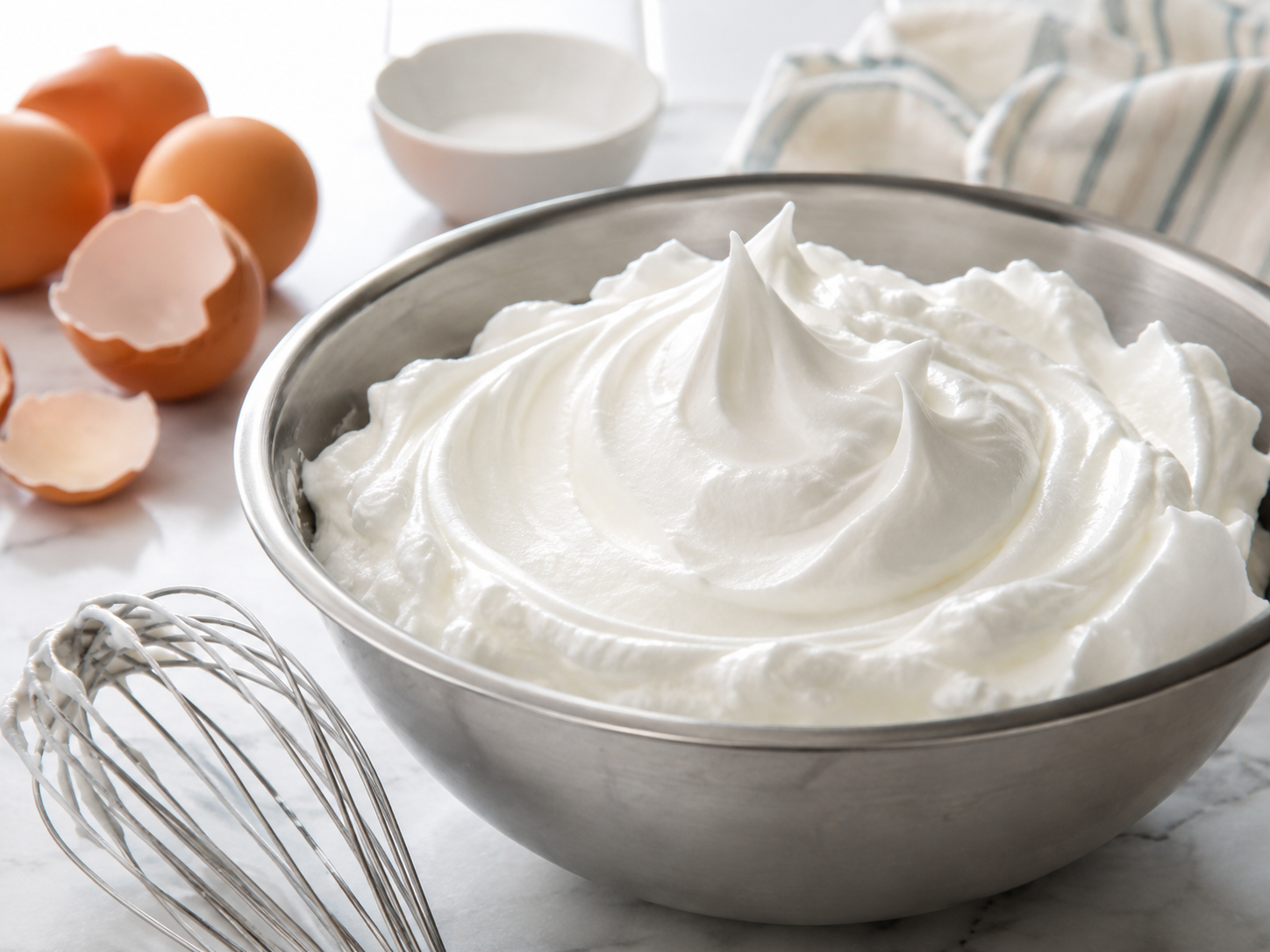
- Stiff peaks: the peak stands upright and the whites look smooth and glossy.
- Stop whipping if the whites begin looking dry or grainy because they may be overwhipped.
- Plain whipped egg whites are best used immediately.
Frequently Asked Questions
Can you whip egg whites without cream of tartar?
Yes. Cream of tartar is optional, but it helps create a more stable foam. Lemon juice or white vinegar can be used instead.
Can egg whites be whipped without sugar?
Yes. Plain egg whites whip without sugar. Sugar is added when making sweet meringue.
Why does the bowl need to be grease-free?
Fat interferes with the proteins that trap air. Even a small amount of yolk or oil can prevent proper whipping.
Should egg whites be cold or room temperature?
Cold eggs are easier to separate, while room-temperature whites generally whip faster. Both can reach stiff peaks.
How do you know when stiff peaks are ready?
Lift the whisk. The peak should stand upright while the foam remains smooth and glossy.
Can whipped egg whites be made ahead?
They should be used immediately because the foam gradually loses volume and stability.
What happens when egg whites are overbeaten?
They become dry, grainy, and difficult to fold. Continued whipping may cause the foam to separate and release liquid.
Can carton egg whites reach stiff peaks?
Some can, but performance depends on the brand and additives. Check the label before using them for meringue.

I’m Tahira Ramzan, an experienced recipe creator and the founder of EggWhiteRecipes.com. I specialize in simple, practical egg white recipes made with everyday ingredients. My goal is to share easy-to-follow recipes, helpful cooking tips, and reliable methods that make home cooking easier and more enjoyable.