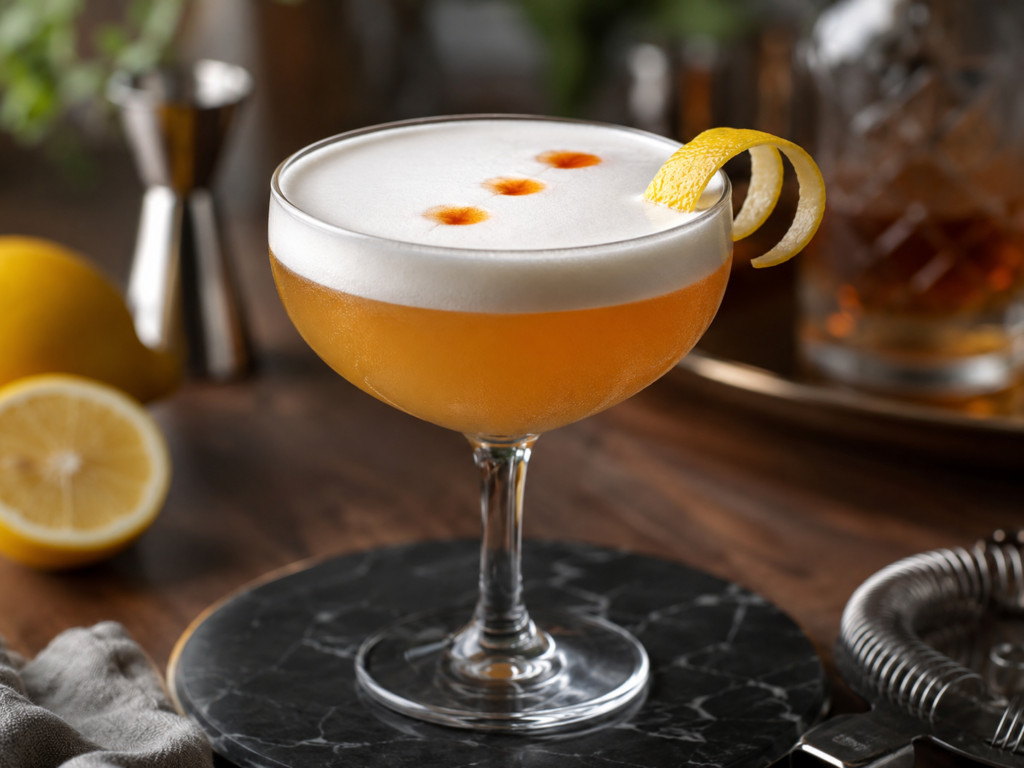
A whiskey sour egg white recipe combines whiskey, fresh lemon juice, simple syrup and pasteurized egg white. Dry-shake the ingredients without ice for 20–30 seconds, shake again with ice, then double-strain. The result is a balanced cocktail with bright citrus, warm whiskey flavor and a smooth, stable foam cap.
What Is a Whiskey Sour With Egg White?
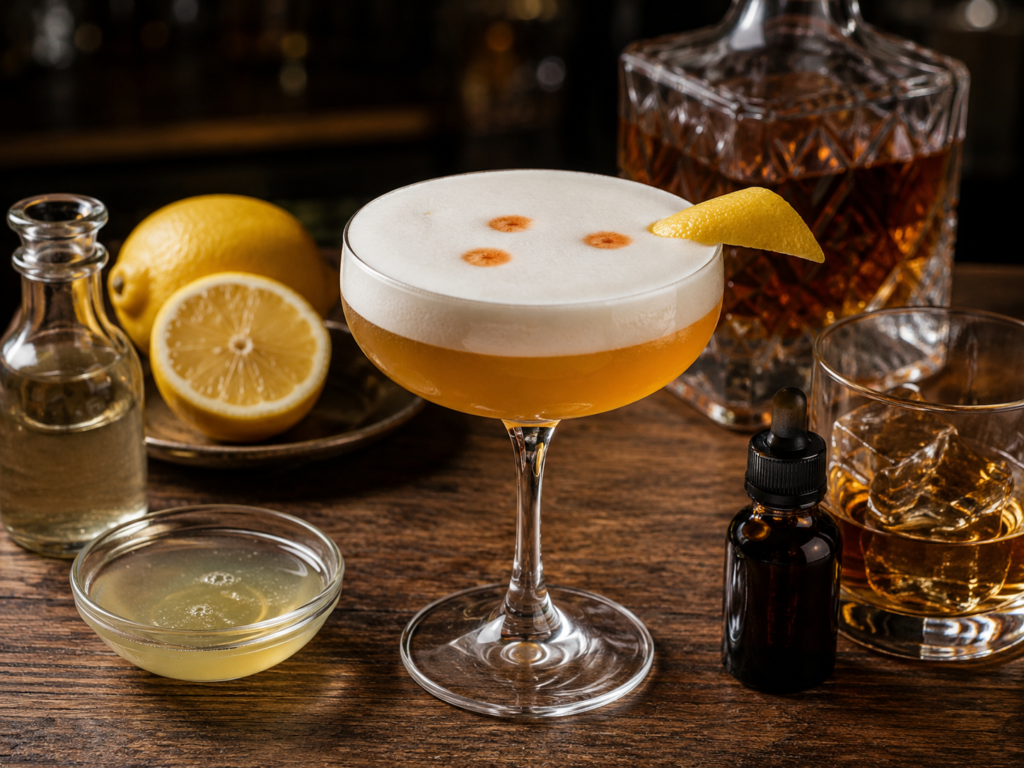
A whiskey sour is a classic cocktail built around three contrasting elements: whiskey, citrus and sugar. Adding egg white does not significantly change that basic flavor structure. Instead, it creates a smoother texture, softens the perception of sharp acidity and produces the drink’s recognizable layer of white foam.
The International Bartenders Association lists bourbon, fresh lemon juice, sugar syrup and optional egg white in its official whiskey sour formula. Its published ratio uses 45 ml bourbon, 25 ml lemon juice and 20 ml syrup. This Egg White Recipes.com version uses slightly more whiskey and less syrup for a stronger, less-sweet drink that remains balanced.
Whiskey sour at a glance
| Detail | Recommendation |
|---|---|
| Preparation time | 5 minutes |
| Yield | 1 cocktail |
| Best whiskey | Bourbon or rye |
| Egg white amount | ½ oz or 15 ml |
| Shaking method | Dry shake, then shake with ice |
| Serving glass | Coupe or rocks glass |
| Flavor | Citrusy, lightly sweet and whiskey-forward |
| Estimated calories | About 180 per serving |
Why Is Egg White Added to a Whiskey Sour?
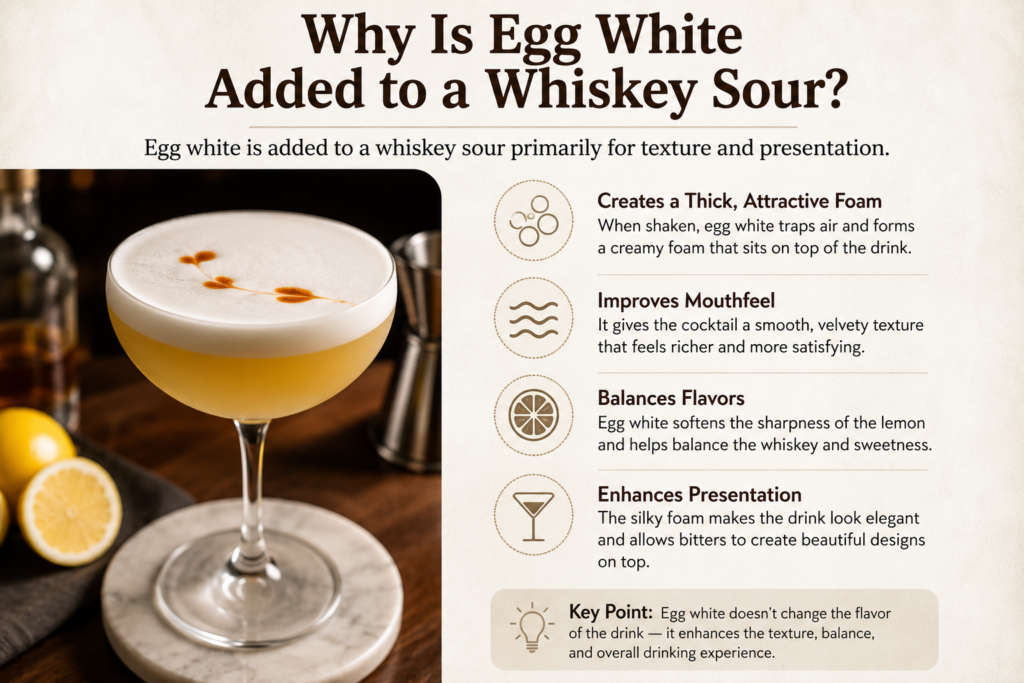
Egg white is added primarily for texture and presentation. When shaken vigorously, its proteins unfold and trap air, creating thousands of small bubbles. These bubbles form a creamy-looking foam that rises above the amber cocktail.
A properly made egg white whiskey sour should not taste like scrambled egg. The lemon, sugar, whiskey and bitters remain the dominant flavors. The egg white contributes a fuller mouthfeel and makes the transition between tart lemon and strong whiskey feel less aggressive.
Egg white provides four noticeable benefits:
- A thick, attractive foam cap
- A softer and silkier mouthfeel
- Better integration of citrus, sugar and whiskey
- A surface that holds aromatic bitters
Using more egg white does not automatically create a better drink. Too much can make the cocktail feel heavy and reduce the impact of the whiskey. Approximately ½ ounce is enough for a generous foam layer without overwhelming one serving.
What Ingredients Do You Need?
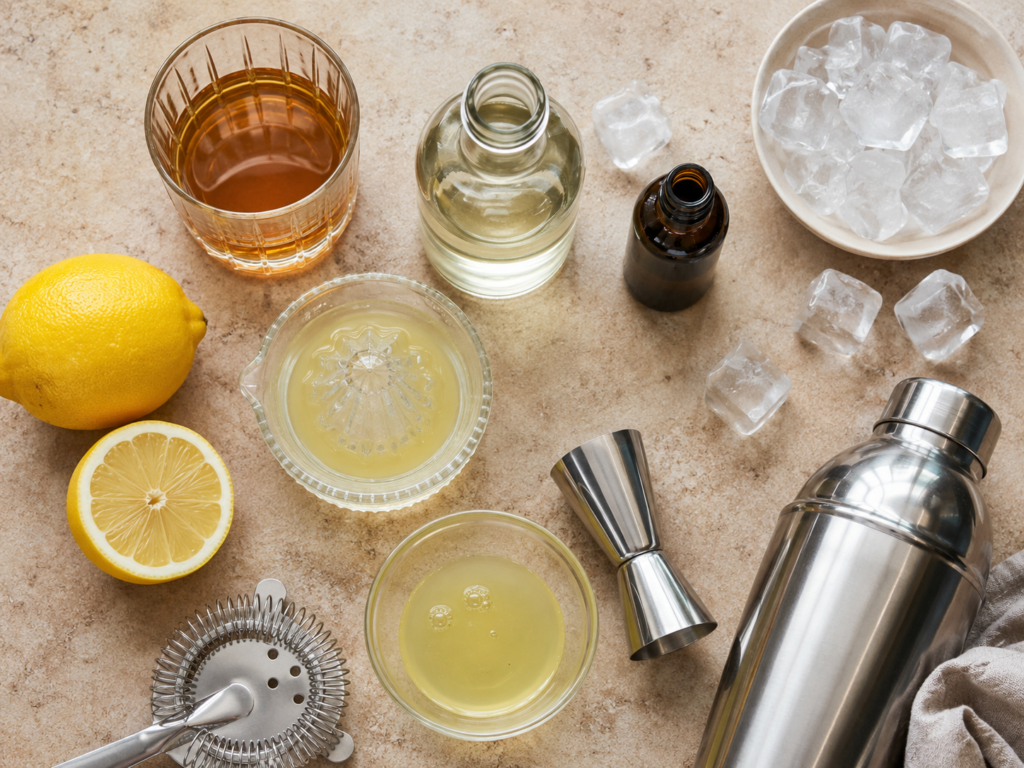
This recipe uses a short ingredient list, so the freshness and balance of each component matter.
Bourbon or rye whiskey
Bourbon is the easiest starting point because its caramel, vanilla and oak notes complement lemon and sugar. Rye produces a drier cocktail with more peppery spice.
You can also use Irish whiskey for a lighter drink or blended Scotch for a subtle smoky character. Avoid starting with an expensive sipping whiskey because lemon and syrup will cover some of its delicate qualities.
Fresh lemon juice
Freshly squeezed lemon juice gives the cocktail a clean, bright flavor. Bottled juice can taste muted, excessively sour or slightly bitter because it has been processed and stored.
One medium lemon usually provides enough juice for one or two cocktails. Strain out seeds and excessive pulp before measuring.
Simple syrup
Standard simple syrup is made with equal quantities of sugar and water. It distributes more evenly than granulated sugar and prevents gritty sweetness at the bottom of the glass.
To make it, combine equal parts hot water and white sugar. Stir until clear, cool it completely and refrigerate it in a clean sealed container.
Pasteurized egg white
Use ½ ounce or 15 ml of pasteurized egg white. This may come from a pasteurized shell egg or a refrigerated carton clearly labeled as pasteurized.
FDA guidance warns that even clean, uncracked shell eggs may contain Salmonella. Pasteurized egg products are therefore the more appropriate choice for drinks in which the egg will remain uncooked.
Angostura bitters
Bitters are optional, but several drops improve the aroma and make the foam look finished. Place the drops directly on the foam and drag a cocktail pick through them to create a simple pattern.
What Is the Best Whiskey Sour Egg White Ratio?
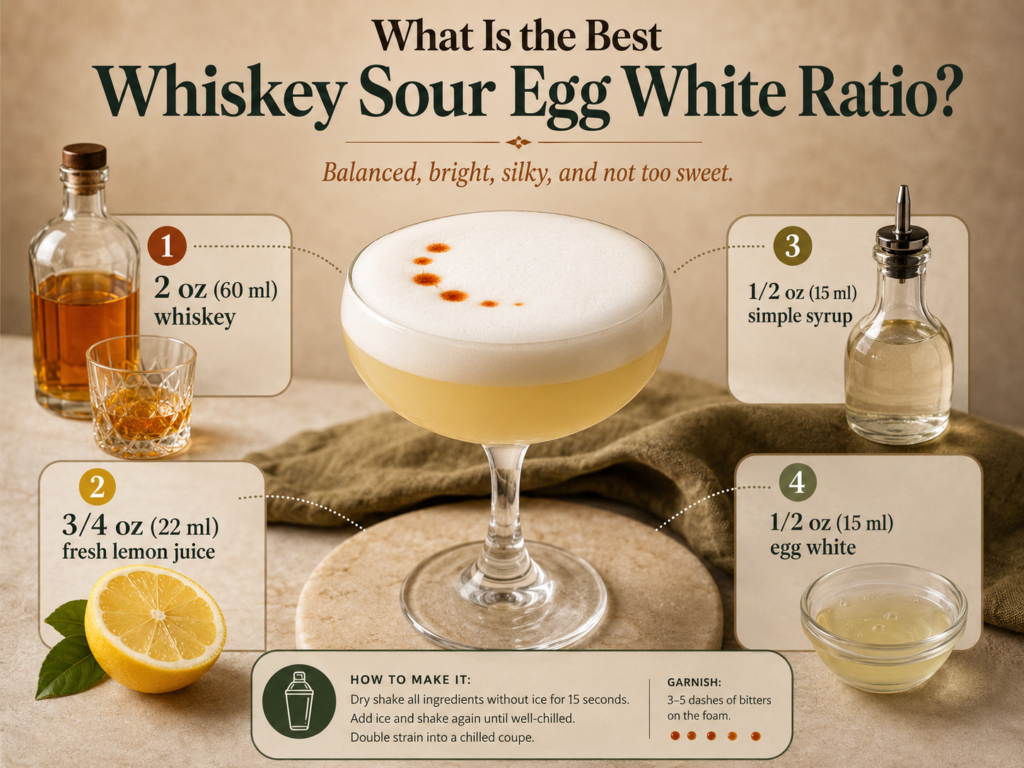
A balanced starting ratio is:
- 2 oz or 60 ml whiskey
- ¾ oz or 22 ml fresh lemon juice
- ½ oz or 15 ml simple syrup
- ½ oz or 15 ml pasteurized egg white
This ratio keeps the whiskey noticeable while supplying enough lemon for brightness and enough syrup to control its acidity. It is less sweet than some traditional formulas, but it can be adjusted after one taste.
How should you adjust the ratio?
| Desired result | Adjustment |
| Sweeter cocktail | Increase syrup to ¾ oz or 22 ml |
| More tartness | Increase lemon to 1 oz or 30 ml |
| Stronger whiskey flavor | Reduce syrup to ⅓ oz or 10 ml |
| Lighter foam | Use ¼ oz or 7 ml egg white |
| Thicker foam | Use ¾ oz or 22 ml egg white |
| Softer drink | Use bourbon instead of rye |
| Drier drink | Use rye and slightly less syrup |
Change one measurement at a time. Adjusting the lemon, syrup and whiskey together makes it harder to identify what improved or harmed the balance.
How Do You Make a Whiskey Sour With Egg White?
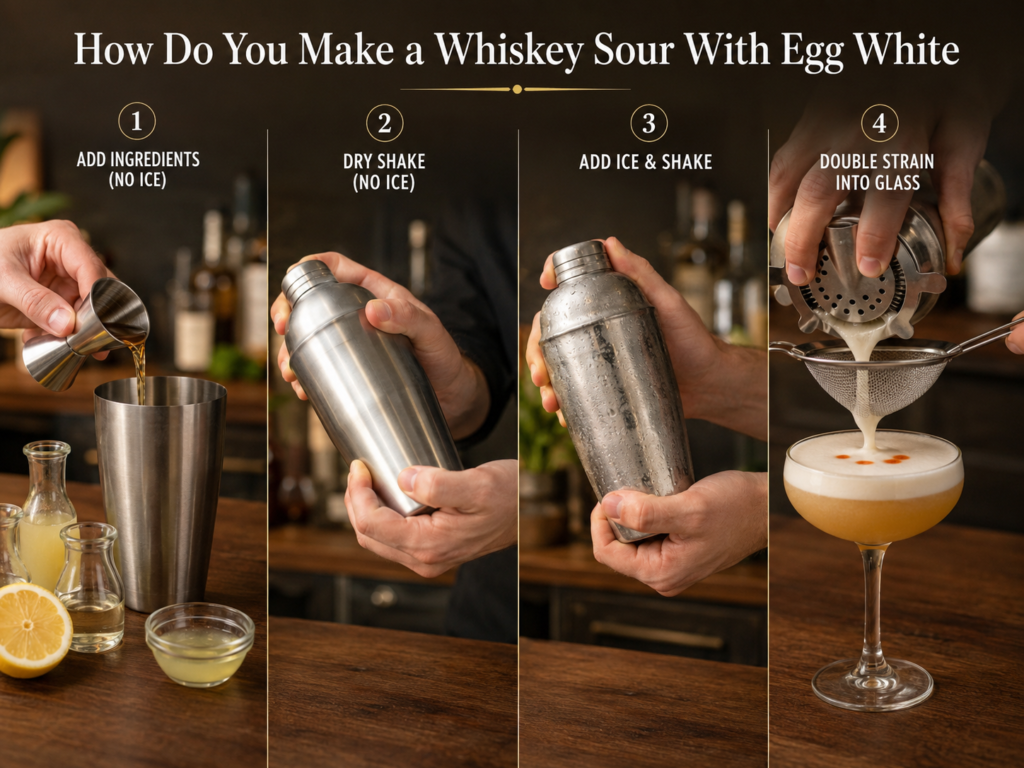
Ingredients
- 2 oz or 60 ml bourbon or rye whiskey
- ¾ oz or 22 ml freshly squeezed lemon juice
- ½ oz or 15 ml simple syrup
- ½ oz or 15 ml pasteurized egg white
- Ice
- 3 drops Angostura bitters, optional
- Lemon or orange peel, optional
- Cocktail cherry, optional
Equipment
- Cocktail shaker
- Jigger or small measuring cup
- Hawthorne strainer
- Fine-mesh strainer
- Coupe or rocks glass
Instructions
- Chill the glass.
Place a coupe glass in the freezer or fill a rocks glass with fresh ice while preparing the drink. - Add the ingredients without ice.
Pour the whiskey, lemon juice, simple syrup and pasteurized egg white into the shaker. - Dry-shake vigorously.
Seal the shaker firmly and shake without ice for 20–30 seconds. Hold both ends because pressure can build inside the shaker. - Add ice.
Open the shaker, add a generous handful of ice and reseal it. - Shake again.
Shake hard for another 10–15 seconds. This chills, dilutes and further aerates the cocktail. - Double-strain the drink.
Strain through both a cocktail strainer and a fine-mesh strainer into the chilled glass. This removes small ice fragments and lemon pulp. - Let the foam settle.
Wait 10–15 seconds for the foam to rise and form a distinct cap. - Add bitters and garnish.
Place three drops of bitters on the foam. Add a lemon peel, orange peel or cocktail cherry when desired.
Serve the cocktail immediately. The foam will remain most attractive and aromatic during the first several minutes.
S
Is Raw Egg White Safe in a Whiskey Sour?
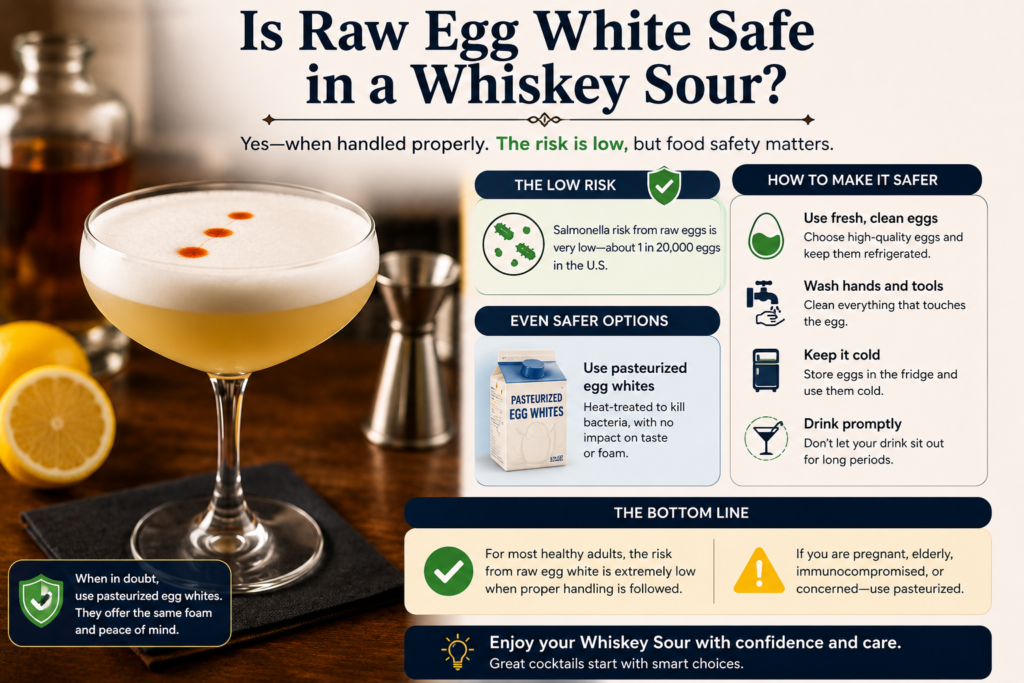
An egg white used in a whiskey sour is not cooked. Whiskey and lemon juice should not be treated as reliable methods of eliminating harmful bacteria.
FDA guidance states that clean, uncracked shell eggs may still contain Salmonella. USDA guidance explains that commercial egg products are pasteurized using controlled heat treatment designed to destroy harmful bacteria without cooking the product.
For a lower-risk cocktail:
- Use pasteurized shell eggs or pasteurized liquid whites.
- Keep the egg product refrigerated.
- Check its use-by date.
- Avoid cartons with damaged seals.
- Wash your hands and equipment after handling egg.
- Prepare only the quantity you will serve immediately.
- Do not leave the mixed cocktail at room temperature.
People at increased risk from foodborne illness should avoid drinks made with unpasteurized raw egg. An aquafaba or commercial cocktail foamer version may be more suitable for them.
This recipe contains alcohol and is intended only for adults of legal drinking age. Drink responsibly.stated storage period.
What Can Replace Egg White?
Egg white is traditional but not essential. The whiskey, lemon and syrup still produce a recognizable sour without it.
Aquafaba
Aquafaba is the liquid from cooked or canned chickpeas. Use approximately ½ ounce or 15 ml per drink. It creates foam and body with no egg, although a mild bean aroma may be noticeable in some products before the cocktail is shaken.
Commercial cocktail foamer
Cocktail foamers are concentrated products designed to create a foamy surface. The required quantity varies considerably, so follow the product instructions rather than substituting them ounce for ounce.
No foaming ingredient
Omit the egg white and shake the remaining ingredients with ice. The result will be brighter, lighter and less creamy, but the whiskey sour’s core sweet-and-sour flavor remains.
Which Whiskey Works Best?
The best whiskey depends on how sweet, spicy or smoky you want the cocktail to taste.
Bourbon
Choose bourbon for a round, approachable sour. Its vanilla, caramel and toasted-oak notes work naturally with simple syrup and lemon. Bourbon is the best starting point for most readers.
Rye whiskey
Choose rye for a drier and more assertive cocktail. Its peppery spice remains noticeable after lemon and sugar are added.
Irish whiskey
Irish whiskey creates a lighter, softer sour. It suits drinkers who find bourbon or rye too intense.
Blended Scotch
A blended Scotch can add malt and gentle smoke. Heavily peated whisky may dominate the lemon and egg-white texture, so use it carefully or combine a small amount with bourbon.
Avoid choosing by price alone. A moderately priced whiskey with a clear flavor profile often performs better in a mixed drink than a delicate premium bottle.
How Can You Adjust the Flavor?
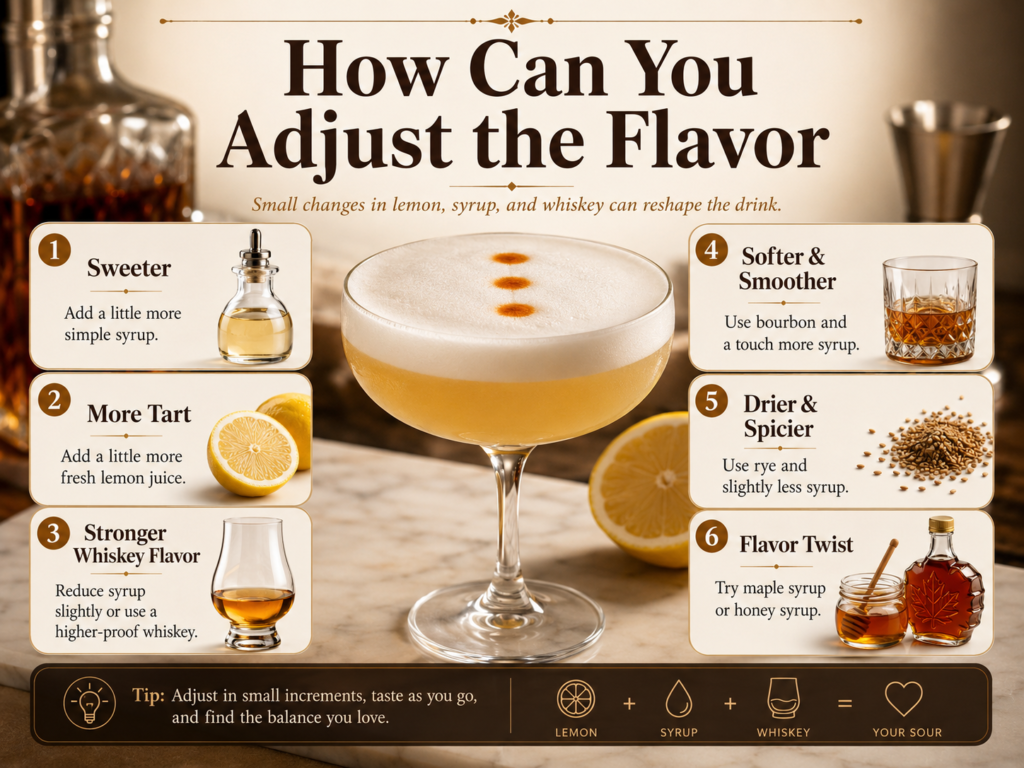
Taste preferences vary, especially where sour cocktails are concerned. Use the standard ratio first and make small changes in the next drink.
For a sweeter whiskey sour, increase the simple syrup by ¼ ounce. For a sharper sour, add a small amount of lemon rather than immediately reducing the sugar.
For a more whiskey-forward cocktail:
- Use a higher-proof bourbon or rye.
- Reduce syrup slightly.
- Serve the drink without ice.
- Avoid an oversized egg-white layer.
For a softer cocktail:
- Choose bourbon or Irish whiskey.
- Increase syrup to ¾ ounce.
- Serve over a large ice cube.
- Add an orange peel rather than lemon peel.
Simple syrup can also be replaced with maple or honey syrup. Thick honey should first be diluted with warm water so it mixes evenly.
What Whiskey Sour Variations Can You Try?
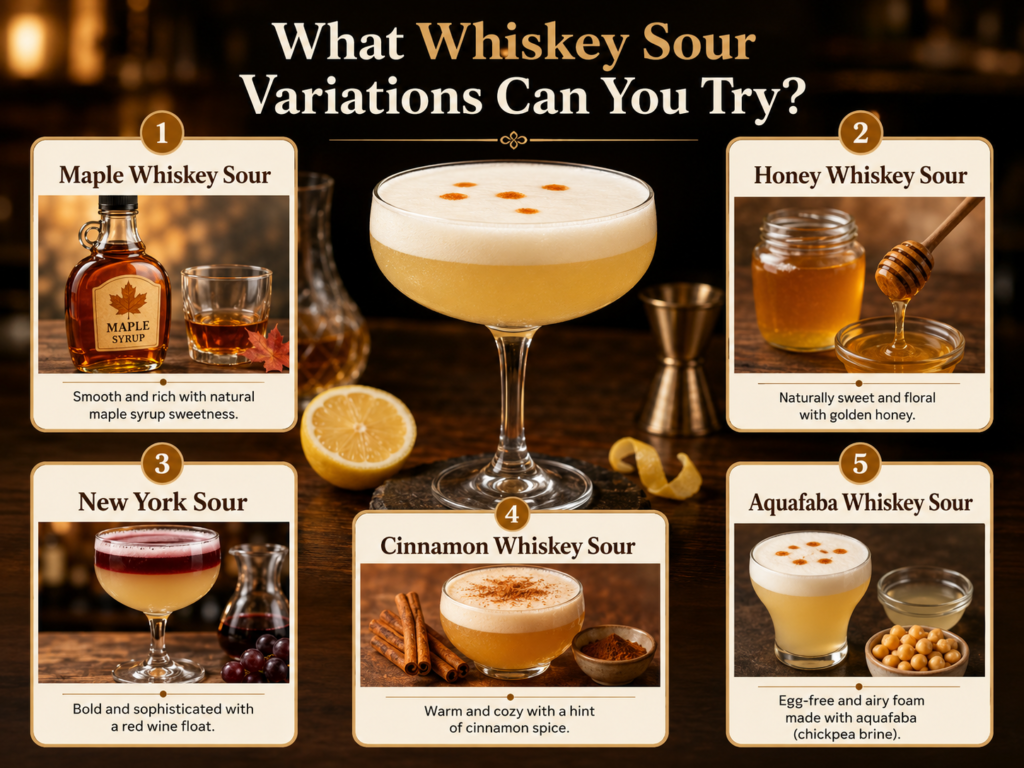
Maple whiskey sour
Replace simple syrup with the same amount of pure maple syrup. This variation works especially well with bourbon and an orange peel.
Honey whiskey sour
Use honey syrup made from two parts honey and one part warm water. It adds floral sweetness without leaving thick honey in the shaker.
New York sour
Prepare the standard whiskey sour, then carefully float red wine over the back of a spoon. The IBA version uses rye or bourbon, lemon, syrup, egg white and a red-wine float.
Cinnamon whiskey sour
Use cinnamon simple syrup and garnish with orange peel. Avoid adding ground cinnamon directly to the foam because it can form dry clumps.
Aquafaba whiskey sour
Replace the pasteurized egg white with ½ ounce of aquafaba. Use the same dry-shake and wet-shake process.
Spiced winter sour
Add one small dash of aromatic bitters to the shaker and garnish with orange peel. Keep spices restrained so they do not cover the whiskey.
What Should You Remember Before Making It?
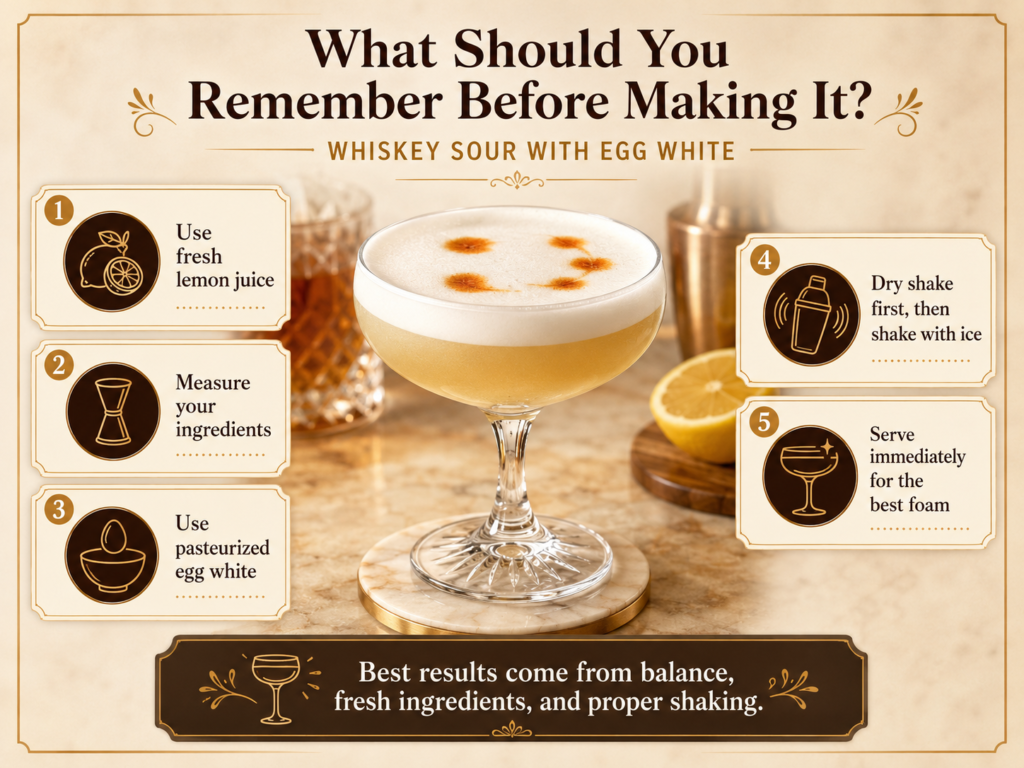
A reliable whiskey sour depends on balance rather than complicated equipment. Measure each ingredient, use fresh lemon, choose pasteurized egg white and complete both shaking stages.
The most dependable starting formula is 2 ounces whiskey, ¾ ounce lemon juice, ½ ounce simple syrup and ½ ounce pasteurized egg white. Once that version works, adjust only the sweetness, acidity or whiskey style to match your preference.
The egg white should support the drink—not dominate it. Aim for a smooth mouthfeel, a fine foam cap and a clear whiskey-and-lemon flavor in every sip.
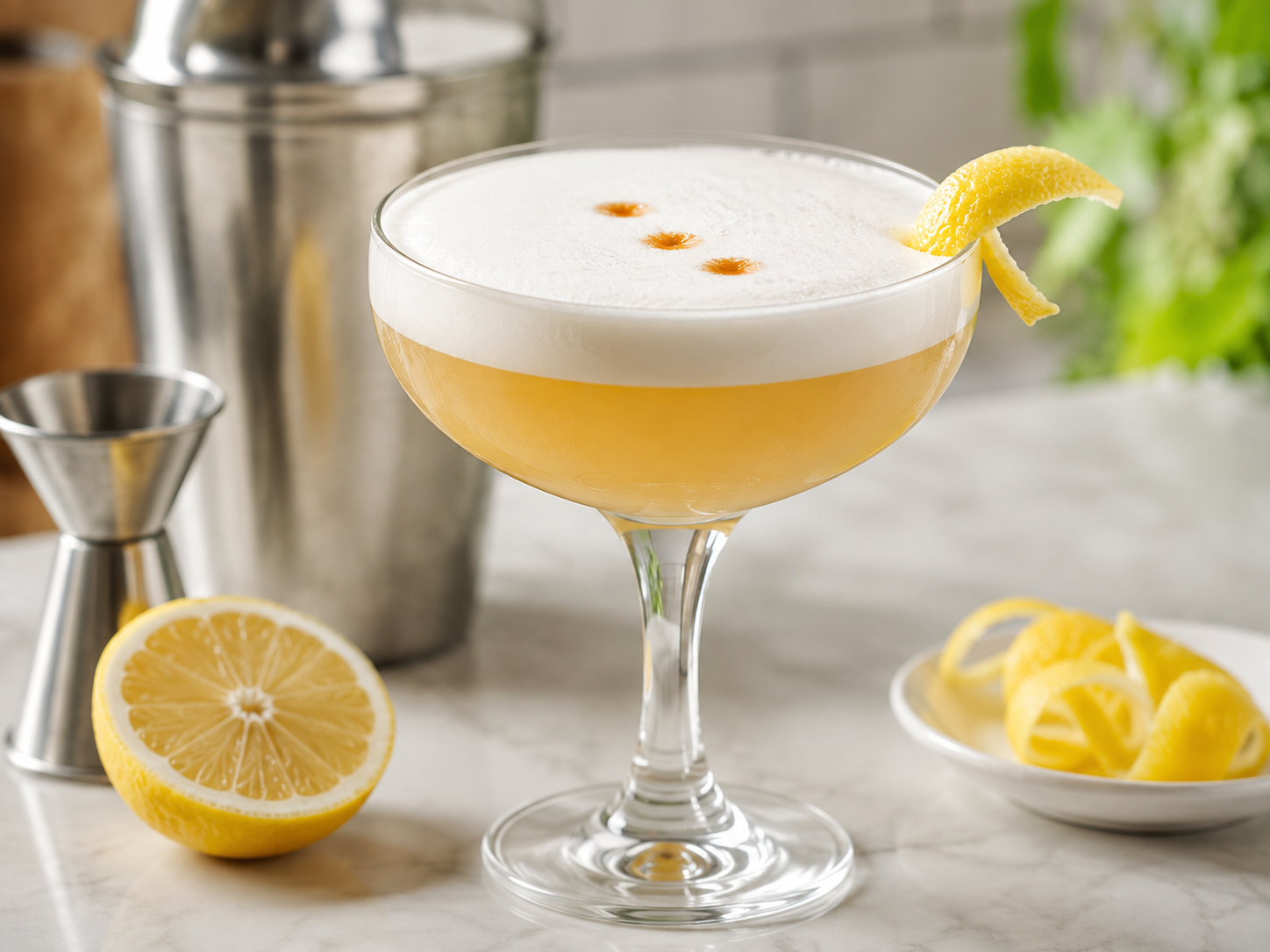
Whiskey Sour Egg White Recipe
Ingredients
Method
- Chill a coupe glass in the freezer, or fill a rocks glass with fresh ice while preparing the cocktail.
- Add the bourbon or rye whiskey, freshly squeezed lemon juice, simple syrup, and pasteurized egg white to a cocktail shaker without ice.
- Seal the shaker tightly and dry shake vigorously for 20–30 seconds to aerate the egg white and create a thick foam.
- Open the shaker and add a generous handful of ice.
- Seal again and shake vigorously for another 10–15 seconds until the cocktail is well chilled.
- Double strain the cocktail through a cocktail strainer and fine-mesh strainer into the chilled glass.
- Let the drink rest for 10–15 seconds so the egg white foam rises and forms a smooth layer on top.
- Add a few drops of Angostura bitters if desired, then garnish with a lemon peel, orange peel, or cocktail cherry.
- Serve immediately.
Notes
Frequently Asked Questions
Does a whiskey sour need egg white?
No. Egg white is optional, but it creates the silky texture and foam associated with many classic whiskey sours. Without it, the drink will be lighter and more sharply citrus-forward.
Does a whiskey sour taste like egg?
A properly measured and well-chilled whiskey sour should not taste strongly of egg. Whiskey, lemon, syrup and bitters remain the main flavors.
How much egg white goes in one whiskey sour?
Use ½ ounce or 15 ml. A whole large egg white may be enough for approximately two drinks, depending on its size.
Can you use a whole egg white?
You can, but it may produce too much foam for one cocktail. Measure the separated white and use about 15 ml for better balance.
How long should you dry-shake a whiskey sour?
Dry-shake vigorously for 20–30 seconds. Add ice and shake for another 10–15 seconds to chill and dilute the drink.
Can you make a whiskey sour without a shaker?
A tightly sealed jar can work, but release the seal carefully after shaking. Use a fine strainer when pouring to remove ice fragments and pulp.
Can you prepare a whiskey sour in advance?
You can pre-measure the whiskey, lemon and syrup for a short period under refrigeration. Add the egg white and shake immediately before serving.
Why did my whiskey sour foam collapse?
The usual causes are insufficient shaking, too little egg white, oily residue in the shaker or excessive dilution. Measure accurately and use clean equipment.
Is bourbon or rye better in a whiskey sour?
Bourbon creates a sweeter, rounder cocktail. Rye produces a spicier and drier drink. Bourbon is generally easier for beginners.
Can bottled lemon juice be used?
It can be used in an emergency, but fresh lemon juice normally gives a brighter and cleaner flavor.

I’m Tahira Ramzan, an experienced recipe creator and the founder of EggWhiteRecipes.com. I specialize in simple, practical egg white recipes made with everyday ingredients. My goal is to share easy-to-follow recipes, helpful cooking tips, and reliable methods that make home cooking easier and more enjoyable.