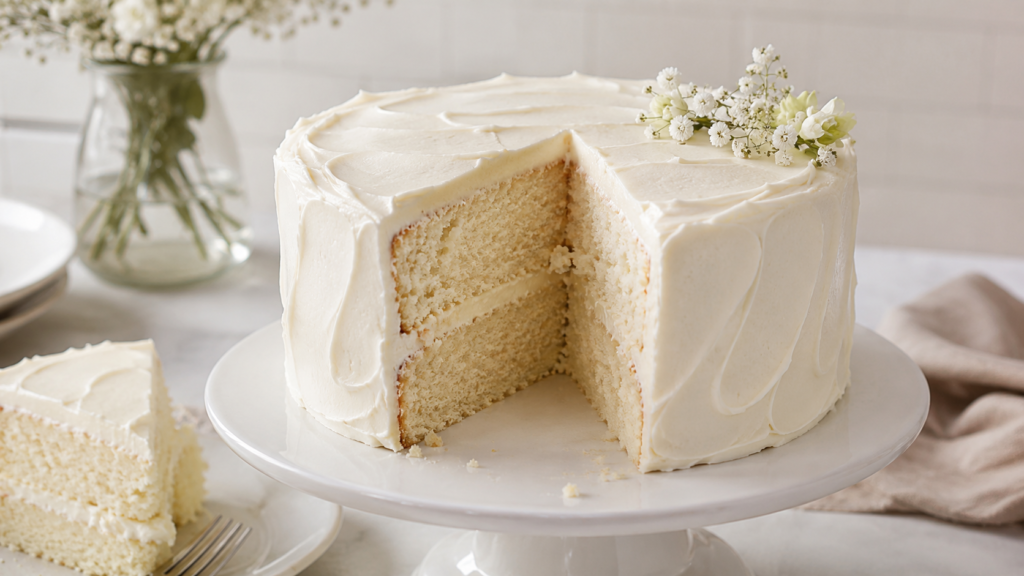
This white cake with egg whites has a soft crumb, delicate vanilla flavor and pale interior that is perfect for birthdays, weddings and other celebrations. Egg whites provide structure without the yellow color of yolks, while butter, oil, sour cream and buttermilk keep the layers moist.
Direct answer: White cake is made with egg whites instead of whole eggs to create a light color and tender texture. Butter supplies flavor, oil and sour cream prevent dryness, and gentle mixing keeps the crumb soft. This recipe makes two 8-inch cake layers that are sturdy enough for filling, frosting and stacking.
What Makes This White Cake Different?
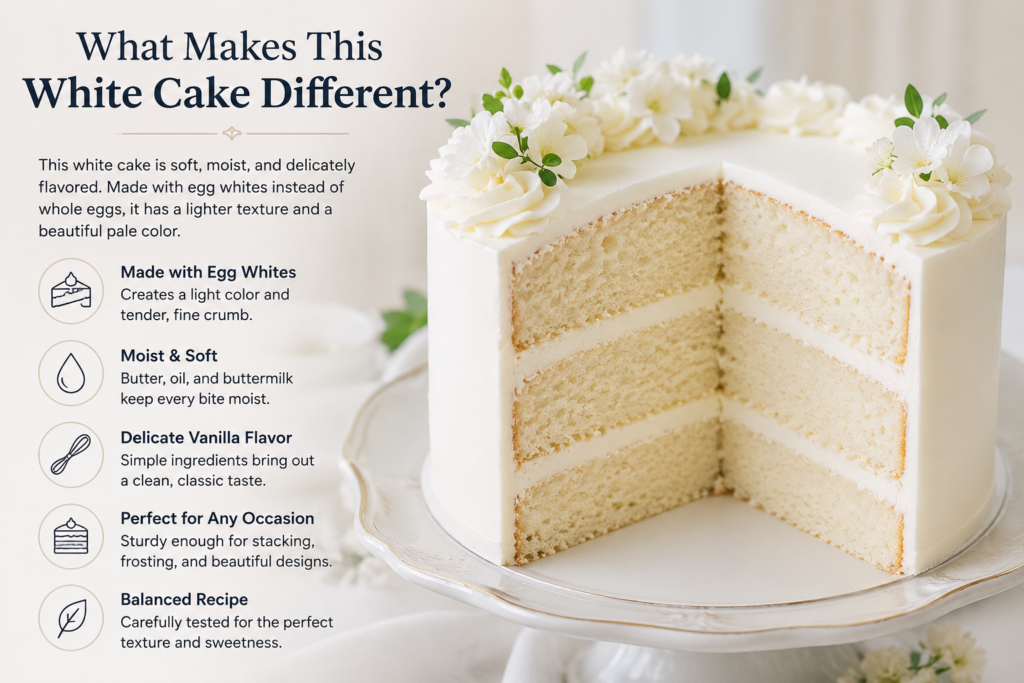
This recipe balances the light texture of egg whites with enough fat and dairy to prevent the cake from becoming dry or rubbery. Butter creates a classic bakery-style flavor, while a small amount of neutral oil helps the layers remain soft after cooling.
The recipe also uses cake flour, buttermilk and sour cream. Cake flour creates a finer crumb, while cultured dairy adds moisture and a slight tang that balances the sweetness.
You can expect:
- A pale, soft interior
- A fine and even crumb
- Clear vanilla flavor
- Moist layers that slice cleanly
- Enough structure for buttercream and fillings
- A lightly golden exterior
A homemade white cake may not appear completely paper-white because real butter and vanilla naturally add a slight cream color. That difference does not affect its quality or flavor.
Why Does White Cake Use Egg Whites Only?
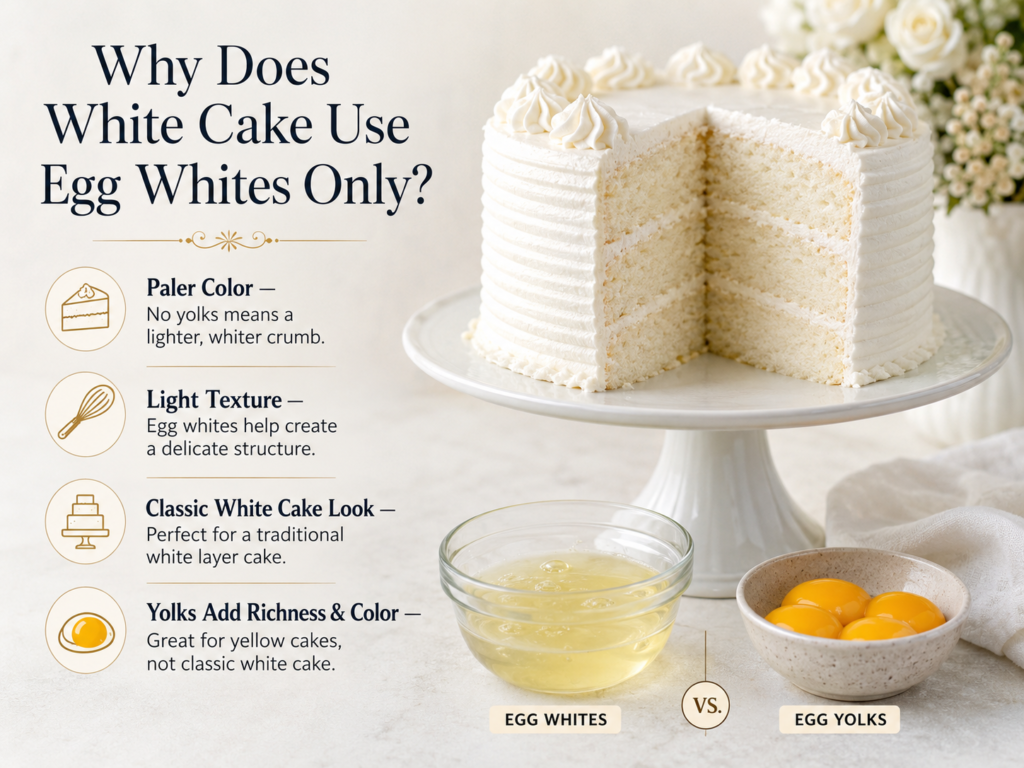
Egg yolks contain fat, flavor and yellow pigments. They make cakes richer, but they also change the color from white to yellow or golden.
Egg whites provide protein and structure without adding the same color. As they heat, their proteins firm and help the cake hold its shape.
However, egg whites contain very little fat. Using too many or baking the cake too long can produce a dry or rubbery texture. That is why this recipe includes butter, oil, sour cream and buttermilk.
For the best results, separate eggs while they are cold because the yolks are less likely to break. Let the whites come to room temperature before adding them to the batter.
Which Ingredients Keep White Cake Soft and Moist?
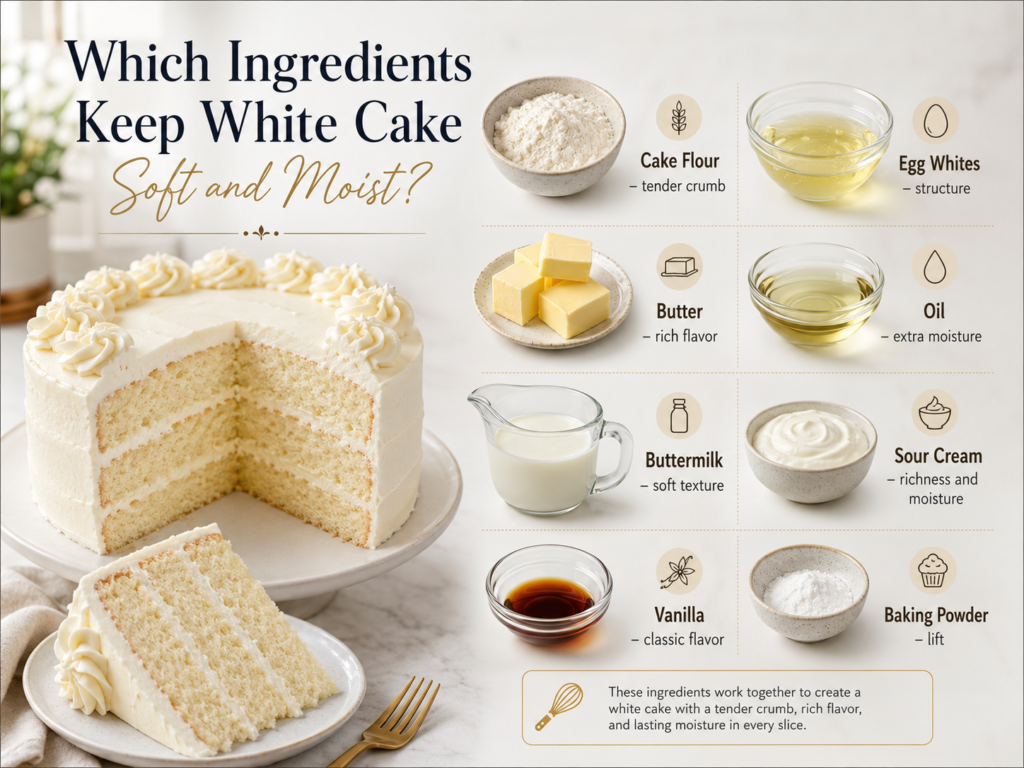
Each ingredient has a specific role in the cake.
Cake flour
Cake flour contains less protein than most all-purpose flour. It creates a softer, finer crumb and reduces the risk of a chewy cake.
Egg whites
Egg whites provide structure while keeping the cake pale. Six large egg whites equal approximately 180 grams.
Butter
Butter adds flavor and helps trap air when creamed with sugar. Use softened butter, not melted butter.
Neutral oil
A small amount of oil keeps the cake softer after refrigeration. Canola, vegetable, sunflower or another flavorless baking oil will work.
Buttermilk
Buttermilk hydrates the flour and adds a subtle tang. Its acidity also helps create a tender crumb.
Sour cream
Sour cream adds moisture and richness without making the batter excessively thin.
Vanilla extract
Vanilla gives the cake its main flavor. Clear vanilla can create a paler cake, but pure vanilla generally provides a more natural flavor.
Baking powder
Baking powder supplies the lift needed for light, even layers. Check the expiration date before baking.
Can You Use Carton Egg Whites?
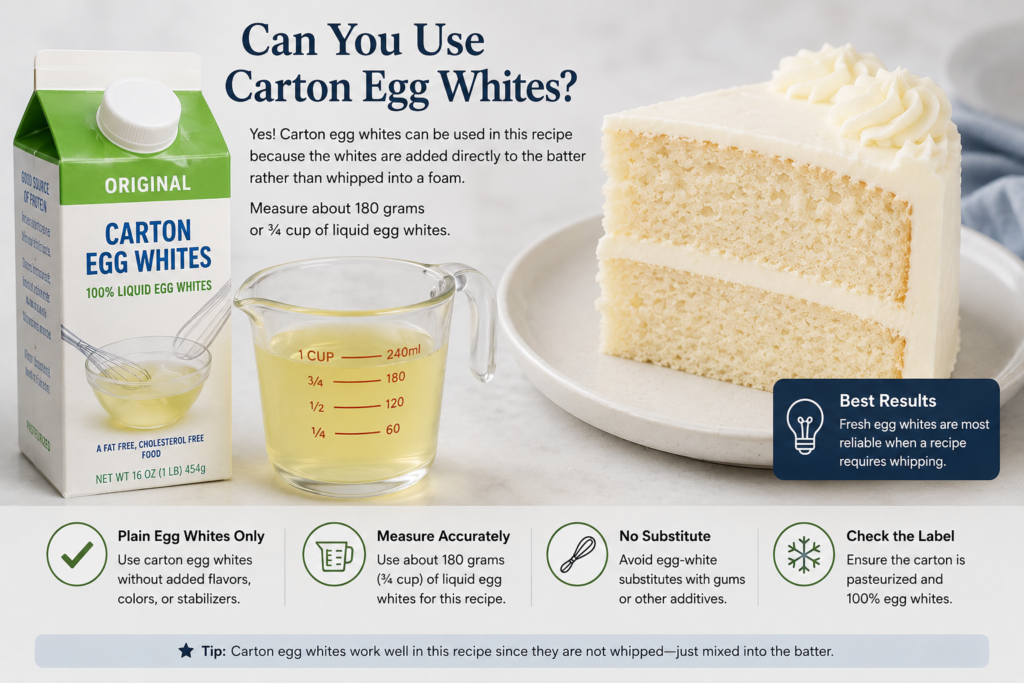
Carton egg whites can be used in this recipe because the whites are added directly to the batter rather than whipped into a foam.
Measure approximately 180 grams or ¾ cup of liquid egg whites. Check the package to confirm that the product contains plain egg whites without added flavorings.
Fresh egg whites remain the most reliable option when a recipe requires whipping. Some pasteurized carton whites take longer to whip or may not reach the same volume.
Do not use an egg-white substitute containing gums, colors or other ingredients unless the package specifically states that it is suitable for baking.
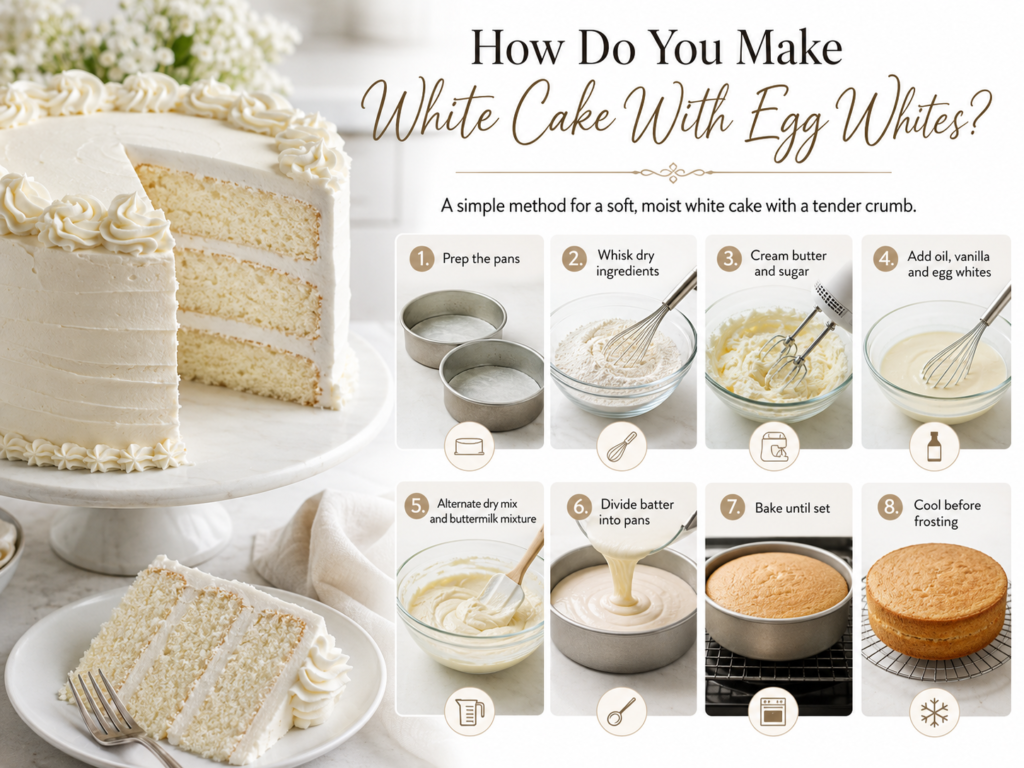
How Do You Make White Cake With Egg Whites?
White Cake Recipe Card
Prep time: 25 minutes
Bake time: 26–32 minutes
Cooling time: 1 hour
Yield: Two 8-inch cake layers
Servings: 12–14 slices
Oven temperature: 350°F or 175°C
Ingredients
- 3 cups cake flour, spooned and leveled or 345 grams
- 2½ teaspoons baking powder
- ½ teaspoon fine salt
- ¾ cup unsalted butter, softened or 170 grams
- ¼ cup neutral oil or 60 milliliters
- 1¾ cups granulated sugar or 350 grams
- 6 large egg whites, room temperature or about 180 grams
- 2 teaspoons vanilla extract
- ¼ teaspoon almond extract, optional
- 1 cup buttermilk, room temperature or 240 milliliters
- ½ cup full-fat sour cream, room temperature or 120 grams
Instructions
- Prepare the oven and pans.
Preheat the oven to 350°F or 175°C. Grease two 8-inch round cake pans. Line the bottoms with parchment paper and lightly grease the parchment. - Combine the dry ingredients.
Whisk the cake flour, baking powder and salt in a medium bowl. Set the mixture aside. - Cream the butter and sugar.
Beat the softened butter and sugar with an electric mixer for 3–4 minutes. The mixture should look pale and fluffy. - Add the oil and flavorings.
Beat in the neutral oil, vanilla extract and optional almond extract until evenly combined. - Add the egg whites.
Add the egg whites in three portions, mixing on medium-low speed after each addition. Scrape the sides and bottom of the bowl as needed. - Combine the dairy ingredients.
Whisk the buttermilk and sour cream together in a separate bowl until smooth. - Finish the batter.
Add one-third of the flour mixture to the butter mixture. Mix on low speed, then add half of the buttermilk mixture. Repeat, ending with the remaining flour. - Avoid overmixing.
Stop mixing as soon as no dry flour remains. Fold the batter gently with a spatula to make sure everything is evenly combined. - Fill the pans.
Divide the batter evenly between the prepared pans. A kitchen scale can help create layers of equal thickness. - Bake the cake.
Bake for 26–32 minutes. Begin checking early because ovens and cake pans vary. - Cool the layers.
Let the cakes cool in their pans for 10–15 minutes. Run a thin knife around the edges, turn the cakes onto a rack and remove the parchment. - Frost the cake.
Allow the layers to cool completely before filling, trimming or frosting them.
How Do You Know When the Cake Is Done?
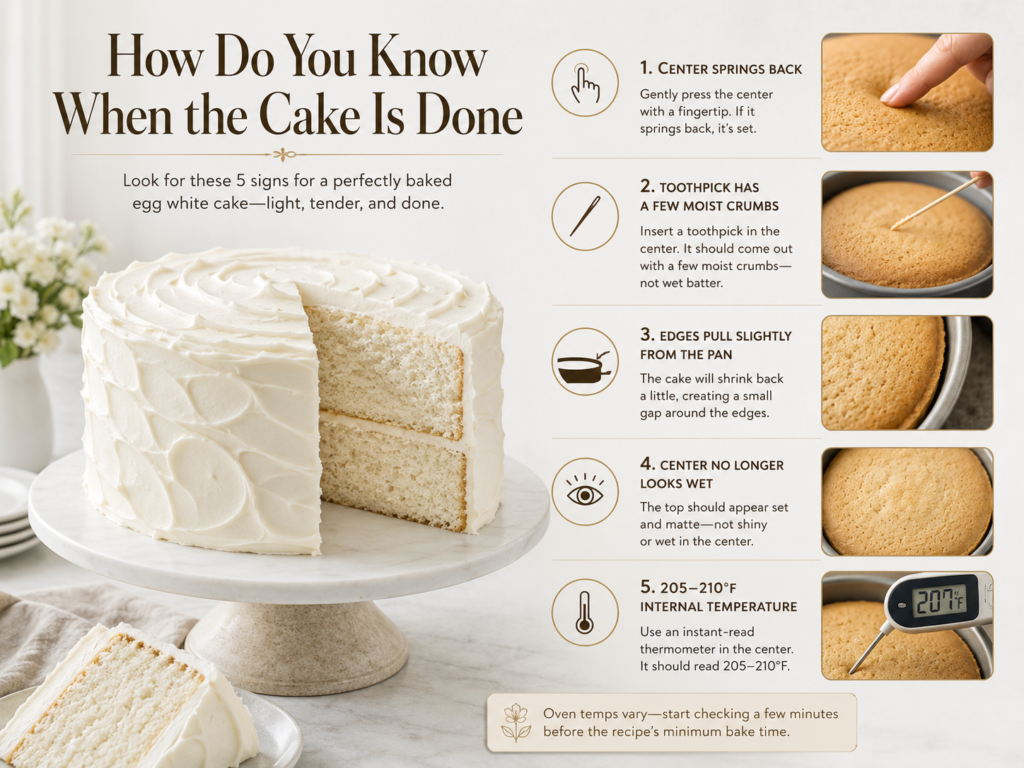
The cake is ready when the center springs back after being pressed gently and a toothpick inserted near the middle comes out clean or with a few moist crumbs.
Look for several signs rather than relying only on the baking time:
- The center no longer appears wet
- The cake springs back after a light touch
- A toothpick has no liquid batter
- The edges begin pulling slightly from the pan
- The layers look evenly risen
Do not wait for the entire cake to become deeply browned. Egg-white cakes can dry out quickly when overbaked.
An instant-read thermometer inserted into the center should generally register around 205–210°F or 96–99°C.
Which Pan Sizes Can You Use?
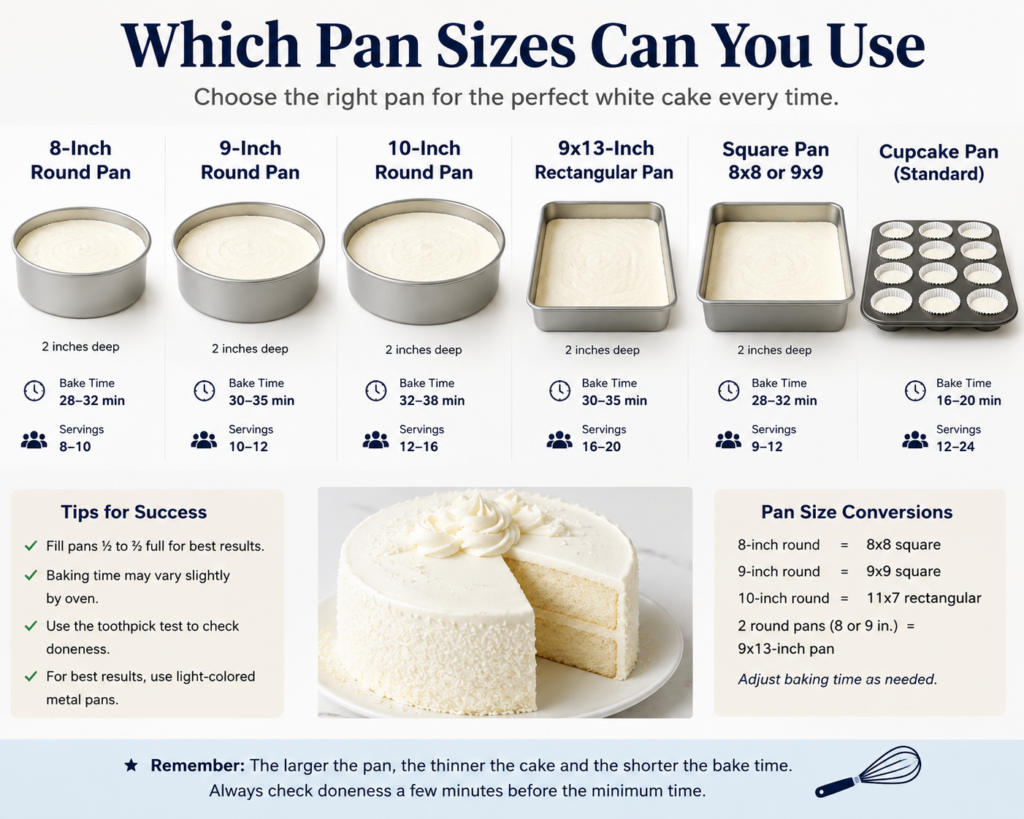
The recipe is designed for two 8-inch round cake pans, but it can be adapted to other formats.
| Pan format | Approximate baking time |
| Two 8-inch round pans | 26–32 minutes |
| Two 9-inch round pans | 22–28 minutes |
| One 9 × 13-inch pan | 30–38 minutes |
| Standard cupcakes | 18–22 minutes |
Fill cake pans no more than about two-thirds full. For cupcakes, fill each liner approximately two-thirds full.
Pan materials, batter depth and oven accuracy affect baking time. Begin checking before the suggested minimum time rather than waiting for the timer to finish.
Which Frosting Goes Best With White Cake?
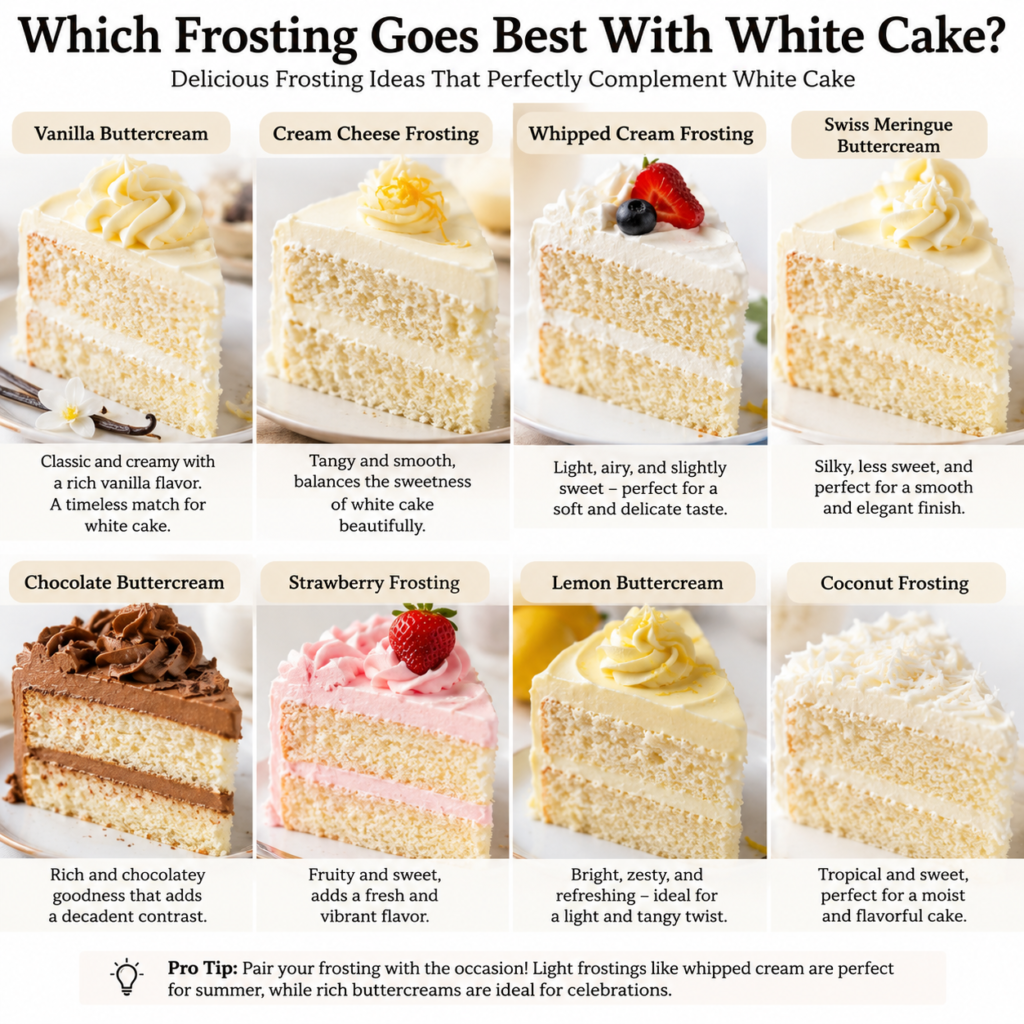
Vanilla buttercream is the classic choice because it supports the cake’s delicate flavor without overpowering it.
Other suitable options include:
- White chocolate buttercream
- Cream cheese frosting
- Swiss meringue buttercream
- Whipped vanilla frosting
- Strawberry buttercream
- Raspberry filling
- Lemon curd
- Coconut frosting
For a celebration cake, spread a thin buttercream barrier around soft fillings such as jam or curd. This prevents the filling from leaking between the layers.
Cool the cake completely before frosting. Even slightly warm layers can soften the buttercream and cause the cake to slide.
How Should You Store and Freeze White Cake?
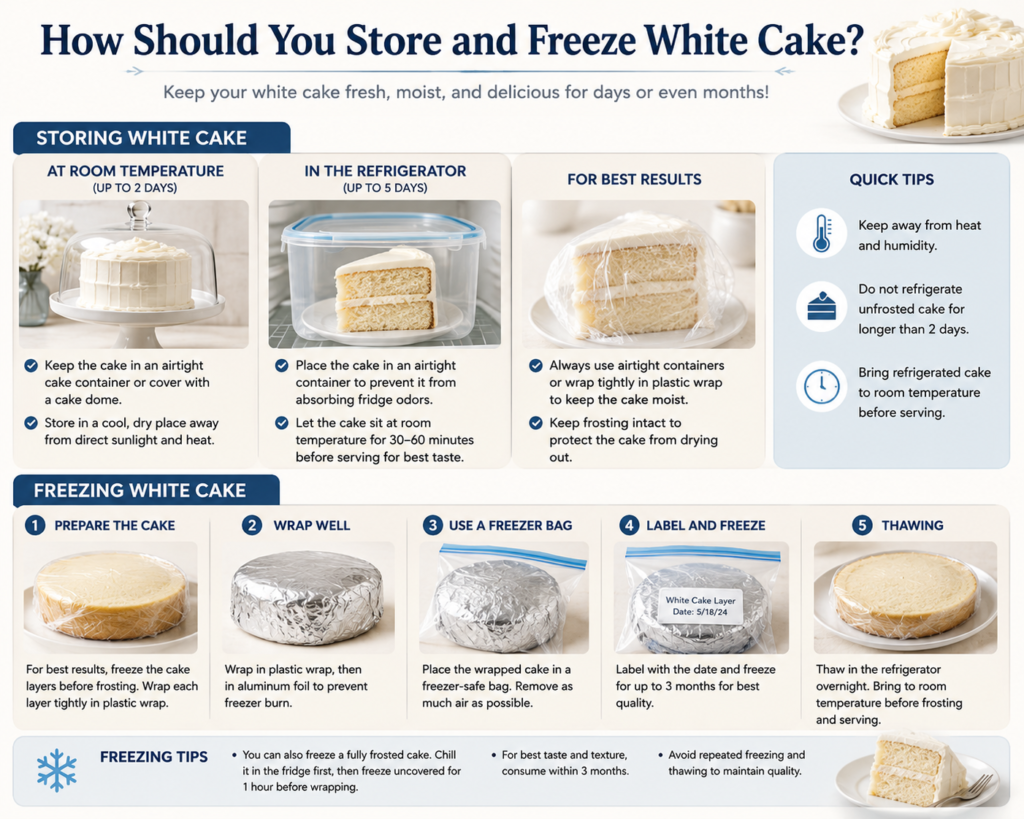
Unfrosted cake layers can be stored at room temperature for up to two days when wrapped tightly. Keep them in a cool, dry place away from direct sunlight.
A buttercream-frosted cake can usually remain at room temperature for one day, provided the room is not warm. Cakes containing cream cheese frosting, whipped cream, custard or fresh fruit should be refrigerated.
To freeze the layers:
- Cool them completely.
- Wrap each layer tightly in plastic wrap.
- Add a second layer of foil or place them in freezer bags.
- Freeze for up to three months.
- Thaw the wrapped layers at room temperature.
Keeping the layers wrapped while they thaw reduces surface condensation and helps preserve moisture.
What Can You Make With the Leftover Egg Yolks?
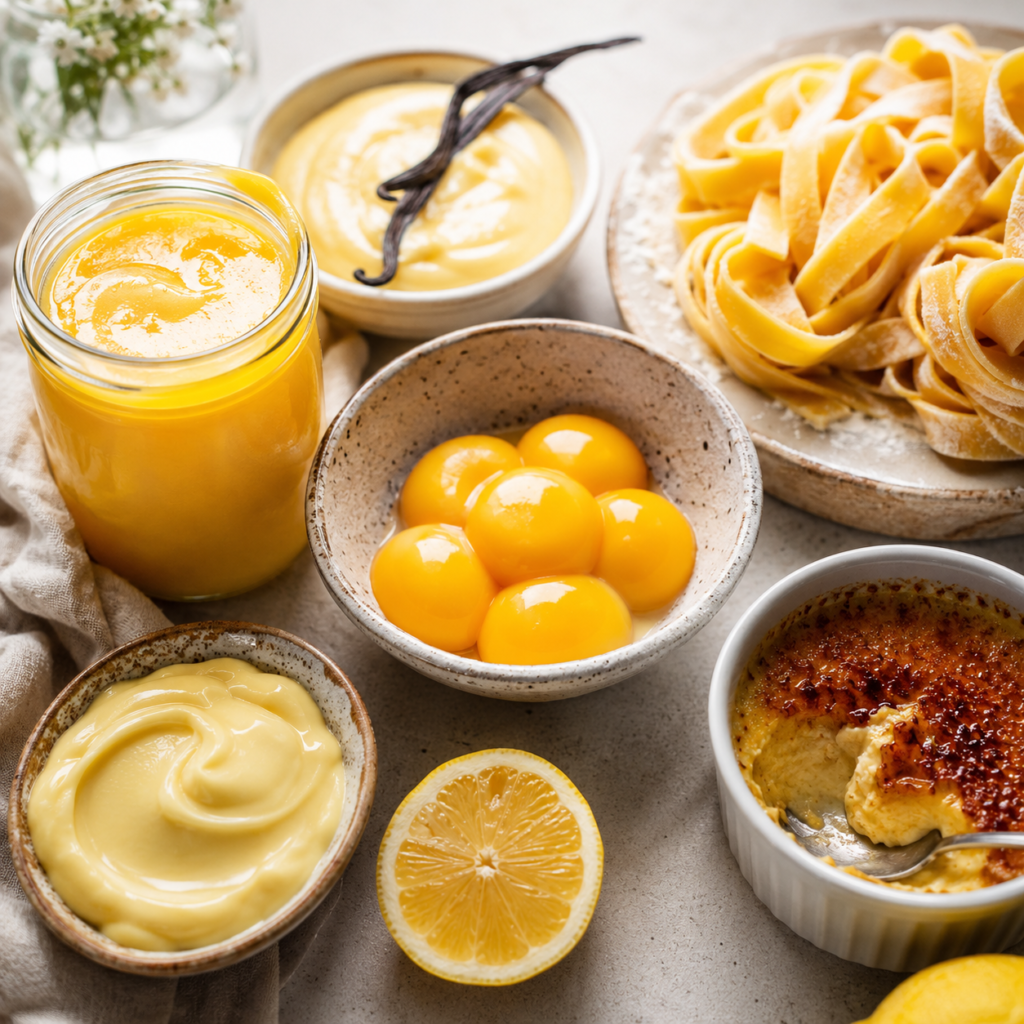
Do not discard the yolks left after separating the eggs. They can be used in recipes that benefit from extra richness.
Good options include:
- Lemon curd
- Pastry cream
- Vanilla custard
- Crème brûlée
- Homemade mayonnaise
- Ice cream
- Hollandaise sauce
- Enriched scrambled eggs
Store raw yolks in a covered container in the refrigerator and use them promptly. Adding a thin layer of cold water over the yolks can help prevent their surfaces from drying. Drain the water before use.
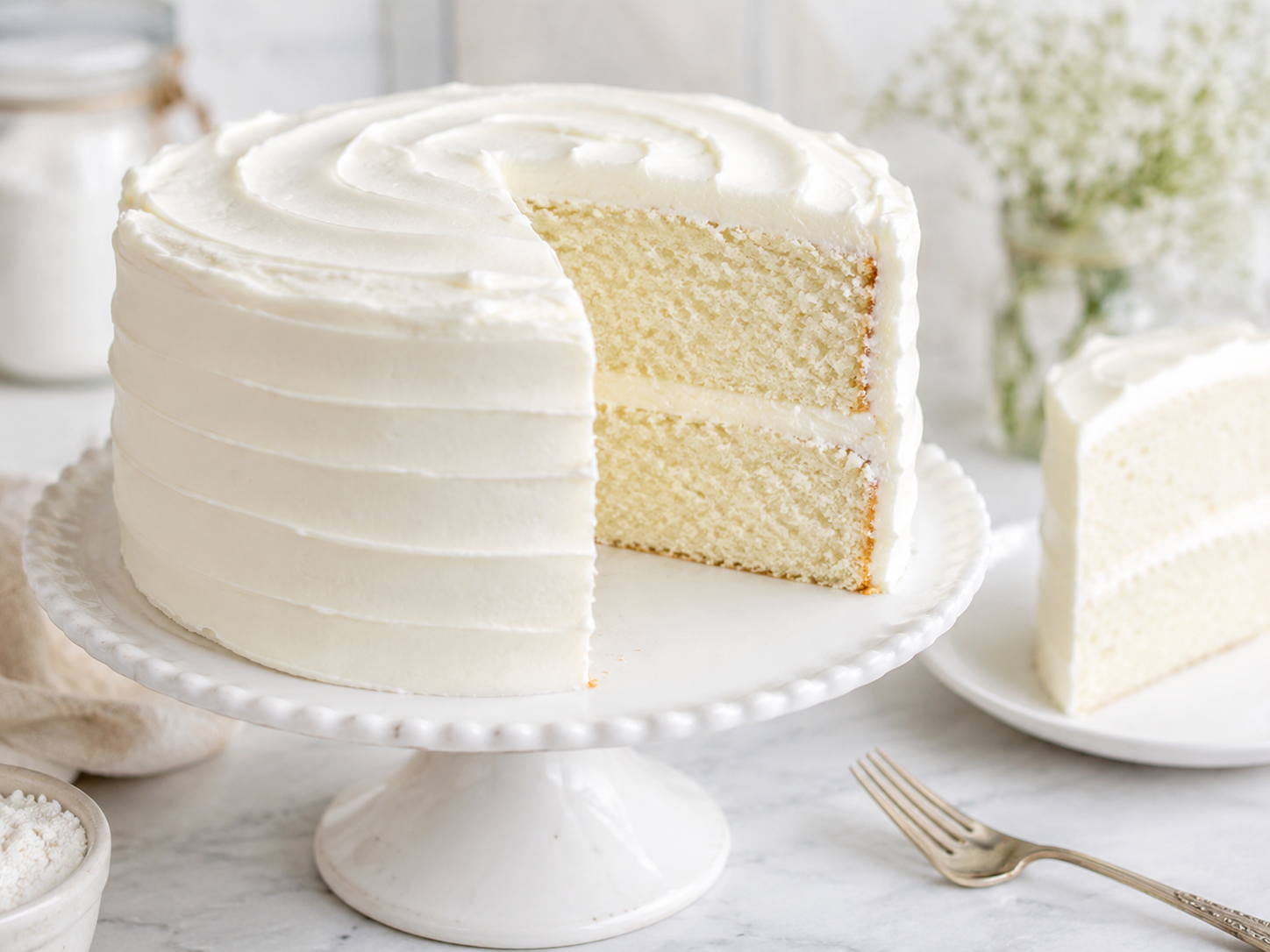
Soft and Fluffy White Cake With Egg Whites
Ingredients
Method
- Preheat the oven to 350°F (175°C). Grease two 8-inch round cake pans, line the bottoms with parchment paper, and lightly grease the parchment.
- Whisk the cake flour, baking powder, and salt together in a medium bowl. Set aside.
- Beat the softened butter and granulated sugar with an electric mixer for 3–4 minutes, until pale and fluffy.
- Add the neutral oil, vanilla extract, and optional almond extract. Mix until fully combined.
- Add the egg whites in three additions, mixing on medium-low speed after each addition. Scrape down the sides and bottom of the bowl as needed.
- In a separate bowl, whisk the buttermilk and sour cream together until smooth.
- Add one-third of the flour mixture to the butter mixture and mix on low speed. Add half of the buttermilk mixture. Repeat, then finish with the remaining flour mixture.
- Mix only until no dry flour remains. Gently fold the batter with a spatula. Do not overmix.
- Divide the batter evenly between the two prepared cake pans and smooth the tops.
- Bake for 26–32 minutes, or until the centers spring back when lightly touched and a toothpick inserted in the center comes out clean or with a few moist crumbs.
- Let the cakes cool in the pans for 10–15 minutes.
- Run a thin knife around the edges, turn the cakes onto a wire cooling rack, and remove the parchment paper.
- Allow the cake layers to cool completely before frosting, filling, or stacking.
Notes
Frequently Asked Questions
Can you make white cake without egg yolks?
Yes. Traditional white cake uses egg whites instead of whole eggs to create a pale color and lighter texture.
Do egg whites make cake dry?
Egg whites can produce dryness when too many are used or the cake is overbaked. Butter, oil, sour cream and buttermilk help maintain moisture.
Can carton egg whites be used?
Yes. Plain carton egg whites work well in this recipe because they are not whipped. Measure approximately 180 grams or ¾ cup.
Is cake flour necessary?
Cake flour creates the softest texture. All-purpose flour can work, but the crumb may be slightly firmer.
Why did my white cake turn yellow?
Butter, vanilla and normal browning can create an ivory color. Clear vanilla and very pale butter can make the cake look whiter.
Why did the cake sink in the center?
The cake may have been removed too early, the oven door may have been opened during baking or too much leavening may have been used.
Can this cake be made ahead?
Yes. Bake the layers one or two days ahead, wrap them tightly and store them at room temperature or freeze them for longer storage.
Is this cake strong enough for stacking?
Yes. The crumb is soft but stable enough for a standard two-layer cake. Chill the layers before assembling a taller cake.

I’m Tahira Ramzan, an experienced recipe creator and the founder of EggWhiteRecipes.com. I specialize in simple, practical egg white recipes made with everyday ingredients. My goal is to share easy-to-follow recipes, helpful cooking tips, and reliable methods that make home cooking easier and more enjoyable.