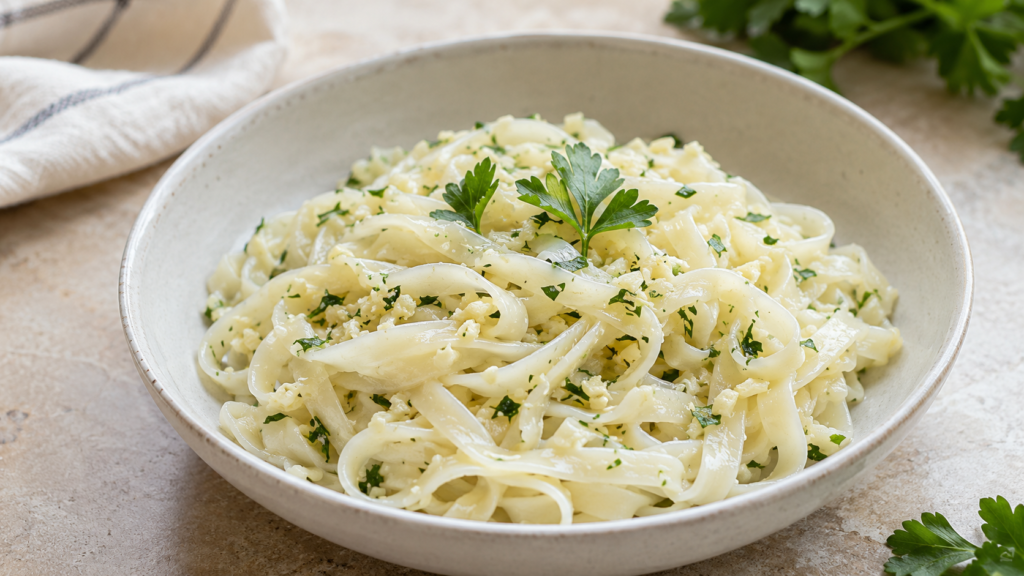
Egg white noodles are thin, flourless noodle strips made by cooking egg whites into flexible sheets and slicing them like pasta. This high-protein recipe takes about 15 minutes and works well with light sauces, soups, stir-fries, and low-carb meals.
The texture is softer than traditional wheat pasta and closer to delicate egg noodles. For the best results, cook the sheets over medium-low heat and warm the finished noodles only briefly before serving.
What Are Egg White Noodles?
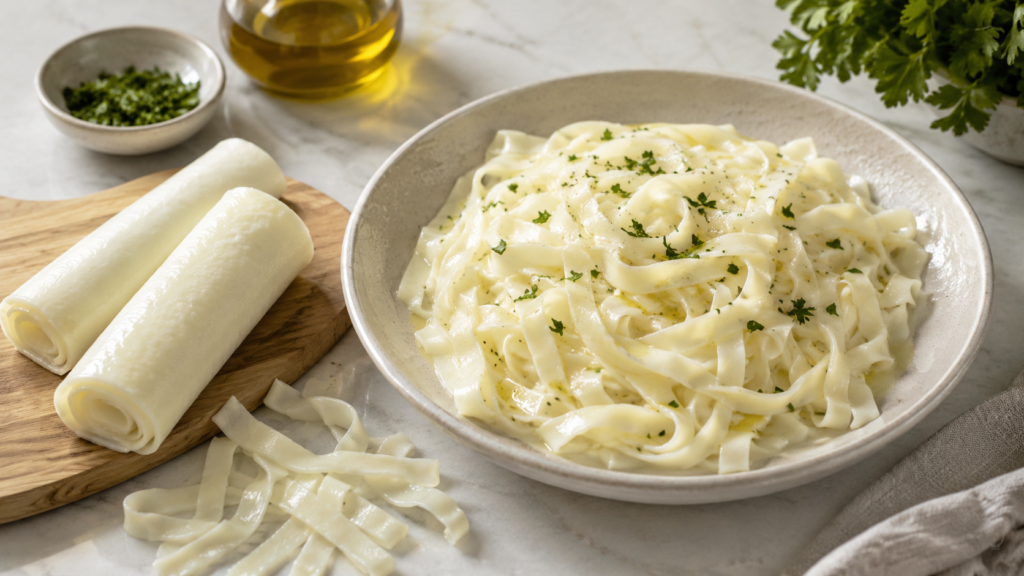
Egg white noodles are made from cooked egg-white sheets rather than flour-based dough. The mixture is spread thinly in a skillet, cooked like a crepe, cooled, rolled, and cut into strips.
Unlike traditional egg noodles, this recipe requires:
- No wheat flour
- No kneading
- No pasta machine
- No dough resting
- No boiling
These noodles are naturally low in carbohydrates and provide a simple way to use fresh or carton egg whites.
Why Does This Egg White Noodles Recipe Work?
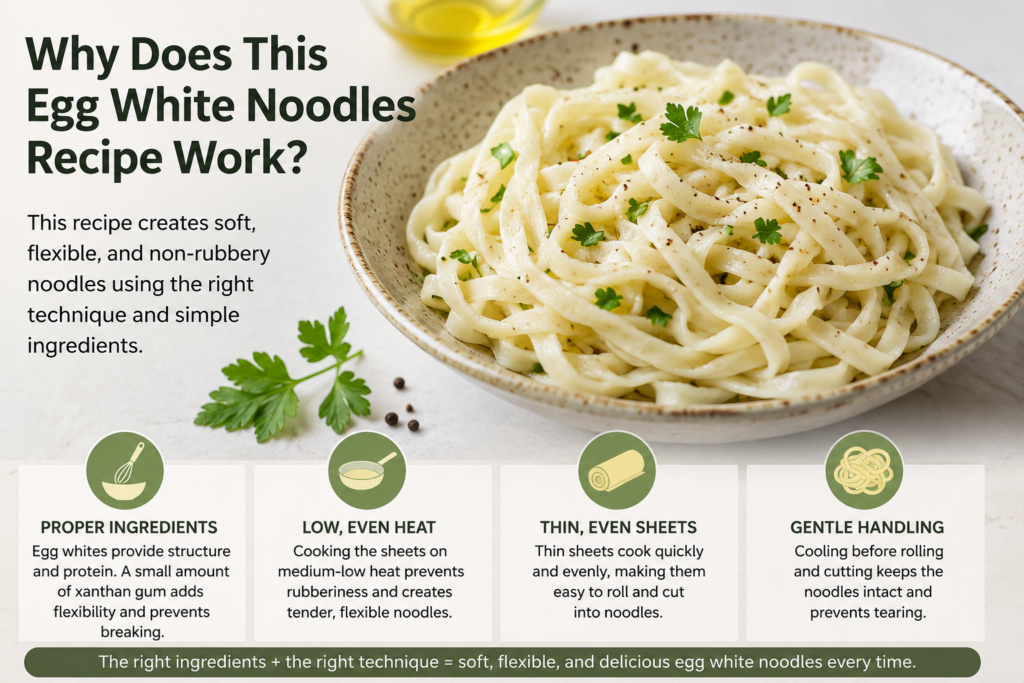
Egg whites firm up when heated, while a small amount of xanthan gum helps the cooked sheets bend without tearing.
Three details improve the texture:
- Use medium-low heat: High heat makes egg whites rubbery.
- Cook thin sheets: Thick layers become spongy rather than noodle-like.
- Avoid boiling: The noodles are already cooked and only need gentle reheating.
The flavour is mild, so season the batter lightly and serve the noodles with a well-seasoned sauce or broth.
Which Ingredients Do You Need?
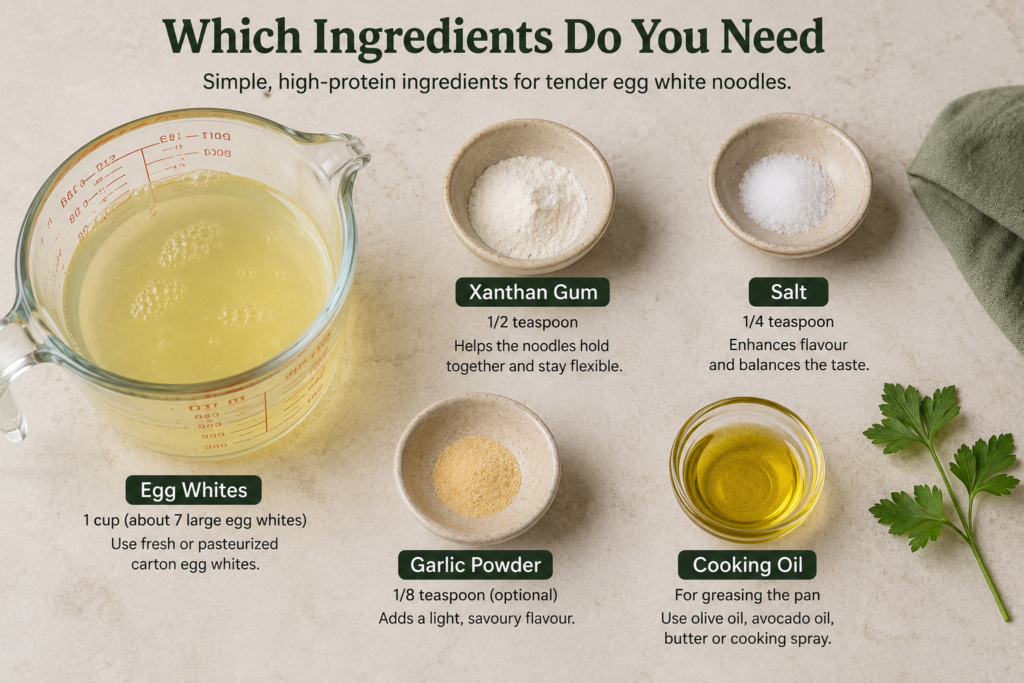
You need only a few basic ingredients.
Egg whites
Use 1 cup of liquid egg whites. This equals approximately seven large egg whites, depending on their size.
Freshly separated egg whites and pasteurized carton egg whites both work.
Xanthan gum
Xanthan gum improves flexibility and prevents the sheets from breaking when rolled or sliced.
Use only ½ teaspoon. Too much can make the noodles gummy.
Salt
Salt gives the otherwise mild egg whites more flavour.
You can also add a small amount of garlic powder, onion powder, white pepper, dried herbs, or nutritional yeast.
Cooking oil
Use a thin coating of neutral oil, olive oil, butter, or cooking spray to prevent sticking.
What Is the Best Egg-White-to-Xanthan-Gum Ratio?
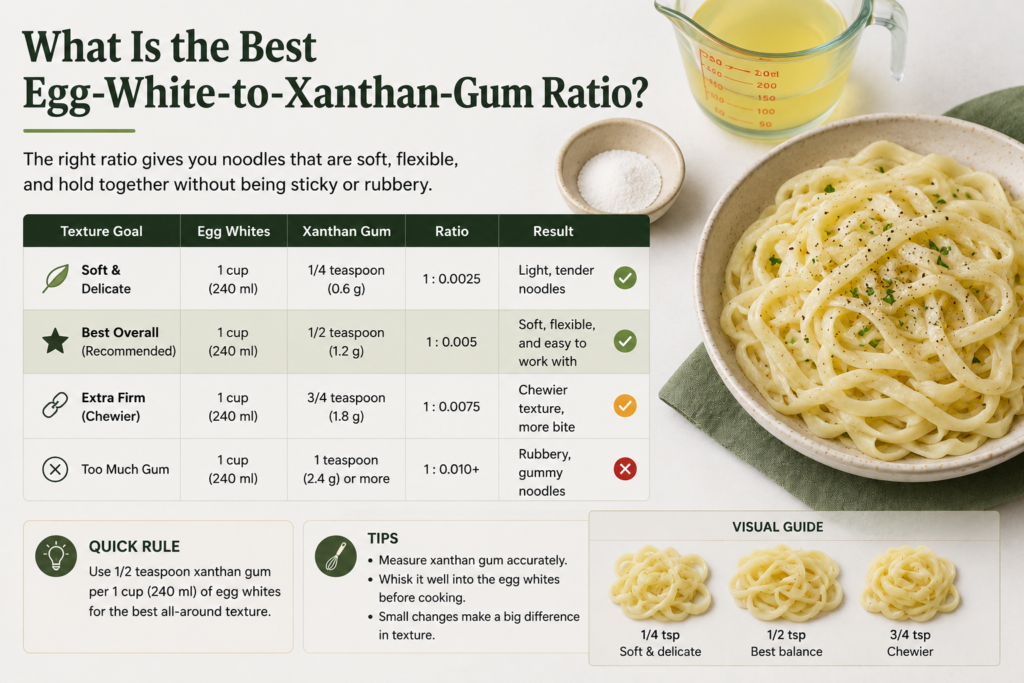
Use ½ teaspoon of xanthan gum for every 1 cup of liquid egg whites.
| Egg whites | Xanthan gum | Yield |
|---|---|---|
| ½ cup | ¼ teaspoon | 1 serving |
| 1 cup | ½ teaspoon | 2 servings |
| 2 cups | 1 teaspoon | 4 servings |
Cook larger batches in separate thin sheets. Pouring all the batter into one pan creates a thick omelette rather than flexible noodles.
How Do You Make Egg White Noodles?
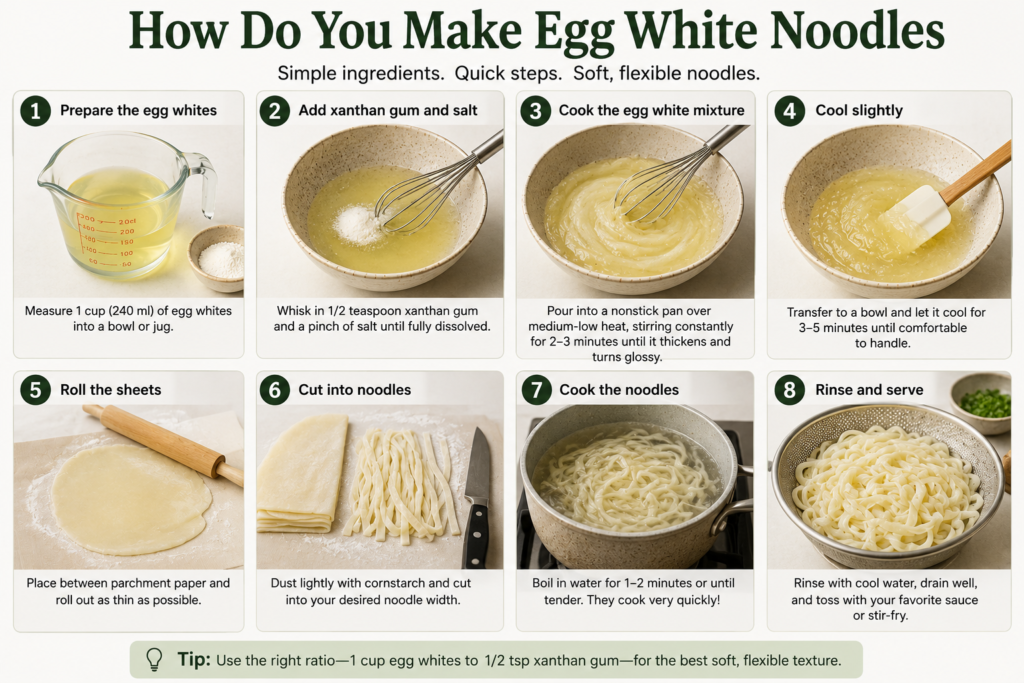
1. Blend the batter
Add the egg whites, xanthan gum, salt, and optional seasonings to a blender.
Blend for 15–20 seconds until smooth. Let the mixture rest for two minutes so large air bubbles can disappear.
Do not blend for too long because excessive foam can create holes in the cooked sheets.
2. Heat the skillet
Place an 8-inch or 20-centimetre nonstick skillet over medium-low heat.
Add a very thin layer of oil. Wipe away any excess so the batter spreads evenly.
3. Cook the egg-white sheets
Pour approximately ¼ cup of batter into the skillet.
Immediately tilt and rotate the pan to spread the mixture into a thin, even layer.
Cook for 90 seconds to two minutes. The sheet is ready to flip when:
- The top is no longer wet
- The edges lift easily
- The centre feels set
- The underside remains pale
Flip carefully and cook the second side for another 20–30 seconds.
4. Cool the sheets
Transfer the cooked sheet to a plate or piece of baking paper.
Repeat with the remaining batter. Allow the sheets to cool before stacking them because warm egg whites can stick together.
5. Cut the noodles
Stack two cooled sheets and roll them loosely.
Use a sharp knife to slice them into strips:
- Thin strips for spaghetti-style noodles
- Medium strips for fettuccine
- Wide strips for lasagne
Unroll and separate the noodles gently with your fingers.
6. Warm and serve
Add the noodles to prepared sauce, broth, or vegetables.
Warm them for only 30–60 seconds. Prolonged simmering can make them tough or cause them to break.
Why Did the Egg White Noodles Tear or Stick?
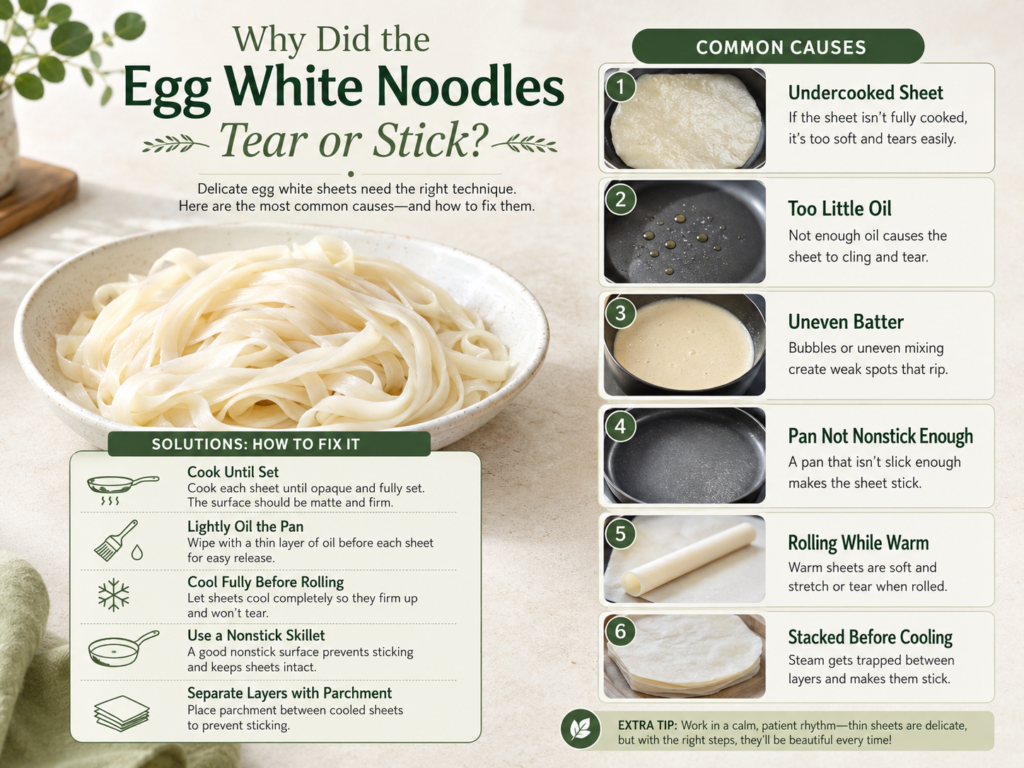
Tearing usually happens when the sheet is undercooked, too thin, or removed from the pan too quickly.
Common causes include:
- Flipping before the top is fully set
- Not blending the xanthan gum evenly
- Using a scratched skillet
- Adding too little oil
- Rolling the sheets while warm
- Pouring the batter unevenly
Let the sheet cook until the edges release naturally. Slide a thin spatula underneath the entire sheet rather than pulling from one corner.
To prevent sticking, cool every sheet fully before stacking. Baking paper can be placed between layers during storage.
Why Did the Noodles Turn Rubbery?
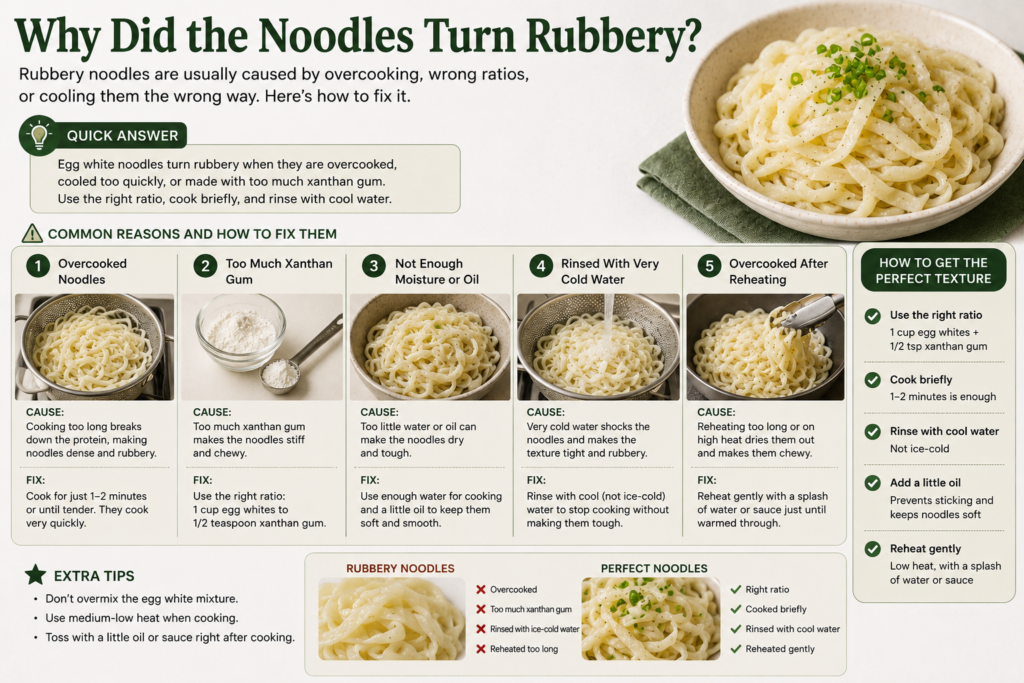
Rubbery noodles are usually caused by excessive heat or overcooking.
Keep the skillet at medium-low heat and remove the sheet as soon as it is cooked through. Browning is unnecessary.
The sliced noodles should also be treated as a cooked ingredient. Add them at the end of preparation rather than simmering them like dried pasta.
A little sauce, broth, butter, or olive oil helps keep the noodles moist.
Can You Use Carton Egg Whites?
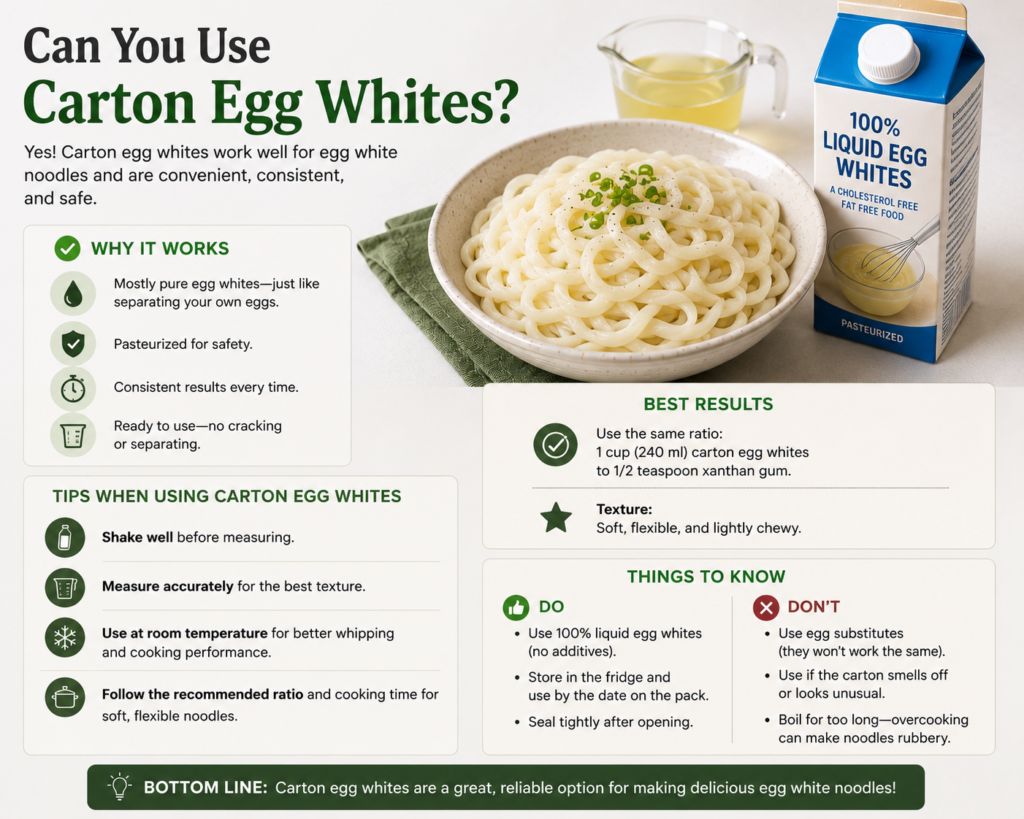
Yes. Pasteurized carton egg whites are convenient because they are easy to measure and require no egg separation.
Choose a carton containing plain egg whites without added sugar or strong flavourings. Shake it gently before measuring because the liquid may separate during storage.
Fresh egg whites also work, although they may create slightly more foam when blended.
Cook the noodle sheets completely before slicing and serving.
Can You Make Egg White Noodles Without Xanthan Gum?
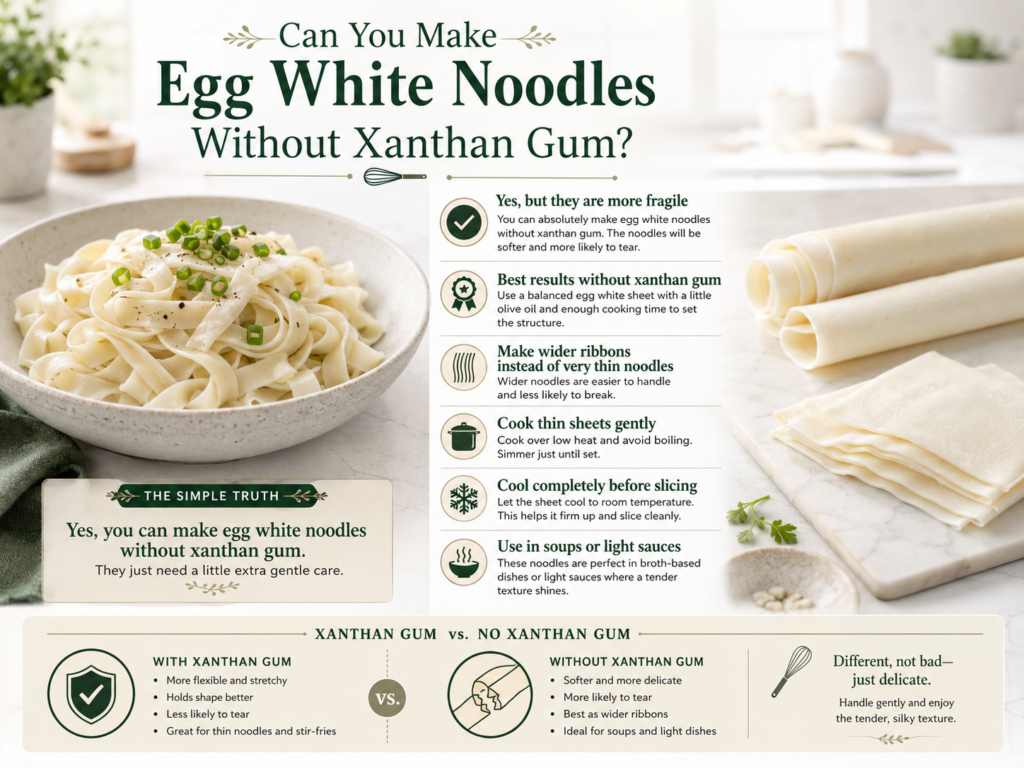
You can make thin sheets using only egg whites, but they will be more fragile and may tear during rolling or slicing.
Without xanthan gum, cut the cooked egg whites into wider ribbons rather than narrow noodles. Wider strips are easier to handle and work well in soups.
Gelatin can also be used in some egg-white noodle recipes, but it requires a different method and cannot be exchanged for xanthan gum in the same amount.
What Can You Serve With Egg White Noodles?
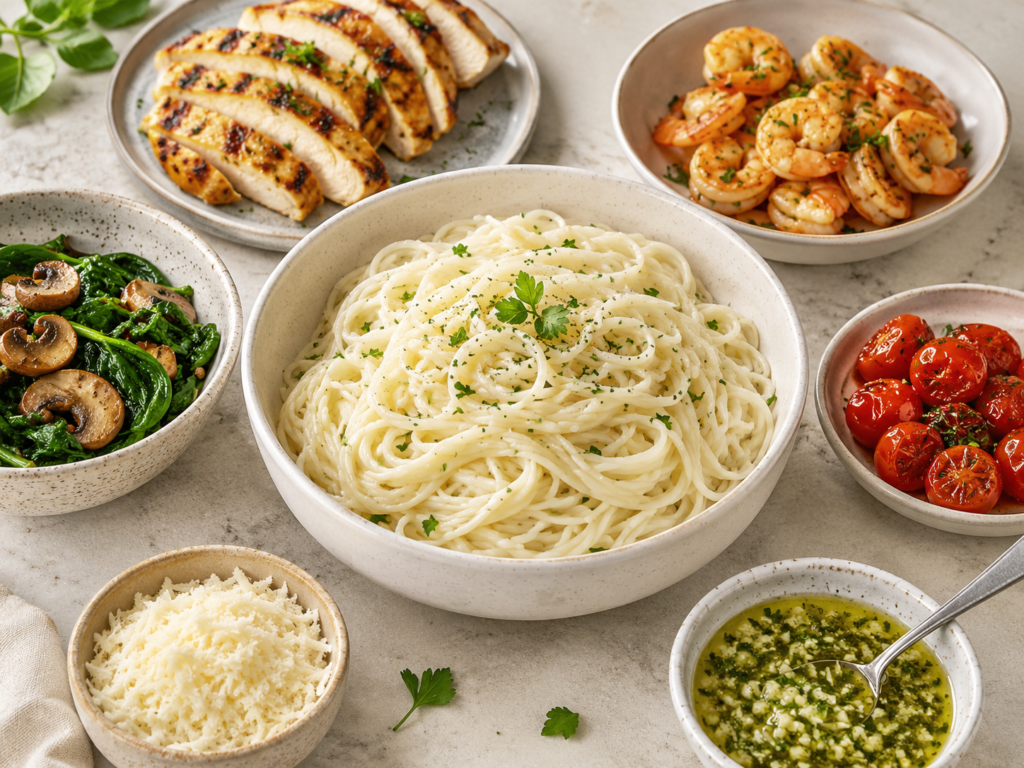
Egg white noodles work best with moist sauces and strongly seasoned toppings.
Good serving options include:
- Garlic butter and herbs
- Tomato and basil sauce
- Chicken and mushroom sauce
- Pesto and cherry tomatoes
- Light Alfredo sauce
- Soy, sesame, and stir-fried vegetables
- Chicken or vegetable broth
- Chilli oil and spring onions
- Garlic prawns
- Ground turkey tomato sauce
For soup, place the noodles directly in the serving bowl and pour the hot broth over them. Avoid boiling them in the soup pot.
How Should You Store and Reheat Egg White Noodles?
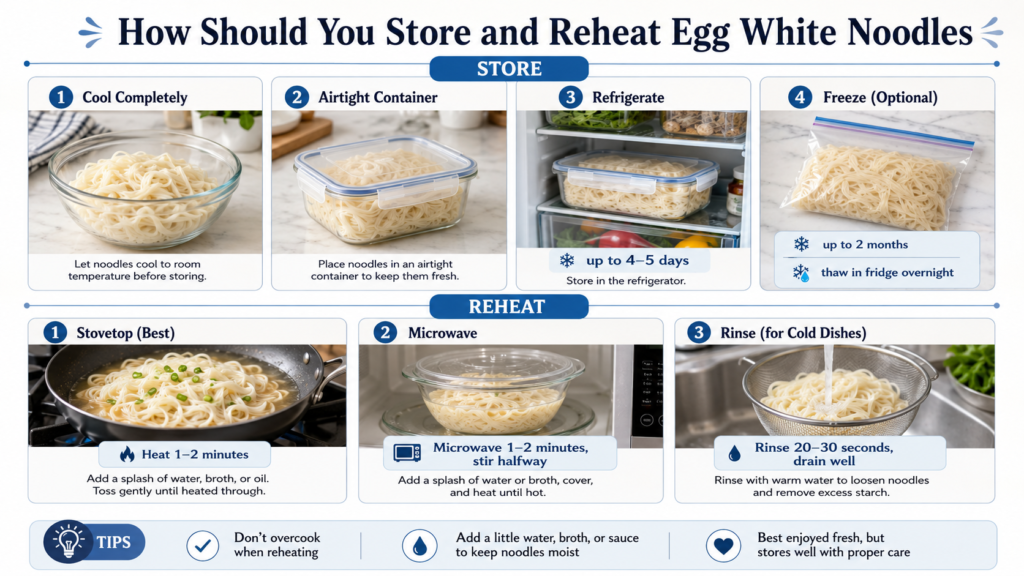
Allow the noodles to cool completely before transferring them to an airtight container.
Refrigerate them for up to three or four days. Place baking paper between layers if the noodles tend to stick.
To reheat:
- Place the noodles in a skillet.
- Add one or two tablespoons of sauce or broth.
- Cover and warm gently.
- Toss briefly and serve.
Freezing is possible, but the noodles may release moisture and become more fragile after thawing. Refrigeration provides the best texture.
Egg White Noodles Recipe Card
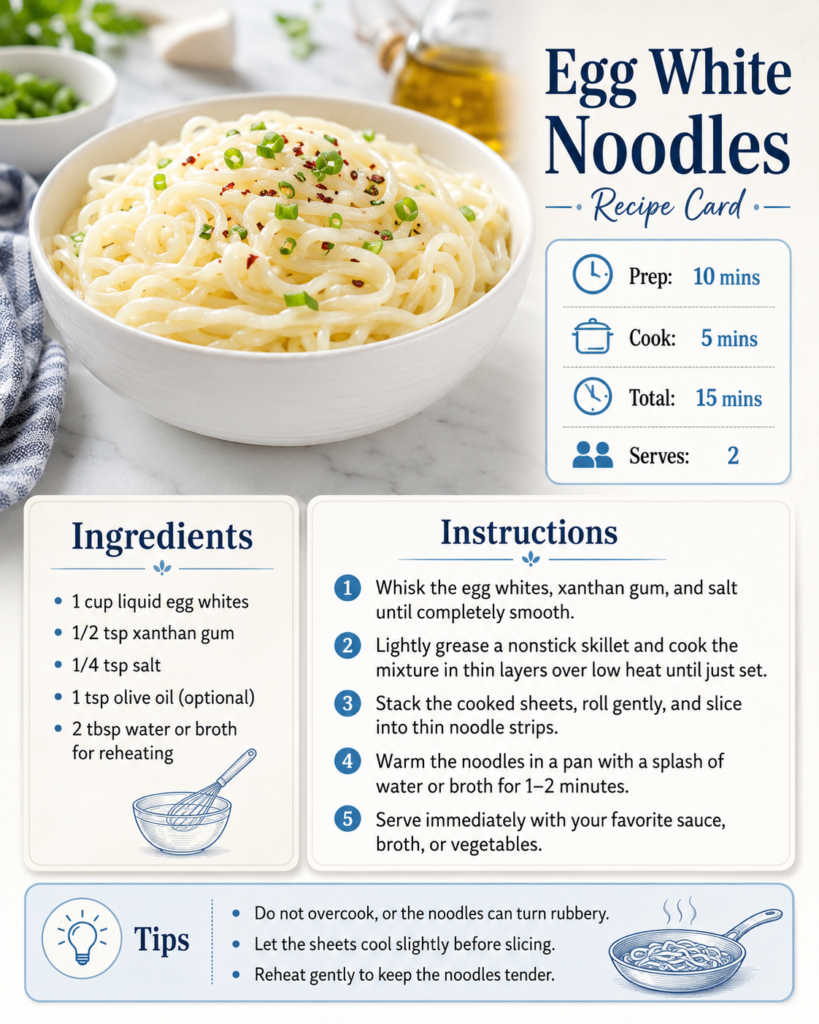
Preparation time: 5 minutes
Cooking time: 10 minutes
Total time: 15 minutes
Servings: 2
Ingredients
- 1 cup liquid egg whites
- ½ teaspoon xanthan gum
- ¼ teaspoon fine salt
- ⅛ teaspoon garlic powder, optional
- Oil, butter, or cooking spray for the skillet
Instructions
- Add the egg whites, xanthan gum, salt, and optional garlic powder to a blender.
- Blend for 15–20 seconds until smooth.
- Let the batter rest for two minutes.
- Heat a lightly greased nonstick skillet over medium-low heat.
- Pour approximately ¼ cup of batter into the skillet.
- Rotate the pan to create a thin layer.
- Cook for 90 seconds to two minutes, until the top is dry.
- Flip and cook for another 20–30 seconds.
- Transfer the sheet to a plate and repeat with the remaining batter.
- Cool the sheets completely.
- Stack, roll, and slice them into noodle strips.
- Warm briefly in prepared sauce or broth and serve.
Final Tips
- Keep the sheets thin and evenly spread.
- Use medium-low heat to prevent rubbery edges.
- Cool the sheets before rolling and slicing.
- Prepare the sauce before adding the noodles.
- Do not boil or simmer the finished noodles.
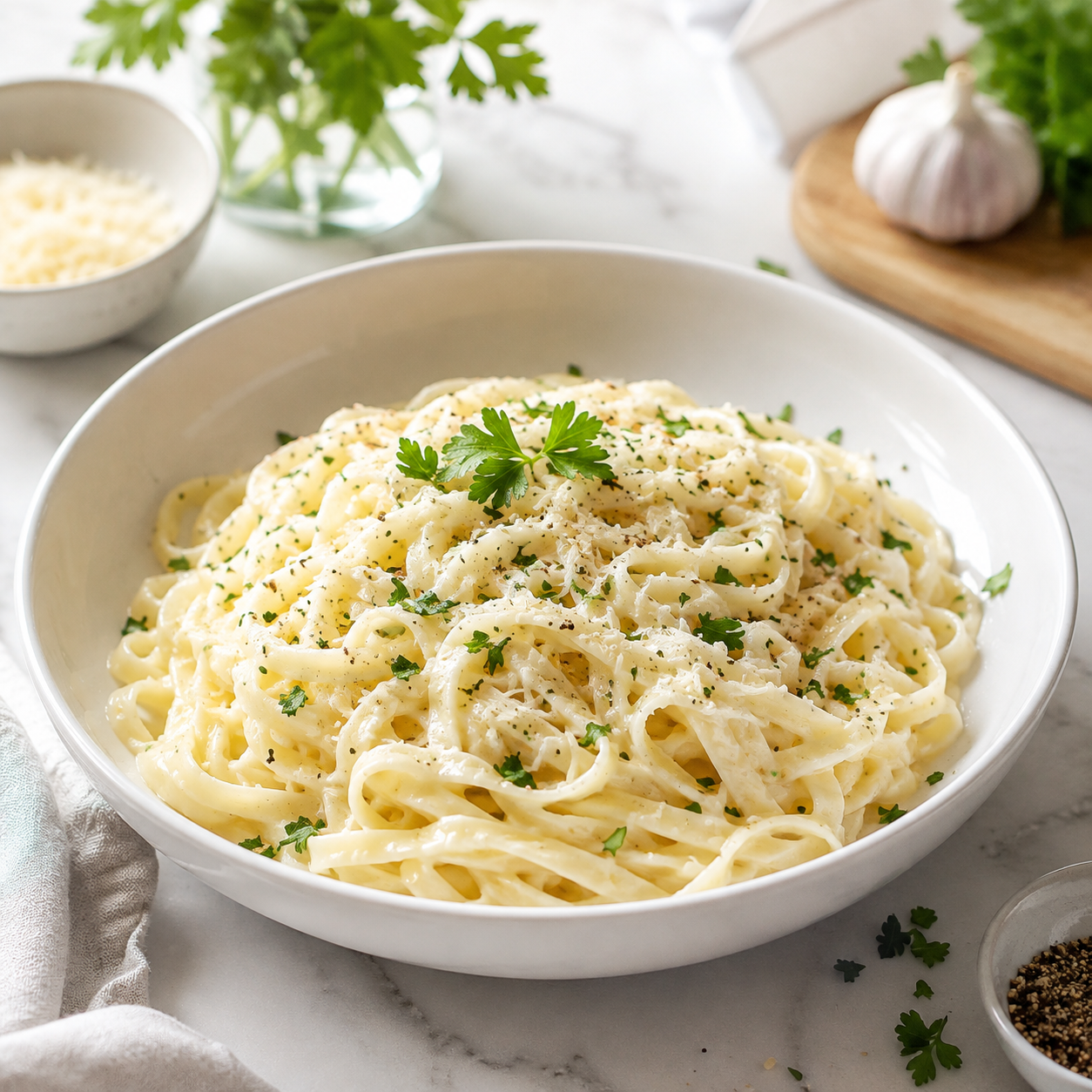
Easy Egg White Noodles Recipe – Flourless & Low Carb
Ingredients
Method
- Add the egg whites, xanthan gum, salt, and optional garlic powder to a blender.
- Blend for 15–20 seconds until smooth.
- Let the mixture rest for 2 minutes so excess air bubbles settle.
- Lightly grease a nonstick skillet and heat it over medium-low heat.
- Pour approximately 1/4 cup of batter into the skillet.
- Tilt and rotate the pan immediately to spread the mixture into a thin, even layer.
- Cook for 90 seconds to 2 minutes, until the surface is dry and set.
- Carefully flip and cook the second side for another 20–30 seconds.
- Transfer the cooked sheet to a plate and repeat with the remaining mixture.
- Allow all the egg-white sheets to cool completely.
- Stack the sheets, roll them loosely, and slice into thin noodle strips.
- Add the noodles to your prepared sauce or broth and warm for only 30–60 seconds before serving.
Notes
- Keep each egg-white sheet thin for a more noodle-like texture.
- Cook over medium-low heat to prevent rubbery noodles.
- Let the sheets cool before stacking, rolling, and slicing.
- Prepare your sauce or broth before adding the noodles.
- Do not boil the finished noodles because they are already cooked and may become rubbery or break apart
Frequently Asked Questions
Do egg white noodles taste like regular pasta?
No. They have a mild egg flavour and a softer texture than wheat pasta. A flavourful sauce makes the difference less noticeable.
Can egg white noodles be boiled?
No. They are already fully cooked. Boiling can make them rubbery or cause them to break.
Are egg white noodles gluten-free?
The basic recipe contains no wheat. Check that the xanthan gum, seasonings, and cooking spray are certified gluten-free when cross-contact is a concern.
Are egg white noodles suitable for keto meals?
The noodle ingredients contain very little carbohydrate. The total carbohydrate content depends mainly on the sauce and toppings.
Can you use egg white noodles for lasagne?
Yes. Leave the cooked sheets whole and use them as thin lasagne layers instead of slicing them.
How long do egg white noodles last?
Properly refrigerated noodles should be used within three or four days.
Can you prepare them in advance?
Yes. Cook and slice the noodles ahead, then store them in a sealed container until needed.
Why are my noodles watery?
The sheets may be undercooked, or the sauce may contain too much liquid. Cook each sheet until the surface is fully dry before removing it from the skillet.

I’m Tahira Ramzan, an experienced recipe creator and the founder of EggWhiteRecipes.com. I specialize in simple, practical egg white recipes made with everyday ingredients. My goal is to share easy-to-follow recipes, helpful cooking tips, and reliable methods that make home cooking easier and more enjoyable.